Bajrangdal activists thrash old man, asks him to leave village

Raichur: Bajrangdal activists attacked a mosque, threw copies of Quran, mikes and set of mats and other items on fire at a mosque in Raichur district's Talekan village in Maski taluk. The incident came to light lately.
A terror attack had taken place on Indian soldiers at Pulwama in Kashmir on February 14. Accusing some Muslim youths of celebrating the terror attack, the Bajrangdal activists thronged into a mosque and threw off copies of Holy Quran, mikes and set mats and other items on fire.
They then lodged a complaint with the police alleging that the Pakistan Zindabad slogans were raised and soldiers' death was celebrated. Following which, a case was registered under Section 147 of the IPC, including Section 25/2019, 143, 147, 120 (A) 153 (A) and 504. Based on this, the Maski police have reportedly arrested six Muslim youths.
Even after the incident, Bajrangdal activists continued to bolster the protest and demanded to book sedition case against the arrested youths. It is learnt that activists gave a call to boycott trade with Muslims and not to give even a drop of water to them. They also blocked Muslims from coming to Namaz.
The Maski police, on February 24, registered a case against Bajrangdal workers as well, for destroying various materials at the mosque. The case was registered under Section 149, 147, 427, 435, 295, and 149 and nine workers were taken into custody. However, the Bajrangdal activists were reportedly released without any punishment.
After this, they again attacked an old man Hussein Saab, who was returning from the mosque on April 9. Around 10 Bajrang Dal activists allegedly attacked Hussein Saab, used foul language, thrashed him and also threatened him to leave the village. A case has been registered against Vishwanath, Kanteppa, PB Basappa and five others under section 149 IPC, including Section 143, 147, 341, 504, 323, 506 at the Maski Police Station.
A delegation of the Raichur district SDPI visited the superintendent of police and demanded immediate arrest of the accused who threatened to leave the village. It sought stringent action against the culprits and requested to restore communal harmony in the village.


Let the Truth be known. If you read VB and like VB, please be a VB Supporter and Help us deliver the Truth to one and all.
Centre spent Rs 76.13 lakh on print media ads for RSS centenary, reveals RTI
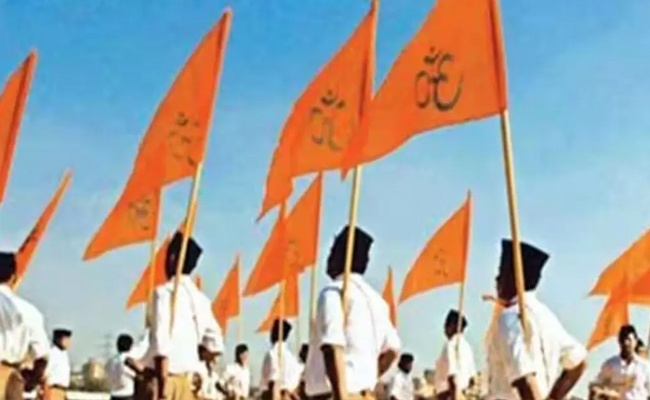
New Delhi: The Union Ministry of Culture allegedly spent Rs 76.13 lakh on print advertisements marking the 100-year celebrations of the Rashtriya Swayamsevak Sangh (RSS), according to a Right to Information (RTI) reply.
The information was sought by RTI activist Ajay Basudev Bose, who filed an application seeking details on expenditure incurred by the ministry for advertisements commemorating the RSS centenary.
Bose shared a picture of the reply from the ministry on his official ‘X’ handle.
“It is informed that an amount of Rs 76,13,129 has been spent on advertisement given in various print media by the Ministry of Culture on the occasion of the completion of 100 years of RSS,” the government’s reply stated.
RTI reply shows Min of Culture Govt of India spent a Whopping Rs 76L,13K,129 on Advertisement in Print Media on occasion of 100 yrs of #RSS
— AJAY Basudev Bose (@AjayBos93388306) April 16, 2026
When Everyone knows RSS is Not Registered & Does not Pay any Tax is it justified to spend Tax Payers Money on such Private event??@RSSorg… pic.twitter.com/dW4IUtdNCg
Bose questioned the expenditure in the post X, “when Everyone knows RSS is Not Registered & Does not Pay any Tax is it justified to spend Tax Payers Money on such Private event??”
Reacting to the development, Karnataka’s IT-BT and Panchayat Raj Minister Priyank Kharge also criticised the spending.
In a post on X, he asked why public money was being used for what he described as a “private ideological project” and questioned the government’s decision to fund advertisements related to the organisation’s centenary.
According to reports, the RSS, founded in 1925, describes itself as a volunteer-based organisation and has stated that it functions as a body of individuals rather than a registered entity.