Bangalore Metro rejects reports of man being denied entry due to attire, says he was drunk
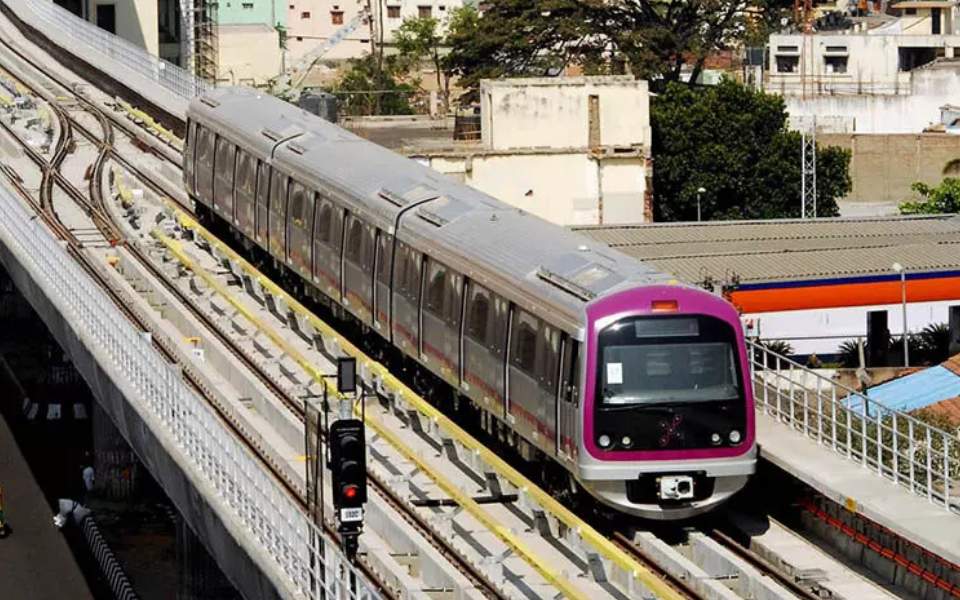
Bengaluru (PTI): The Bangalore Metro Rail Corporation Limited (BMRCL) on Wednesday rejected reports in a section of the media that claimed that a man from an economically weak section of society was barred from using its train services over wearing “inappropriate” attire.
The BMRCL said the man in question was drunk and hence the security guards on duty at Doddakallasandra station initially denied him entry, but later let him through.
Earlier, a Metro passenger claimed that a labourer was stopped at the Metro station because of the way he was dressed. “Location Doddakallasandra metro. One more incident of cloth/attire related incident happened in front of me just now. A labourer was stopped & told to stitch up his top two buttons… When did Namma metro became like this!!?” the passenger said in a post on social media platform X.
In a statement on Wednesday, the BMRCL said that on April 7 at 7.34 pm at Doddakallasandra Metro station, during the security check, staff found a person smelling of alcohol. “After confirming the smell, the security guard engaged with the individual to assess his condition to travel without disturbing other passengers. The individual admitted to drinking earlier in the day,” the BMRCL said.
“Upon evaluating the individual’s condition, the security guard then allowed him to travel keeping in mind the safety and comfort of other passengers. Issue as stated is not on his attire,” the statement said.
Let the Truth be known. If you read VB and like VB, please be a VB Supporter and Help us deliver the Truth to one and all.
Rickelton's ton in vain as SRH beat MI by 6 wickets
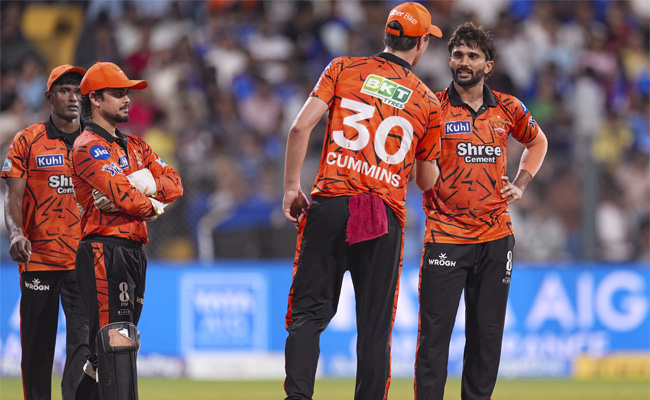
Mumbai (PTI): Ryan Rickelton's whirlwind unbeaten ton was overshadowed by Heinrich Klaasen's unbeaten 65 as Sunrisers Hyderabad defeated Mumbai Indians by six wickets in an IPL match here on Wednesday.
Chasing an imposing 244-run target, Travis Head (76 off 30) and Abhishek Sharma (45 off 24) shared 129 runs for the opening wicket to set the platform for SRH.
Klaasen (65 not out off 30 balls) then displayed his all-round hitting abilities to guide SRH home with the help of Nitish Kumar Reddy (21) and Salil Arora (30 not out off 10) in 18.4 overs.
Earlier, Rickelton's knock powered MI to 243 for five.
MI rode on a 93-run stand between Rickelton (123 not out off 55 balls) and Will Jacks (46 off 22) in 7.1 overs for the opening stand to power the side.
MI skipper Hardik Pandya scored a valuable 31 off 15 balls before being dismissed.
Praful Hinge (2/54), Eshan Malinga (1/29), Sakib Hasan (1/39) and Nitish Kumar Reddy (1/31) were the wicket-takers for SRH.
Brief Scores:
Mumbai Indian: 243 for 5 in 20 overs (Ryan Rickelton 123 not out; Praful Hinge 2/54).
Sunrisers Hyderabad: 249 for 4 in 18.4 overs (Travis Head 76, Heinrich Klaasen 65 not out; AM Ghazanfar 2/51).