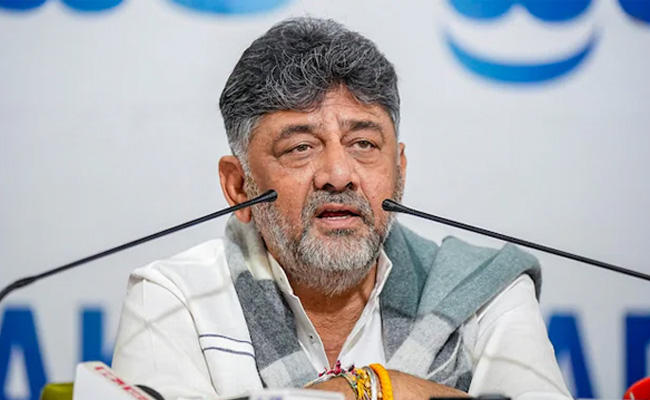
Belagavi Airport: BJP MP urges action against airlines for halting operations on profitable routes
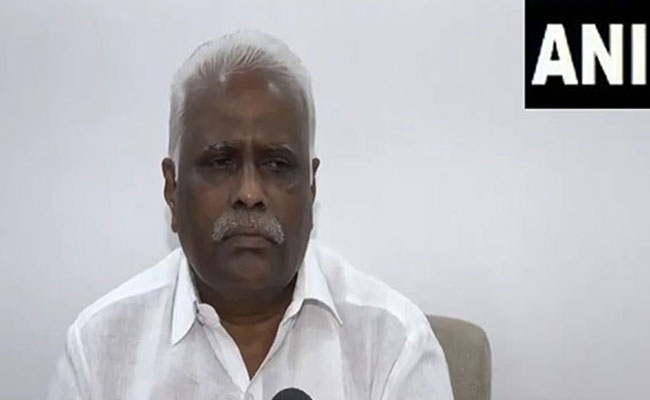
New Delhi (PTI): Karnataka BJP MP Iranna Kadadi on Friday raised the issue of dwindling air connectivity at Belagavi airport in the Rajya Sabha, urging the government to take strict action against airlines that have discontinued services despite high passenger demand.
Raising the matter during Zero Hour in the Upper House, Kadadi pointed out that while Belagavi was supposed to be connected to 13 cities through five airlines under the Udaan-3 scheme, connectivity has now been reduced to just five cities, served by two airlines.
"Airlines only provide services until they get viability gap funding or subsidy from the government. As soon as the subsidy expires, they stop flying," he said.
The MP highlighted that despite the end of the Udaan-3 scheme, passenger numbers remained robust.
The airport recorded 3,40,300 passengers in 2024-25, marking a 9 per cent increase over the previous year. Load factors on routes to Mumbai, Delhi, Bangalore and Hyderabad ranged between 85 per cent and 95 per cent.
"When flights were running at more than 90 per cent capacity and were providing benefits even without a subsidy, it is wrong to stop service through airlines," Kadadi said, questioning the decision to halt operations on profitable routes.
Built by the Royal Air Force in 1942, Belagavi airport serves a strategically important region bordering Karnataka, Maharashtra and Goa.
The city hosts major defence establishments, including the Maratha Light Infantry, ITBP, Commando Training Centre and Air Force units. It is also an educational, medical and industrial hub.
The central government is currently expanding the airport with a new terminal building worth Rs 262.64 crore and an apron costing Rs 25.98 crore.
Kadadi urged the government to restore flights from Mumbai, Pune, Chennai, Indore and Jaipur for the convenience of security personnel and the general public, emphasising that the high load factor justified continued operations.
Let the Truth be known. If you read VB and like VB, please be a VB Supporter and Help us deliver the Truth to one and all.
Court can reject anticipatory bail but cannot direct accused to surrender: SC
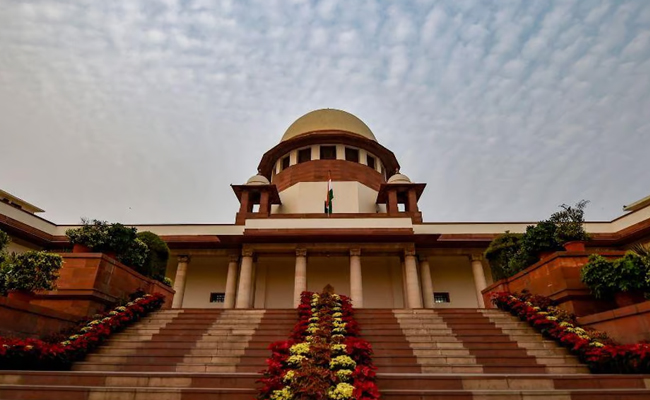
New Delhi (PTI): A court can reject anticipatory bail of an accused but it has no jurisdiction to direct him to surrender before the trial court, the Supreme Court has said.
A bench of Justices J B Pardiwala and Ujjal Bhuyan made the observation while hearing a plea filed by a man accused of cheating and forgery.
"If the court wants to reject the anticipatory bail, it may do so, but the court has no jurisdiction to say that the petitioner should now surrender," the bench said.
The Jharkhand High Court had rejected anticipatory bail plea of the accused and asked him to surrender and seek regular bail.
In this case, a complaint had been filed before a magistrate alleging offences under Sections 323 (voluntarily causing hurt), 420 (cheating), 467 (forgery of valuable security), 468 (forgery for purpose of cheating), 471 (using forged document) and 120B read with 34 of the IPC, in connection with a land dispute.
The high court had dismissed the second anticipatory bail application of the accused on the ground that no new circumstances were shown.
It had relied on its earlier order rejecting his first anticipatory bail plea, in which the court directed the petitioner to surrender before the trial court and seek regular bail in terms of the decision in Satender Kumar Antil v. CBI.
The top court said such a direction was wholly without jurisdiction and said that if a court chooses to reject anticipatory bail, it may do so, but it cannot compel the accused to surrender.