Belagavi Tech Meet showcases home-grown innovations, KabadiMan stands out
_vb_69.jpeg)
Belagavi : The fourth edition of the Belagavi Tech Meet was organised on August 30. The meet showcased the growing role of tier-2 cities in shaping India’s innovation landscape. Themed ‘Tech for Human Impact’, the event brought together entrepreneurs, corporate leaders and innovators. The Hindu reported that the aim of this meet was to discuss how locally developed technologies are driving meaningful change with global relevance.
Several home-grown products were launched during the event, including KabadiMan, a door-to-door trash recycling service that rewards customers while promoting sustainability, Hoopoe Electric, an urban electric bike designed and built entirely in Belagavi, Zen AI, an AI-powered platform simplifying online advertising and marketing and BeTCA Assist, a flagship AI initiative by the Belagavi Technology Companies Association (BeTCA) to provide tailored digital assistance for local enterprises.
According to The Hindu's report, the evening began with a welcome address by host Amit Soundalgekar, followed by a presentation on BeTCA’s journey and impact by Gajendra S. Tripathi. He underlined BeTCA’s role as a Section 8 non-profit collective of IT and ITeS firms, championing policy advocacy, ecosystem growth, talent development, and infrastructure needs. Mr. Tripathi cited BeTCA’s interactions with Department of Science and Technology (DST) Secretary Abhay Karandikar, who praised Belagavi’s innovation potential. He also noted KEONICS chairman Sharath Kumar Bache Gowda’s positive response to proposals for an IT park and plug-and-play facilities.
In a session on ‘Inventing the Future: How Founders Are Building Life-Changing DeepTech Products’, Kawal Arora, co-founder of DesiLLM, recounted his experience at Tesla and his return to India to build India-focused large language models (LLMs). He said the effort aims to reduce biases and make LLMs more suited to Indian users.
Akash Kulgod, founder of Dognosis and a UC Berkeley Cognitive Science graduate, shared his work on training dogs to detect diseases. He said his venture began during the Covid-19 pandemic after learning that dogs could detect the coronavirus. According to him, Beagles are especially effective for such work due to their temperament and independence.
A second panel discussion, ‘From Tier-2 to Global: Shared Learnings of Corporate Leaders and Entrepreneurs’, featured several success stories. Leena Padihari, founder of Alfanzyme Life Science, described her journey from a small loan-funded venture to a company now nearing ₹50 crore in revenue, with over 200 sugar factories as clients and plans for international expansion. Shekhar Gaonkar, founder of PetCart, explained how observing pet care trends helped him carve out a niche in the growing industry. Allah Baksh of Infosys Hubballi stressed persistence as the key to long-term growth. The sessions were moderated by Aadil Bandukwala of HackerRank.
Let the Truth be known. If you read VB and like VB, please be a VB Supporter and Help us deliver the Truth to one and all.
Real Madrid fines Valverde and Tchouaméni half a million euros each for altercation
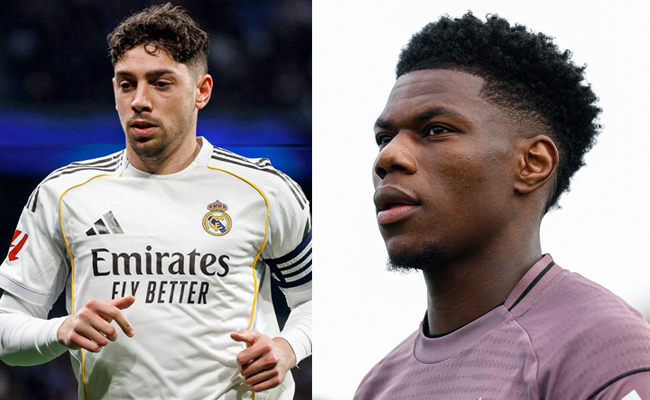
Barcelona (AP): Real Madrid slapped players Federico Valverde and Aurélien Tchouaméni with half-a-million-euro ($588,000) fines on Friday for their altercation during practice.
The massive fines came a day after the midfielders tussled when the team trained. Valverde said in a post on social media on Thursday that no punches were thrown. But Valverde knocked his head on a table and he suffered a small cut that required a brief hospital visit.
On social media, Valverde initially called it a “meaningless fight” with a teammate and said “everything has been blown out of proportion."
His employers, however, considered it a significant enough breach of team discipline to nail both Valverde and Tchouaméni with fines that bite even the bank account of a top soccer player. The half-a-million euro penalties reflect the reputational damage the club was enduring in a chaotic end to a disappointing season.
In a statement, the 15-time European champion said its disciplinary action was concluded after both players expressed to the club “their complete remorse for what happened and apologized to one another.”
Madrid added they also apologized to their teammates, the coaching staff and club supporters, as well as showing their willingness to accept whatever disciplinary action the club deemed “opportune.”
Tchouaméni was back training with Madrid on Friday, two days before they play at Barcelona in a clasico. Madrid has to win otherwise Barcelona will be crowned La Liga champion.
After being notified of the fine, he posted a public apology to the club and its fans on social media.
“What happened this week in training is unacceptable,” Tchouaméni wrote. "I say this while thinking about the example we are expected to set for young people, whether in football or at school.
“Above all, I am sorry for the image we projected of the club.”
Valverde was not at practice due to the head knock.
Both players are set to play in the World Cup next month, with Tchouaméni playing for France and Valverde for Uruguay.
Chaotic end to a poor season
===================
The run-in between the players, who for seasons have played side by side in Madrid's midfield, came after they argued this week in previous training sessions. But tempers boiled over on Thursday. Spanish media was rife with reports that the players previously disagreed over the club's decision to let coach Xabi Alonso go after just months on the job.
It was not the only altercation involving Madrid players during training this week. Álvaro Carreras confirmed he was in a “minor” incident with a teammate. Spanish media said he and fellow defender Antonio Rüdiger got into a scuffle.
Álvaro Arbeloa, the coach who was promoted from Madrid's reserve team when Alonso was fired in January, will face tough questions on what went wrong inside the changing room when he gives a press conference on Saturday ahead of the clasico at Camp Nou.
Madrid is facing a second consecutive campaign without a major trophy amid rumors in the Spanish media that club president Florentino Pérez is considering bringing back Jose Mourinho to straighten out his underperforming team.