Bengaluru among 14 global cities to clean toxic air
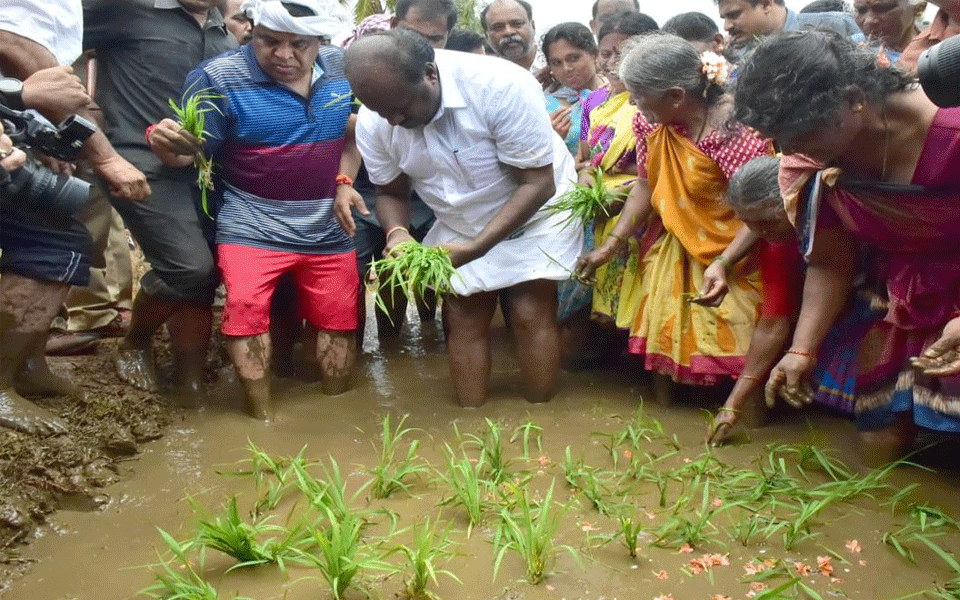
Bengaluru, July 31: India's tech hub Bengaluru on Tuesday joined 13 other cities, including London, to clean up toxic air and check pollution in urban areas the world over.
Hosting the first meeting of the C40 Air Quality Network, Bengaluru brought experts and policymakers from 13 other cities from the world over to find solutions to the threat of toxic air pollution.
"Formed when London Mayor Sadiq Khan visited India in December last year, the Network enabled leaders to share information and work together to develop plans for how each city will clean up its toxic air," an official statement said.
The C40 Cities is an organisation of 96 global cities to fight climate change and work towards a sustainable future, while the C40 Air Quality Network, a body of upto 20 global cities formed in December last year, aims to develop solutions for air pollution, and is co-chaired by Khan and Bengaluru Mayor Sampath Raj.
The 13 cities that were part of the meeting were Berlin, Chennai, Dar-es-Salaam, Delhi, Johannesburg, Kolkata, London, Los Angeles, Portland, Quito, Salvador, Tel Aviv and Warsaw.
"The discussions and knowledge sharing on how other cities have dealt with air quality challenges is beneficial," Karnataka Chief Minister H.D. Kumaraswamy said on the occasion.
As part of the Network, the global cities sign the 'clean bus' and 'fossil fuel-free streets' declarations, thereby relying on low-emission vehicles that run on electric power instead of traditional fuels like petrol and diesel, that contribute to high emissions.
Even as Bengaluru is implementing projects promoting the use of electric vehicles and plans to have an all-electric bus fleet in the city by 2030, Deputy Chief Minister G. Parameshwara said the government is committed to implement an air quality management plan for the capital.
"Based on the best practices we can learn from the forum, I commit my support in implementing a robust air quality management plan for Bengaluru by providing both financial and governance resources," said Parameshwara, who also holds the portfolio of Bengaluru Development Minister.
An estimated seven million people die prematurely each year due to air pollution, according to the World Health Organisation.
In 2016, there were over 1.1 million early deaths in India and over 40,000 in Britain due to air pollution, statement from the Network said.
London Deputy Mayor for Environment and Energy Shirley Rodrigues, Bengaluru civic body commissioner N. Manjunatha Prasad and air quality researchers and experts from the state were also present.
Let the Truth be known. If you read VB and like VB, please be a VB Supporter and Help us deliver the Truth to one and all.
Two arrested in K'taka for assaulting minors, uploading CSAM content

Bengaluru (PTI): Two men were arrested for allegedly sexually assaulting two minor girls, recording the acts on mobile phones and uploading the videos online as child sexual abuse material, police said on Thursday.
The accused have been identified as Kiran Kumar (29), hailing from Chitradurga district, and Aditya M K (20), hailing from Shivamogga district, they said.
A probe was initiated after information was received from the NCRP portal regarding a suspected instance of creation of Child Sexual Abuse Material (CSAM) for online dissemination, police said.
Accordingly, a case was registered at Kaggalipura Police Station under relevant sections of the IT Act on May 10, they added.
Investigation revealed that two minor girl victims were exploited and videos were created and uploaded to the internet. The child victims have subsequently recorded their statements as per procedure and further necessary legal steps have been taken, Pronab Mohanty Director General of Police, Cyber Command, said in a statement.
Based on the statements of the victims, the accused persons, who allegedly assaulted the minors, recorded the acts on mobile phones and uploaded the videos online, were arrested, he said.
Following the probe, sections 65(2) (rape) and 70 (gangrape) of the Bharatiya Nyaya Sanhita, along with relevant sections of the POCSO Act, have been added to the FIR, police said.
Officials collected relevant information and on May 12, arrested the accused persons and seized three mobile phones belonging to them, in which the videos had allegedly been recorded, he said.
The accused were later produced before the court and taken into police custody for further investigation, he added.
According to him, in CSAM cases, police usually apprehend offenders who have downloaded such content or have kept them in their possession after obtaining them from elsewhere, usually the internet.
"The present case is one of the very few instances where content creators and uploaders have been apprehended," Mohanty added.