Bengaluru among world’s top 10 most densely populated cities: UN report
_vb_08.jpeg)
New Delhi: Bengaluru has been ranked among the world’s top ten most densely populated cities, according to a new UN report, World Urbanisation Prospects 2025: Summary of Results.
The report highlights a dramatic rise in megacities (urban areas with 10 million or more residents). Their number has jumped from just eight in 1975 to 33 in 2025, with Asia accounting for 19 of them. By 2050, the tally is expected to reach 37, with cities such as Addis Ababa (Ethiopia), Dar es Salaam (United Republic of Tanzania), Hajipur (India) and Kuala Lumpur (Malaysia) projected to cross the 10-million mark.
The report released by the UN Department of Economic and Social Affairs notes that out of the world’s 50 most crowded cities, 12 are in India. Mumbai leads globally with nearly 30,000 people per sq km. Four Indian cities, Mumbai, Surat, Ahmedabad and Bengaluru—rank among the top ten. Bengaluru alone has a population density exceeding 20,000 people per sq km.
The report further adds that urban areas are now home to 45% of the world’s 8.2 billion people. Among the 33 megacities identified, India hosts five: Delhi, Mumbai, Kolkata, Chennai and Bengaluru—one more than China, which has four.
Globally, Jakarta leads as the most populous city with nearly 42 million residents, followed by Dhaka with 37 million and Tokyo with 33 million. India’s New Delhi, with 30 million people, and Kolkata, with 22 million, also feature in the top ten. Cairo (Egypt) is the only non-Asian city among the top ten.
The release of the report coincides with the UN climate summit in Brazil, where nations are negotiating emission cuts and expanding carbon sinks to meet the needs of a rapidly growing population.
“As governments convene at COP30 to advance global climate commitments, the UN underscores the pivotal role of urbanisation in driving sustainable development and climate resilience across all settlement types,” Li Junhua, UN Under-Secretary-General for Economic and Social Affairs said in a statement. “Urbanisation is a defining force of our time. Countries must adopt integrated national policies that align housing, land use, mobility, and public services across urban and rural areas.”
Let the Truth be known. If you read VB and like VB, please be a VB Supporter and Help us deliver the Truth to one and all.
Diageo India collaborates with IRTE, Bengaluru Traffic Police to improve road safety
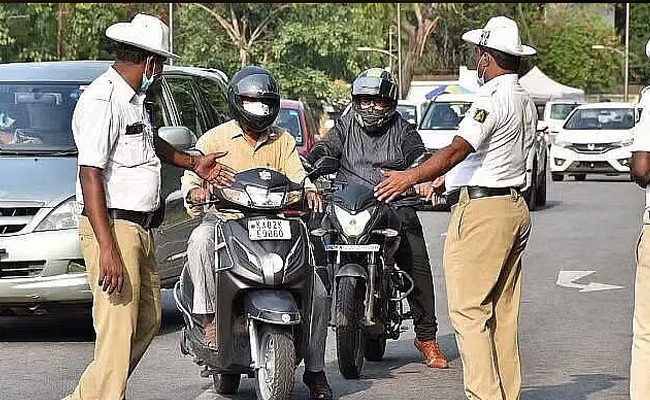
Bengaluru (PTI): Diageo India, in collaboration with the Institute of Road Traffic Education and the Bengaluru Traffic Police, has undertaken a road safety and traffic engineering study aimed at improving safety and traffic efficiency at key intersections in the city, the company said on Wednesday.
The initiative, taken up as part of the Diageo India (United Spirits Limited)’s Corporate Social Responsibility commitments, focuses on enhancing road safety and urban mobility in Bengaluru through research, on-ground assessment and capacity building.
According to a statement, the study assessed three key intersections—Chalukya Circle, Cantonment Railway Station Junction and H Siddaiah Circle—using a scientific, data-driven methodology that included traffic volume analysis, behavioural observations and road safety audits.
These locations were selected to represent different urban contexts, including administrative, transport hub and recreational zones, it said.
The analysis examined traffic movement patterns, pedestrian usage and crossing behaviour, and the role of road design and infrastructure in influencing traffic flow. It also identified opportunities to improve traffic efficiency through better planning and design.
The study recommended several low-cost engineering interventions such as improved lane channelisation, pedestrian refuge islands, optimised signal placement and enhanced signage to help improve traffic flow and road safety, the company said.
Bengaluru, one of India’s fastest-growing metropolitan cities, has over 14 million residents and more than 1.2 crore registered vehicles, placing significant pressure on road infrastructure and contributing to high congestion levels, the statement said.
As part of the initiative, a two-day training programme for Bengaluru Traffic Police officers was conducted on March 30 and 31 by Institute of Road Traffic Education (IRTE).
Joint Commissioner of Police (Traffic), Bengaluru City, Karthik Reddy said Managing traffic in a city like Bengaluru requires a strong understanding of enforcement, road engineering, and on-ground realities.
Initiatives like this play an important role in strengthening the capacity of our officers and bringing valuable technical insights into day-to-day traffic management, he said.
"Greater coordination between planning, engineering, and enforcement agencies, along with a focus on both vehicular movement and pedestrian safety, will be key to improving traffic efficiency and making our roads safer for all."
Devashish Dasgupta, Corporate Relations Director, Diageo India (USL) said: " Through this collaboration with IRTE and Bengaluru Traffic Police, we are taking a science-based, data-driven approach to improving traffic flow and road safety. Starting with a pilot study across three key junctions and capacity building sessions, we aim to scale this initiative in a phased manner."
Headquartered in Bengaluru, Diageo India is among India's leading beverage alcohol companies, it claimed.