Bengaluru: College student detained for stabbing Institute staffer to death
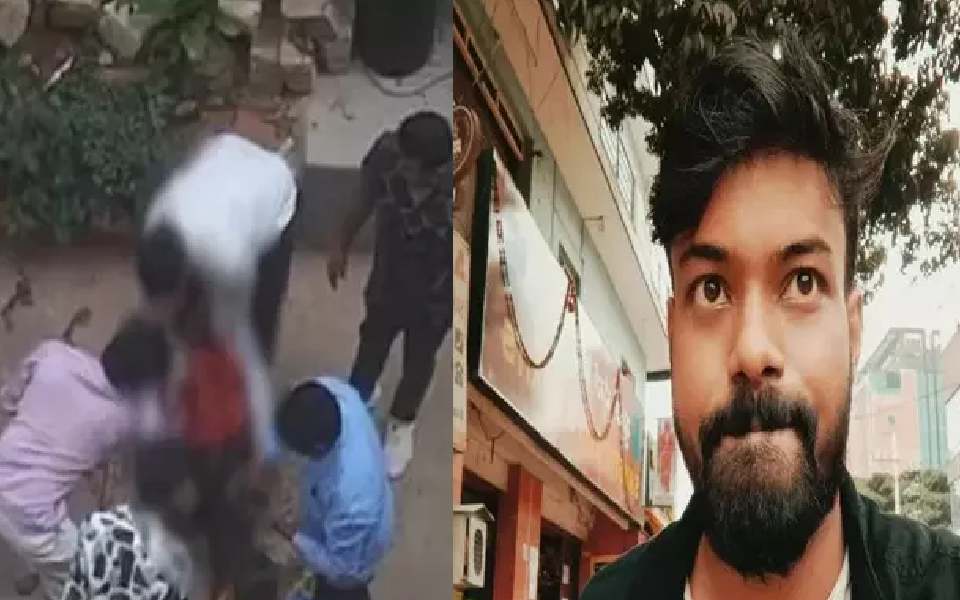
Bengaluru: In an incident reported under the jurisdiction of the Amruthahalli police station on Wednesday, a college student was detained for allegedly stabbing the disciplinary-in-charge of the institute.
The deceased disciplinary-in-charge was identified as Jaikishore Roy (52), a native of Assam.
The incident was reported at a private college in Amruthalli, the accused identified as Bhargav (22) a resident of Bihar has been detained, said the Police.
ALSO READ: Speeding bus hits car in Shivamogga: Car driver killed on spot, passengers in bus injured
Bharghav was a final year BA student at the college. On Wednesday, July 3, Bhargav entered the college premises in an inebriated state at 3:30 PM. When Jaikishore denied the student’s entry an argument ensued between the two. Bhargav left the premises, bought a knife from a shop, and returned to the college after some time and then stabbed Roy in the chest. Jaikishore, who was seriously injured, died on the spot. A program was underway at the campus during the incident.
Amruthahalli police visited the spot, conducted an investigation, and took the accused into custody and said that the dead body has been sent for post-mortem examination.
Let the Truth be known. If you read VB and like VB, please be a VB Supporter and Help us deliver the Truth to one and all.
Rickelton's ton in vain as SRH beat MI by 6 wickets
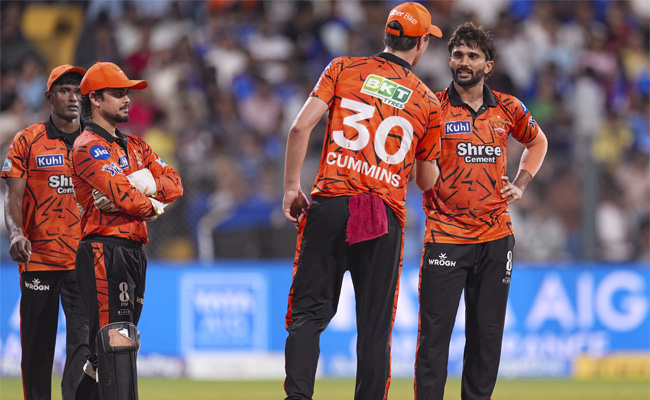
Mumbai (PTI): Ryan Rickelton's whirlwind unbeaten ton was overshadowed by Heinrich Klaasen's unbeaten 65 as Sunrisers Hyderabad defeated Mumbai Indians by six wickets in an IPL match here on Wednesday.
Chasing an imposing 244-run target, Travis Head (76 off 30) and Abhishek Sharma (45 off 24) shared 129 runs for the opening wicket to set the platform for SRH.
Klaasen (65 not out off 30 balls) then displayed his all-round hitting abilities to guide SRH home with the help of Nitish Kumar Reddy (21) and Salil Arora (30 not out off 10) in 18.4 overs.
Earlier, Rickelton's knock powered MI to 243 for five.
MI rode on a 93-run stand between Rickelton (123 not out off 55 balls) and Will Jacks (46 off 22) in 7.1 overs for the opening stand to power the side.
MI skipper Hardik Pandya scored a valuable 31 off 15 balls before being dismissed.
Praful Hinge (2/54), Eshan Malinga (1/29), Sakib Hasan (1/39) and Nitish Kumar Reddy (1/31) were the wicket-takers for SRH.
Brief Scores:
Mumbai Indian: 243 for 5 in 20 overs (Ryan Rickelton 123 not out; Praful Hinge 2/54).
Sunrisers Hyderabad: 249 for 4 in 18.4 overs (Travis Head 76, Heinrich Klaasen 65 not out; AM Ghazanfar 2/51).