Bengaluru faces shortage of shelters as Supreme Court orders relocation of stray dogs

Bengaluru: The Supreme Court recently directed that all stray dogs in public spaces such as hospitals, schools, colleges, and parks must be shifted into shelters. While the order calls for relocating a large number of dogs, Bengaluru reportedly lacks the infrastructure to house even a few hundred dogs for large-scale Animal Birth Control (ABC) programs.
The Greater Bengaluru Authority (GBA) is now scouting for locations to set up new dog pounds and is planning a series of initiatives to reduce dog bites across the city. “Our first priority is to set up more centres to house the dogs, and instructions have been given to all the corporations,” Deccan Herald quoted Maheshwar Rao, GBA Commissioner, as saying.
At present, there are about eight centres conducting ABC programs and a few observation centres. However, Rao acknowledged that limited space has slowed progress, prompting the authority to seek public support. “If anyone can provide us space to set up observation centres to house dogs, we can go ahead immediately. Our officials are also trying to scout suitable places,” he said.
Corporation commissioners have also asked officials to survey and identify dogs that need to be relocated so that the required infrastructure can be planned and set up. Institutions across the city have been asked to report the number of dogs on their premises, which will guide further action, added the report.
While the GBA is now focusing on better infrastructure and new initiatives, many earlier proposals remain unimplemented. The Bruhat Bengaluru Mahanagara Palike (BBMP) had previously announced measures to control the stray dog population, including microchipping strays to track neutering status and community feeding programs to reduce aggressive behaviour. However, none of these measures were carried out.
“The tenders did not receive a good response. Though we invited tenders twice, we could not get a qualified agency to take up these works. Now, the individual corporations will take over,” DH quoted a senior GBA official as saying.
Rao acknowledged that many programs stalled after the GBA and five corporations took over from BBMP, but emphasised that the first priority is to implement the Supreme Court order and improve infrastructure, with other initiatives to be addressed later based on priority.
Over the last three months, the capital city has recorded at least three dog-bite incidents, including one fatality. Yet, despite repeated incidents, there seems to be no impact on the ground, and residents say they still go out in fear of being hounded by packs of dogs, added DH.
Let the Truth be known. If you read VB and like VB, please be a VB Supporter and Help us deliver the Truth to one and all.
Opposition plans to move fresh notice seeking removal of CEC Gyanesh Kumar
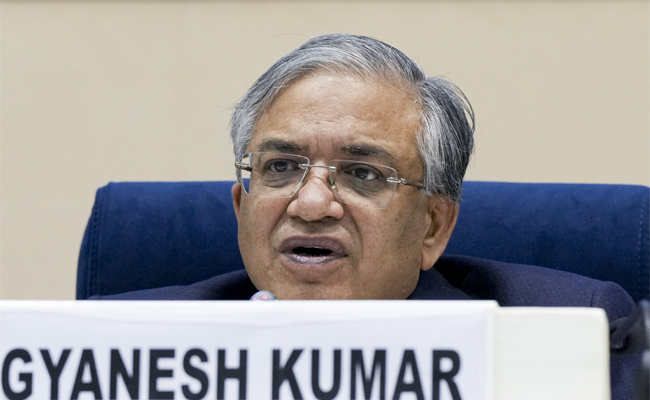
New Delhi (PTI): Undeterred by the rejection of their earlier notices, opposition parties are planning a fresh move to seek the removal of Chief Election Commissioner Gyanesh Kumar, sources said on Saturday.
According to highly placed sources, leaders from several opposition parties are in talks, and at least five senior MPs from different parties -- including the Congress, the Trinamool Congress, the Samajwadi Party and the DMK -- are working on drafting a new notice to initiate removal proceedings.
It has, however, not yet been decided which House the notice would be moved in, or whether it would be introduced in both Houses as was done last time, the source added.
Buoyed by the defeat of The Constitution (131st Amendment) Bill, 2026 in Lok Sabha on Friday, opposition leaders are aiming to secure more MPs' signatures on the notice and are looking at garnering at least 200, the source said.
"We want to make a statement. We first need to prove that the number last time was underestimated," the source added.
In its earlier notices, the opposition had accused CEC Kumar of a "failure to maintain independence and constitutional fidelity" and of acting under the "thumb of the executive".
The notices levelled sweeping charges against the CEC, alleging “proved misbehaviour” on grounds including a compromised and executive-influenced appointment, partisan functioning -- such as the alleged “graded response” doctrine targeting opposition leaders -- obstruction of electoral fraud investigations, and erosion of transparency through refusal to share data and materials.
They further accused him of enabling large-scale disenfranchisement via Special Intensive Revision (SIR) exercises in Bihar and elsewhere, defying or delaying compliance with Supreme Court directions, and acting in alignment with the political executive, thereby undermining the independence of the Election Commission.
However, in almost similar responses, Lok Sabha Speaker Om Birla and Rajya Sabha Chairman C P Radhakrishnan rejected the notices, holding that even if the allegations were assumed to be true, they did not meet the high constitutional threshold of “misbehaviour” required for removal.
They reasoned that appointment-related issues or prior government service do not constitute misconduct; differences in public statements or administrative decisions lack evidence of wilful abuse of authority; and actions like data-sharing or electoral roll revisions fall within the commission’s constitutional mandate and are subject to judicial review.
The responses also stressed that many issues cited were either speculative, politically interpretative, or sub judice, and that removal proceedings cannot be based on disagreement or perceived political consequences but require clear, specific, and provable misconduct, which, they concluded, was absent in this case.