Bengaluru GCC employees face long commutes, Wednesdays busiest for office travel: Report
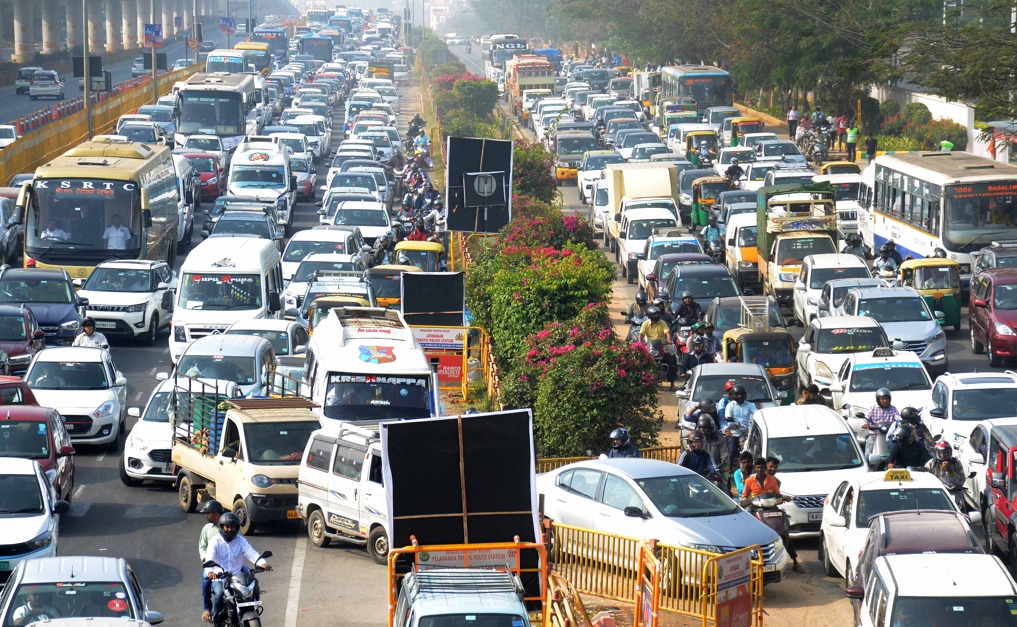
Bengaluru: Employees working in Bengaluru’s Global Capability Centres (GCCs) are spending close to an hour commuting one way, according to MoveInSync’s quarterly report for 2025. The report, released on Tuesday, highlights the increasing commuting challenges faced by professionals in the city, especially along high-density office corridors like Outer Ring Road (ORR), Whitefield, and Electronics City.
On average, GCC employees in Bengaluru commute 15 kilometres in about 50 minutes. While the city accounts for nearly 30 percent of all GCCs in India, it has seen a 41 percent increase in the number of centres between 2019 and 2024. This growth, combined with inadequate infrastructure and congested roads, has worsened the daily travel experience for employees.
The report, based on commute data from Bengaluru, Hyderabad, and the National Capital Region, revealed that hybrid work models are now common across most GCCs, with employees typically reporting to office two to three times a week. Of these, Wednesday has emerged as the busiest day, with cab bookings peaking at around 82,000, compared to 61,000 on Fridays.
Commute patterns also vary by industry. Employees in the industrial and energy sectors travel the farthest—16 km in about 53 minutes. Those in entertainment and gaming have shorter commutes, averaging 11 km in 31 minutes. The pharma and healthcare sector recorded the shortest commute time at 47 minutes over 12 km.
The report noted an encouraging shift towards green mobility, with Bengaluru employees completing approximately 45,000 electric vehicle (EV) trips every month.
MoveInSync CEO and co-founder Deepesh Agarwal emphasized the need for better commute planning. “Providing commute as a service can help companies attract and retain talent. Efficient and sustainable commuting solutions must balance cost, safety, and environmental concerns,” he said.
However, employees working in and around the Outer Ring Road said poor traffic management continues to be a major problem. A senior executive at a GCC remarked that poorly managed metro construction sites, road encroachments, and lack of accessible public transport were making daily commutes unmanageable. “Some people spend over 90 minutes just to reach the ORR stretch. That’s a lot of wasted time,” the executive noted.
Rama NS, advisor to the Electronics City Industries Association (ELCIA), said the completion of the Yellow Line of the Namma Metro could significantly improve commute experience in the coming years. “Beyond reducing travel time, this metro line will help reduce pollution and discomfort caused by long journeys. Improving first-mile connectivity to metro stations will also make a big difference,” she said.
Let the Truth be known. If you read VB and like VB, please be a VB Supporter and Help us deliver the Truth to one and all.
Barakah International School records 100% results in CBSE class 10, over 38 distinctions
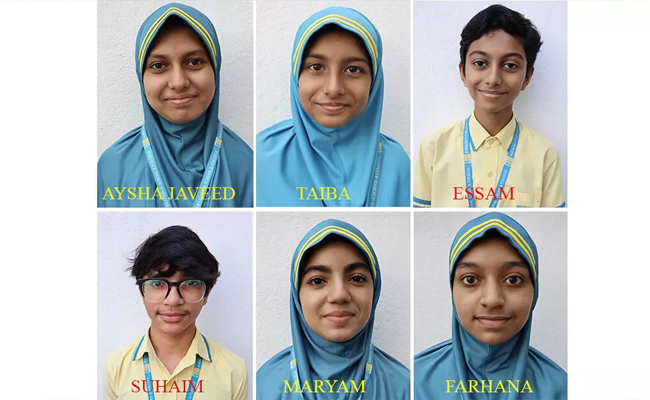
Mangaluru: Barakah International School and College has once again recorded a 100% pass result in the Central Board of Secondary Education (CBSE) Class 10 examinations, with students securing high scores and a significant number of distinctions.
The results of the examinations held for the academic year 2025–26 were announced by the board on Wednesday, April 15.
Leading the batch, school topper Aysha Saleem Javeed secured 96.4 %. She was closely followed by Maryam Taybah, who scored 94.4 %, while Inas Syed and Fidha Falaq secured 92 % each. Essam Khalid Syed and Suhaim scored 90.6 %, and Maryam Mohammed Iqbal along with Fathima Farhana secured 90% each.
Notably, over 38 students achieved distinction, highlighting the collective dedication, perseverance, and hard work of the students, as well as the unwavering commitment of the teaching faculty.
The management, principal, and staff of Barakah International School expressed their heartfelt appreciation for the students’ achievements.
They also acknowledged the vital role played by parents in supporting their children’s academic journey,
Barakah International School and College, Adyar, offers education from Pre-KG to degree level.