Bengaluru; Hostel outsourcing workers’ protest continues, 16 women workers admitted to hospital
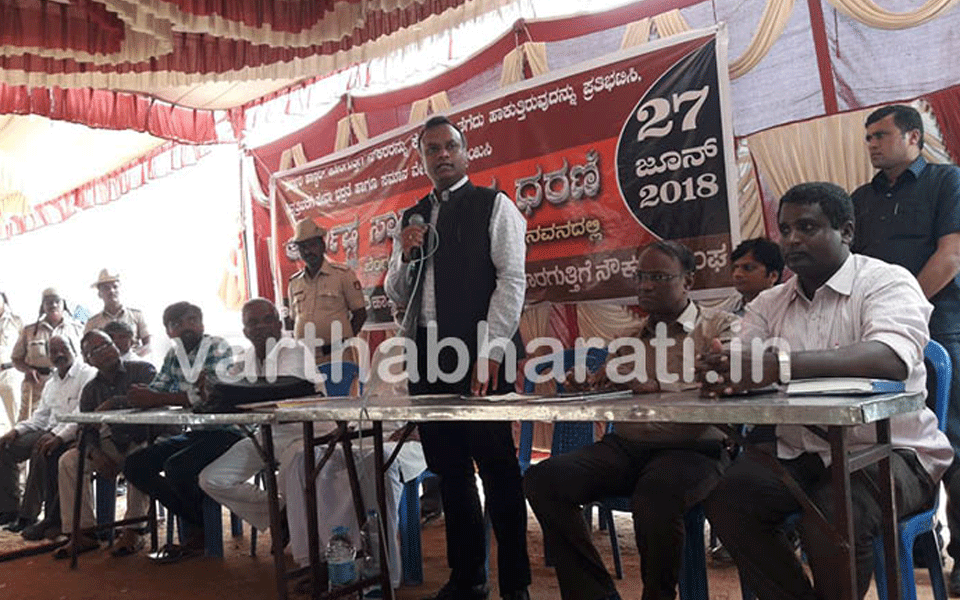
Bengaluru, July 1: The government residential schools outsourcing workers protest condemning their removal from the schools entered the sixth day on Sunday and 16 women were admitted to the hospital after fainting. All the 16 women were getting treatment at the KC General Hospital in the city.
Because of the rain in the city, the agitators fall sick and were suffering from fever, cold, cough and weakness and fainted. An ambulance was stationed at the place where they were staging protest and treating them.
No safety
The hundreds of women workers who were staging protest at the Freedom Park do not have safety and security during night. They do not have drinking water and toilet facility. There are no sufficient women constables, the agitators alleged.
Demands
Chief Minister HD Kumaraswamy has already held one round of discussion with the agitators and assured of directing the minister concerned and officials to stop removal of the outsourcing workers from the service. But the agitators said that they want order instead of promise. So, they continued their protest, it is said.
Outsourcing Workers Association assistant secretary K Hanume Gowda said that the workers are coming under the Social Welfare and Backward Classes departments. Till now, no minister has come and listened to their grievances. So, they want order instead of just promise, he said.
Give order copy
It is not fair to remove the outsourcing workers in government residential schools unilaterally. So, the department concerned should give them the order copy. Till then, they would continue their protest peacefully.
-K Hanume Gowda
Steps would be taken shortly to solve the problem of the government residential schools outsourcing workers.
-Priyank Kharge, Social Welfare Department Minister
Let the Truth be known. If you read VB and like VB, please be a VB Supporter and Help us deliver the Truth to one and all.
Three company directors held in Rs 100-crore investment fraud in Kochi

Kochi (Kerala) (PTI): Police on Sunday arrested three directors of a firm accused of cheating hundreds of investors of over Rs 100 crore through a fake investment scheme linked to agricultural tourism here, officials said.
The accused were identified as Muraleedharan, Ashik Murali and Akhil Murali, all natives of Thrissur.
The arrests were made by the Kalamassery police in connection with a fraud involving ATCOS (Agri Tourism Cooperative Society), a firm headquartered at Pathadipalam here.
Police said the company had promised high returns by collecting investments from the public in the agricultural tourism sector, but allegedly cheated hundreds of people and fled with the money.
ATCOS was registered under the Multi-State Cooperative Societies Act and operated 13 branches across various districts in Kerala, besides a branch in Coimbatore in Tamil Nadu, officials said.
When investors failed to receive their promised returns or the invested amount, complaints were filed with the police.
Officials said around 54 cases have been registered against the firm in 32 police stations across the state, including 29 cases at the Kalamassery police station alone.
Following instructions from Kochi City Police Commissioner K S Mahesh Kumar, a special investigation team was formed under the supervision of Deputy Commissioner of Police (Law and Order) Shehensha and Thrikkakara ACP Manoj Kumar.
The team traced the accused to an apartment in Amala Nagar in Thrissur, where they had been hiding after secretly renting the flat, officials said.
The bank accounts of the accused have been frozen, and steps have been initiated to trace their assets, officials said.
Police also conducted a raid at the company’s office at Pathadipalam and seized several documents related to the case.
The accused were produced before the Judicial First Class Magistrate Court in Kalamassery, which remanded them to judicial custody and sent them to Kakkanad jail.
Police said they would seek the custody of the accused for further interrogation as the investigation continues.