Bengaluru: Maharashtra to appoint 135 Kannada teachers in border schools
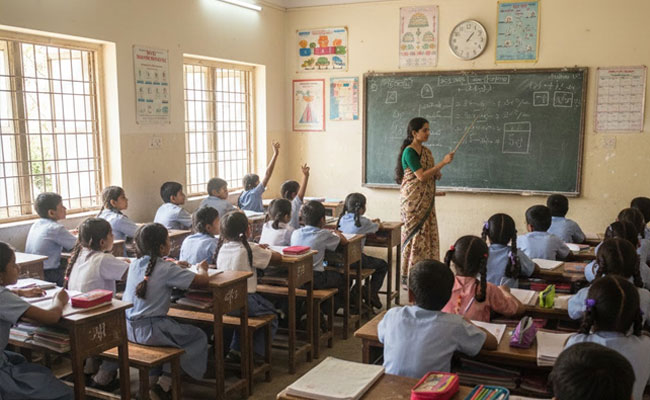
Bengaluru: The Maharashtra government has issued a notification to appoint 135 Kannada teachers in Kannada-medium schools located in border areas, following intervention by the Karnataka Border Area Development Authority (KBADA).
According to The New Indian Express, speaking at a press conference on Tuesday, KBADA president Somanna Bevinamarad said the authority had visited several Kannada and Urdu medium schools in Solapur and Sangli districts of Maharashtra.
“While communicating with the Kannada community and students there, we understood that Marathi-speaking teachers who did not know Kannada were appointed in government Kannada schools. This has created a barrier in communication between teachers and children,” TNIE quoted him as saying.
Subsequently, the authority wrote to the Maharashtra government and the education commissioner requesting that Marathi-speaking teachers should not be appointed to teach Kannada. After sustained follow-up through the Karnataka government, Maharashtra has now agreed to appoint Kannada teachers.
“They have made necessary changes in the Pavitra portal which is used to appoint teachers in schools in Maharashtra. In future, the appointment of teachers would be done as per the required medium of instruction,” Bevinamarad said.
He said that if Kannada teacher posts remain vacant, the Maharashtra government will advertise the positions instead of appointing Marathi or other language teachers to teach Kannada.
Let the Truth be known. If you read VB and like VB, please be a VB Supporter and Help us deliver the Truth to one and all.
Siddaramaiah, I will abide by Cong high command decision on leadership issue, says Shivakumar
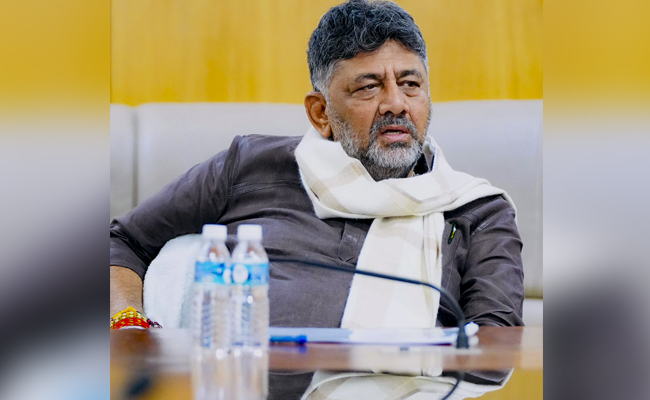
Bengaluru (PTI): Karnataka Deputy Chief Minister D K Shivakumar on Sunday said both he and Chief Minister Siddaramaiah will abide by any decision takeb by the Congress high command on the leadership issue in the state.
Speaking to reporters after returning from Delhi, the Congress state president said, he has full faith in the party leadership and that it would take an approapriate decision at the appropriate time.
The remarks comes amid speculations within the party and political circles about a possible leadership change and cabinet reshuffle after May 4, when the results for assembly elections in four states and one union territory, along with bypolls to two assembly segments in the Karnataka are announced.
"I will not speak about political issues before the media. I have already said that when the time comes you will get to know. So I will not tell you," Shivakumar said in response to a question on discussions with the Congress high command during his Delhi visit over the last couple of days.
He asserted that there are no issues within the party, and whatever has been already decided will take place accordingly.
Responding to a question on senior Minister Satish Jarkiholi's reported statement about internal differences, the Deputy CM said, "nothing like that, they (high command) will do what they have to do at the appropriate time."
"There are no issues, we have faith in our party, they will do what they have to," he added.
Asked about the issue of leadership change as the government is about to complete three years in office, Shivakumar said, "... I have never discussed this issue. The CM and I have both said that we will accept whatever and whenever the high command decides, and we will abide by it."
He declined to comment when asked whether any "good news" can be expected by his birthday on May 15.
The leadership tussle within the ruling party has intensified amid speculation about a possible change of chief minister after the Congress government completed the halfway mark of its five-year term on November 20, 2025. The speculation has been fuelled by the reported "power-sharing" arrangement between Siddaramaiah and Shivakumar at the time of government formation in 2023.
Responding to a question on the BJP's criticism against the Congress government over its decision on internal reservation for Scheduled Castes, alleging injustice to several communities and questioning its intent behind the revised quota formula, Shivakumar said the BJP could not do anything on internal reservation while in power, but the Congress has kept its promise.
"We have found a solution and tried to do justice to all sections among SCs. We have fulfilled the promise made and every one should go together," he said.
Shivakumar warned his party workers against erecting flex banners for his birthday on May 15.
"For May 15, I want to tell everyone that no one should put up flex banners or advertisements for my birthday. If flex are installed I will ensure that cases are registered by authorities against those responsible, whether they are party workers or followers....no one should put such things on roads, this is my personal request," he said, adding that he has asked commissioners of the city corporations to register cases and impose heavy fines.