Bengaluru: Metro fares to rise 5 pc from Feb 9; Shivakumar says decision by central govt committee
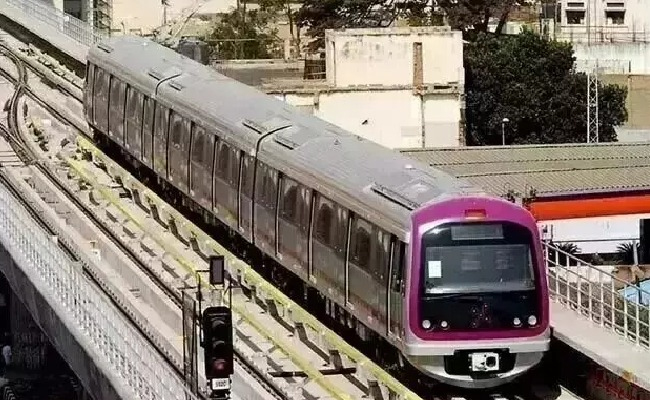
Bengaluru (PTI): The BMRCL on Thursday said that metro rail fares will be revised on a zone-by-zone basis starting February 9 as part of its Annual Automatic Fare Adjustment system.
Under the new structure, Namma Metro fares will rise by Re 1 to Rs 5 across 10 zones, with charges adjusted according to travel distances throughout the metro network.
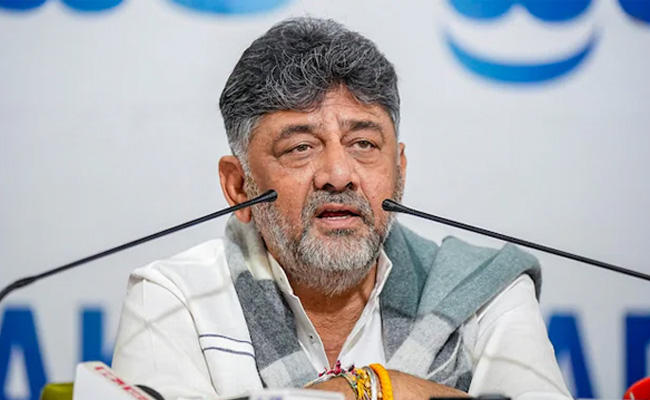
Deputy Chief Minister D K Shivakumar, also the minister in-charge of Bengaluru Development, claimed the matter has not been discussed with the state government or him.
Speaking to reporters, he said the fare decision is made by a central government-led committee and is not under the state's control.
"No file has come to me. They have their own team of central government officials who will decide. It hasn't come to my notice—I also saw it on TV," he said.
The BJP criticised the move, saying it would encourage people to use private vehicles in a city already notorious for traffic congestion.
"In a city like Bengaluru, the mass transport system should be encouraged. Instead of promoting it, the government is effecting a hike, which will not only be a burden on the common man but will also worsen the situation in the city," BJP state chief B Y Vijayendra told reporters.
Leader of Opposition R Ashoka posted on 'X', "After looting Kannadigas’ tax money and emptying the state treasury, the corrupt Congress government is now openly pickpocketing commuters. Honourable Siddaramaiah, Bengaluru metro fares are already among the highest in India. How much more will you pickpocket the public?"
He further charged, "The proposal to increase Metro fares and the fare hike itself are matters concerning the state, and the government must immediately stop this daylight robbery."
Karnataka Home Minister G Parameshwara slammed the opposition while justifying the metro fare hike.
"What else can the BJP do other than criticise us? They fail to acknowledge the extension of Metro services, which now exceed 100 km, with lakhs of people commuting daily," the minister said.
According to him, both the Centre and the state decide the Metro fare price; hence, the BJP also plays a role in the fare hike.
The BMRCL said that the revision is being implemented as per the First Fare Fixation Committee (FFC) constituted under the Metro Railways (Operation & Maintenance) Act, 2002.
In a release, the BMRCL said the FFC, while recommending the revised fare structure, had observed that "revision of fare after 7.5 years and optimisation of fare zones from 29 to 10 has resulted in an average increase of 51.55 per cent."
To avoid such steep increases in the future, the committee recommended "revising the fare annually using a transparent Annual Automatic Fare Revision Formula linked with O&M costs or 5 per cent per annum, whichever is lower, rounding off to the nearest rupee."
The BMRCL added that this mechanism allows for a small, predictable annual fare revision.
"In keeping with the recommendations of the FFC, which are binding on BMRCL, it is hereby notified that an Annual Automatic Fare Revision will be implemented with effect from February 9," the corporation said.
Explaining the basis for the revision, BMRCL said, "Based on the audited financial data for the financial year 2024-25 compared with the base data of 2023-24, the formula-based index indicates a cost increase of 10.20 per cent; however, the fare revision has been restricted to only 5 per cent, in line with the FFC stipulation."
The corporation emphasised that commuter concessions would continue, including all existing commuter-friendly discounts for smart-card/NCMC users, such as a 5 per cent discount during peak hours, a 10 per cent discount during non-peak hours, and a 10 per cent discount on Sundays and three designated national holidays.
It added that the annual 5 per cent increase will also apply to Tourist Cards and Group Tickets.
Highlighting the rationale behind the decision, BMRCL said the annual revision is intended to ensure financial sustainability and service reliability while avoiding the need for large and sudden fare hikes in the future.
It further noted that this approach allows fares to increase gradually in line with inflation and operating costs, thereby protecting commuters from sharp, infrequent hikes.
Let the Truth be known. If you read VB and like VB, please be a VB Supporter and Help us deliver the Truth to one and all.
Court can reject anticipatory bail but cannot direct accused to surrender: SC
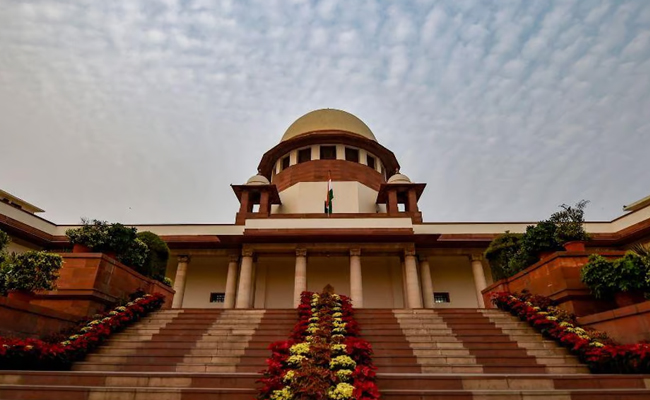
New Delhi (PTI): A court can reject anticipatory bail of an accused but it has no jurisdiction to direct him to surrender before the trial court, the Supreme Court has said.
A bench of Justices J B Pardiwala and Ujjal Bhuyan made the observation while hearing a plea filed by a man accused of cheating and forgery.
"If the court wants to reject the anticipatory bail, it may do so, but the court has no jurisdiction to say that the petitioner should now surrender," the bench said.
The Jharkhand High Court had rejected anticipatory bail plea of the accused and asked him to surrender and seek regular bail.
In this case, a complaint had been filed before a magistrate alleging offences under Sections 323 (voluntarily causing hurt), 420 (cheating), 467 (forgery of valuable security), 468 (forgery for purpose of cheating), 471 (using forged document) and 120B read with 34 of the IPC, in connection with a land dispute.
The high court had dismissed the second anticipatory bail application of the accused on the ground that no new circumstances were shown.
It had relied on its earlier order rejecting his first anticipatory bail plea, in which the court directed the petitioner to surrender before the trial court and seek regular bail in terms of the decision in Satender Kumar Antil v. CBI.
The top court said such a direction was wholly without jurisdiction and said that if a court chooses to reject anticipatory bail, it may do so, but it cannot compel the accused to surrender.