Bengaluru Metro may soon allow passengers to carry sealed liquor bottles
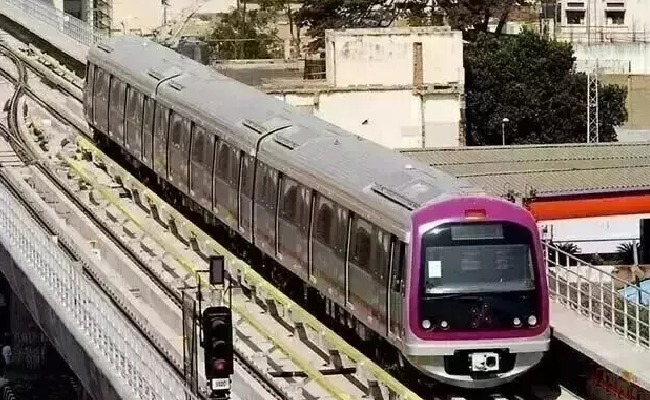
Bengaluru: Passengers travelling on Namma Metro may soon be permitted to carry sealed liquor bottles, if ongoing discussions within the Bangalore Metro Rail Corporation Limited (BMRCL) result in a formal policy change, The New Indian Express reported on Wednesday.
Sources in BMRCL said the proposal has been discussed on multiple occasions and was taken up again at a recent meeting. While there is in-principle approval for the move, officials indicated that its implementation may take some time.
“We will follow the Delhi model. Currently, carrying liquor is allowed on the airport line of the Delhi Metro. Once Namma Metro is connected to the airport, which is expected in about two years, liquor will be allowed,” a source said.
Officials clarified that no special licence or separate government approval is required to allow passengers to carry sealed liquor bottles. Once cleared, the rule will be incorporated into the Metro’s operational guidelines.
“At present, it is not allowed, and there is no specific reason for it. People are permitted to travel on Metro trains even after consuming alcohol, as it is a public transport system. However, consumption must be within permissible limits,” an official said.
The official did not specify what constitutes permissible limits but but stressed that passengers should not misbehave or cause discomfort to others.
At present, Namma Metro stations display boards listing 58 prohibited items under eight categories. These including sharp objects, firearms, tools, explosive materials, flammable items, disabling chemicals, offensive items and others. Liquor is listed under flammable items as alcohols and spirits.
“We have received several requests and feedback over the years questioning why liquor is prohibited on a public transport system. Some have pointed out that while eating and drinking are not allowed inside trains, carrying sealed bottles like any other luggage should not pose a problem. There have also been instances where security staff at some stations have allowed passengers to carry bottles,” the official said.
Confirming that discussions are underway, BMRCL Director (RES and O&M) Sumit Bhatnagar reportedly said deliberations on allowing sealed liquor bottles inside Metro trains are ongoing.
Let the Truth be known. If you read VB and like VB, please be a VB Supporter and Help us deliver the Truth to one and all.
Air India flight from Mumbai makes 'priority' landing in Bhopal after snag; return leg cancelled
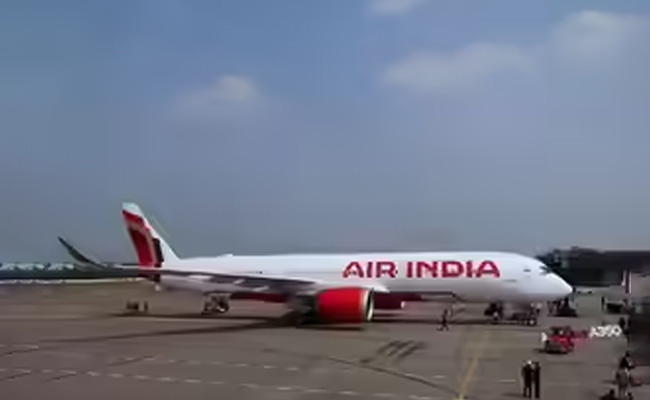
Bhopal (PTI): A Bhopal-bound Air India flight from Mumbai carrying 175 persons on board made a “priority” landing here on Sunday due to a snag, an airport official said.
The aircraft landed safely at Bhopal airport at 3.20 pm, he said.
Consequently, the return leg of the flight from Bhopal to Mumbai, with 178 passengers booked, was cancelled, the official said.
AAI-run Bhopal airport said in a statement that Air India flight AI 633 “reported a technical issue to Air Traffic Control (ATC) during the flight from Mumbai to Bhopal”.
Immediately, all prescribed safety protocols were activated, and seamless coordination was ensured between ATC, airline ground operations, CISF and airpiort fire and rescue team of Bhopal airport, it said in a statement.
The flight, carrying 175 persons, including 166 passengers and nine crew members, landed safely at Bhopal airport at 3.20 pm, the airport operator said.
All necessary assistance and support were extended by the airport and airline teams as per the requirements of the flight crew, it said.
“Due to the technical issue, the aircraft was declared unserviceable, and as a precautionary measure, the return flight AI-634 (Bhopal to Mumbai) was cancelled by the airline to facilitate detailed inspection and rectification,” the statement said.