Bengaluru: Special court grants bail to MLA Byrathi Basavaraj in murder case
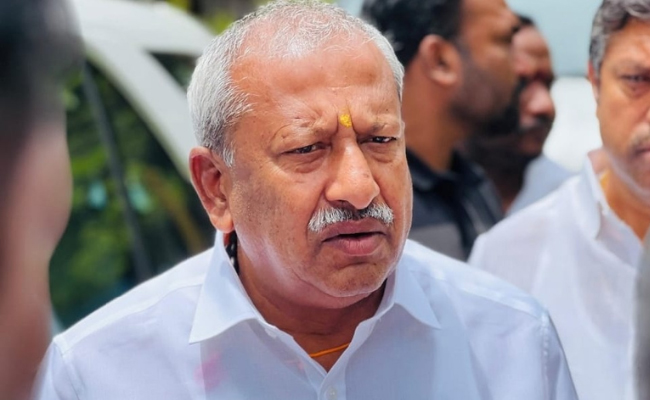
Bengaluru: A special court in Bengaluru on Thursday granted bail to BJP MLA Byrathi Basavaraj in connection with the murder of Shivaprakash alias Bikla Shiva, a realtor and rowdy-sheeter who was killed on July 15, 2025, The Hindu reported.
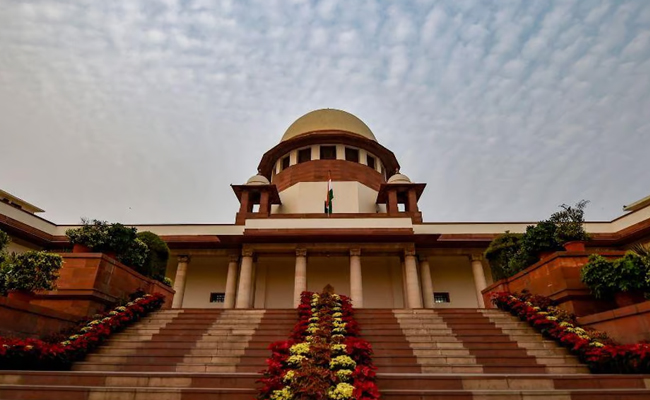
Santhosh Gajanan Bhat, judge of the special court of sessions for criminal cases against former and present MLAs and MPs, passed the order while allowing Basavaraj’s bail petition.
ALSO READ: Karnataka caste survey report likely to be submitted by April-end, says Minister Tangadagi
Basavaraj was arrested on February 12, 2026, and later remanded to judicial custody after undergoing a week-long interrogation in police custody. In the case, he has been arraigned as accused number-5 among the 20 accused.
While granting bail, the court directed the MLA not to threaten or tamper with prosecution witnesses and and not to directly or indirectly make an attempt to influence any of the witness.
Among the other conditions are that he has to appear before the investigating officer as and when required and has to cooperate for the probe, and not leave the court’s jurisdiction without prior written permission.
Let the Truth be known. If you read VB and like VB, please be a VB Supporter and Help us deliver the Truth to one and all.
Correspondents' dinner firing: World leaders say political violence has no place in democracy
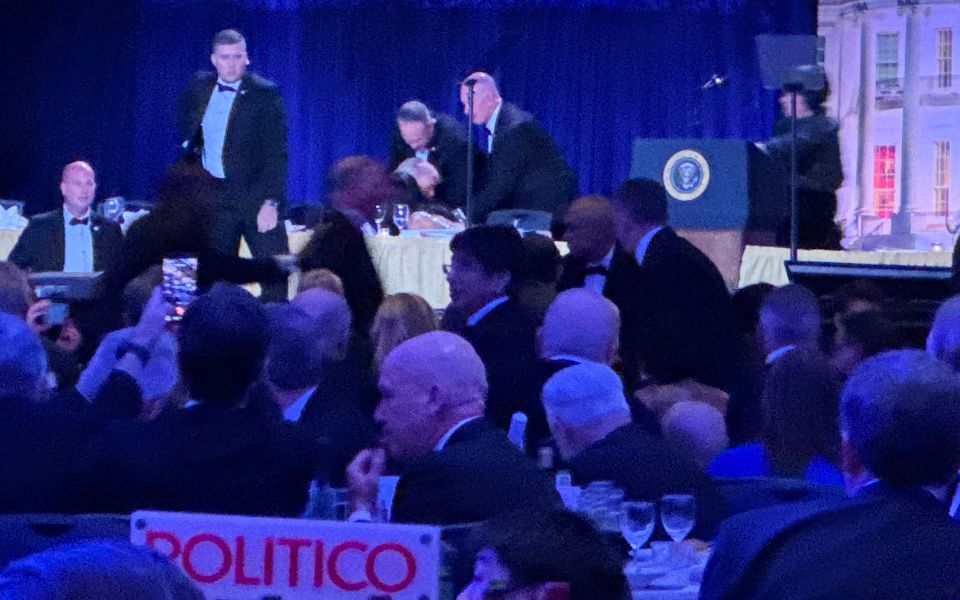
Washington (PTI): World leaders expressed relief that US President Donald Trump, First Lady Melania and other guests were unharmed after a shooting incident at the White House Correspondents' dinner here on Saturday night and asserted that political violence has no place in a democracy.
Reacting to the incident, Prime Minister Narendra Modi said he was relieved that President Trump, First Lady Melania and Vice President J D Vance were safe and unharmed after a security incident at the White House Correspondents' dinner in Washington.
Modi said violence has no place in democracy and must be unequivocally condemned.
"Relieved to learn that President Trump, the First Lady and Vice President are safe and unharmed following the recent security incident at a Washington DC hotel. I extend my best wishes for their continued safety and well-being. Violence has no place in a democracy and must be unequivocally condemned," Modi said in a post on X.
Canadian Prime Minister Mark Carney, who has had frequent run-ins with Trump, described the shooting incident at the Washington Hilton hotel as a “disturbing event”.
“I am relieved that the President, the First Lady, and all guests are safe following reports of gunfire at the White House correspondents’ dinner in Washington tonight. Political violence has no place in any democracy, and my thoughts are with all those who have been shaken by this disturbing event,” Carney said in a post on X.
President of the Republic of Korea, Lee Jae Myung asserted that political violence “can never be justified under any circumstances.”
“The Government of the Republic of Korea firmly opposes all forms of violence and extremism that erode the values of democracy and the rule of law,” he said in a social media post.
Prime Minister of Japan Sanae Takaichi said, “Violence must never be tolerated anywhere in the world”
“I am relieved to hear that President Trump is safe following the terrifying gunfire. Violence must never be tolerated anywhere in the world,” she posted on social media.
Israeli President Benjamin Netanyahu called the incident “an attack on all the democracies.”
"This wasn't just an attack on Donald Trump. This was an attack on a candidate for the presidency of the United States. This was an attack on America. It was an attack on democracy, it was an attack on all the democracies,” he posted on social media.
Mexican President Claudia Sheinbaum said it was “good that President Trump and his wife are safe following the recent events”.
“We send them our respect. Violence must never be the way,” she said.
Australian Prime Minister Anthony Albanese said he was pleased to hear all attendees were safe. “We applaud the work of the Secret Service and law enforcement agencies for their swift action,” he said in a statement.
Delcy Rodriguez, the acting President of Venezuela following the capture of Nicolas Maduro by US forces, condemned the attack against Trump.
"We extend our best wishes to them and to all attendees of the Correspondent’s dinner. Violence is never an option for those who uphold the values of peace," she wrote on X.
Pakistani Prime Minister Shehbaz Sharif also took to social media to condemn the incident, stating he was "deeply shocked" to hear the news.
"Relieved to know that President Trump, the First Lady, and other attendees are safe," Sharif said.
Trump has survived two assassination attempts over the past two years – first at a presidential election campaign rally in Butler, Pennsylvania, on July 13, 2024, and later in Palm Beach, Florida, on September 15, 2024.