Bengaluru to host inaugural edition of GITEX Ai India 2027
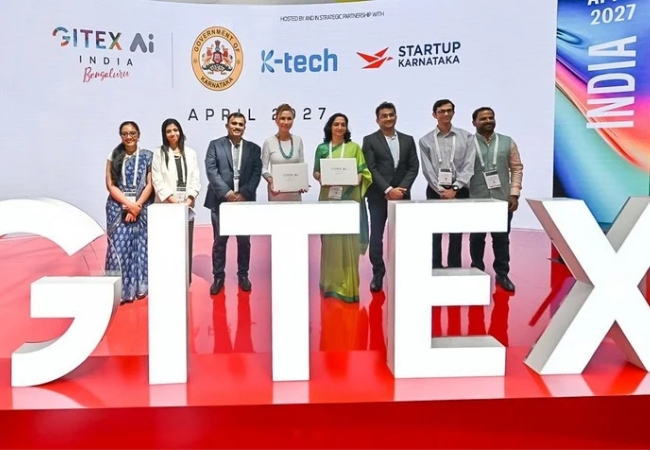
Bengaluru (PTI): GITEX GLOBAL, the world's largest technology and AI events network, will make its India debut with GITEX Ai India, to be held in April 2027 in Bengaluru, officials said on Thursday.
The event will be organised by Dubai World Trade Centre (DWTC) and KAOUN International in strategic partnership with Karnataka's Department of Electronics, Information Technology and Biotechnology, they said.
According to an official statement, the announcement was made at GITEX GLOBAL 2025 in Dubai, where the Indian tech community has consistently been one of the largest participating delegations, reflecting the strong and long-standing ties between Indian innovators and the GITEX ecosystem.
Recognised globally as India's technology capital, Karnataka contributes 42 per cent of India's software exports, houses over 50 per cent of the country's AI and deep-tech talent and is home to the largest concentration of unicorns and GCCs (Global Capacity Centers) in the nation, it said.
Bengaluru's thriving startup ecosystem, robust R&D infrastructure and strong academic-industry linkages make it the natural choice to host GITEX's first India edition, it added.
Speaking on the development, Information Minister Priyank Kharge said: "Welcoming GITEX Ai India to Bengaluru is a proud moment for us. Discussions around this began during GITEX Africa earlier this year, and I'm glad our Department and the GITEX team were able to make it possible."
"With our deep talent base, strong research ecosystem and global connectivity, Karnataka is the natural anchor for the inaugural GITEX Ai India 2027. We look forward to showcasing the best of our innovation to the world," he added.
Let the Truth be known. If you read VB and like VB, please be a VB Supporter and Help us deliver the Truth to one and all.
Two arrested for allegedly sexually assaulting woman at knifepoint in Kochi

Kochi (PTI): Two persons have been arrested after a three-member gang allegedly sexually assaulted a woman at knifepoint near Ernakulam Junction Railway station, officials said on Friday.
The arrested accused were identified as Danish (26), a native of Varkala in Thiruvananthapuram district, and Rahul (39), a native of Paravoor in Kollam district.
Police officials said they were searching for the prime accused, Sanjay, a native of Aroor in Alappuzha district.
According to police, the incident occurred on the night of May 5 when the victim was chatting with her friend near a closed hotel near Ernakulam Junction Railway station.
Officials said the accused approached them, attacked the victim’s friend and then allegedly threatened the woman with a knife before sexually assaulting her.
Police said the accused also allegedly disrobed the victim during the attack.
However, the woman managed to escape from the spot and approached a nearby shop for help.
Police were informed immediately and shifted the victim to the police station.
Officials said the accused were heavily drunk at the time of the incident and went into hiding soon after the attack.
Police registered a case on May 6 under charges including rape, disrobing a woman, criminal intimidation and robbery.
The two accused were later arrested in the city, while efforts are continuing to trace Sanjay, police said.
The accused were produced before a court and remanded to judicial custody.