Bengaluru woman kills autistic daughter, surrenders to police

Bengaluru, Jun 15: A 35-year-old woman allegedly strangled her three and half year-old autistic daughter to death and surrendered before the police, officials said on Saturday. The woman had twin girls, both of whom are autistic. While one of them is mildly autistic, the other one has severe autism, they said.
The accused is said to have killed her daughter with severe autism symptoms as she was concerned about her future.
According to police, the woman had on Thursday strangled her daughter to death. After killing her, she turned herself in at the Subramanya Nagar police station here.
ALSO READ: Chitradurga: SUV traveling from B’luru to Goa rams into truck after tyre burst; 4 dead, 4 injured
"During questioning, the woman said that she was worried as to how her daughter would lead her life owing to her condition and hence decided to kill her. She also claimed that she was in depression for the past few months and out of frustration, she killed her daughter," a senior police officer said.
A case of murder was registered and the woman was arrested and sent to judicial custody.
After post-mortem, the body was handed over to relatives, police said, adding the woman's husband works abroad.
Let the Truth be known. If you read VB and like VB, please be a VB Supporter and Help us deliver the Truth to one and all.
Karnataka electoral roll SIR exercise to begin from June 20
Bengaluru (PTI): Karnataka will begin SIR of electoral rolls from June 20 as part of a nationwide exercise covering 16 states and three Union territories, CEO Anbu Kumar said on Friday.
The drive will cover more than 5.55 crore electors in the state, he said.
As per the schedule notified by the Election Commission (EC), preparation, training and printing activities will be carried out from June 20 to June 29 and Booth Level Officers (BLOs) will conduct house-to-house visits from June 30 to July 29.
The rationalisation of polling stations is scheduled to be completed by July 29. The draft electoral roll will be published on August 5, following which claims and objections can be filed between August 5 and September 4.
The notice phase and disposal of claims and objections will continue from August 5 to October 3, and the final electoral roll will be published on October 7, it said.
ALSO READ: Sindhu out of Thailand Open, loses to Yamaguchi in quarterfinals
Addressing a press conference here, CEO Kumar said that in Karnataka, the Office of the Chief Electoral Officer is fully prepared to proceed with the SIR of electoral rolls.
As part of this exercise, we have successfully mapped 86.46 per cent of our voters, he said.
"The primary objective of this entire exercise is to ensure that every eligible voter is enrolled, while simultaneously ensuring that no ineligible individuals are included in the voter list. Therefore, I seek the support and cooperation of all the voters of Karnataka, all political parties, and our friends from the media," he added.
According to the statement issued by the CEO's office, 59,050 BLOs will be involved in the SIR of the electoral roll in the state. The exercise will cover approximately 5,55,74,064 electors in the state as of May 12.
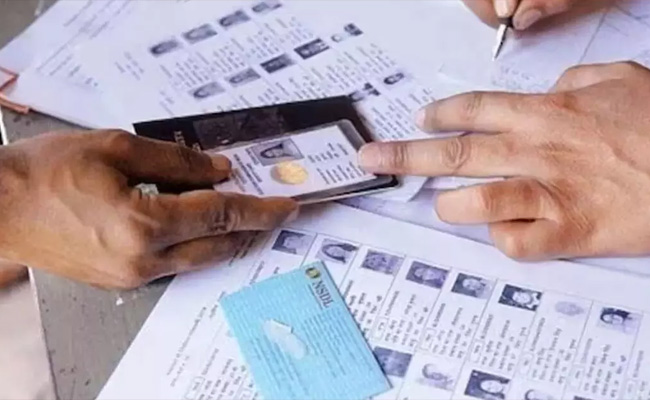
The SIR is a participative and transparent exercise involving electors, political parties and the election machinery. During the revision process, BLOs will undertake house-to-house visits for the distribution and collection of enumeration forms, the statement said.
Stating that there are currently 25,284 Booth Level Agents (BLAs) appointed by recognised political parties, the CEO urged all recognised political parties to appoint BLAs for every polling station to ensure active participation and transparency in the revision process.
Electors have been requested to cooperate with BLOs during the house-to-house distribution and collection of enumeration forms.
Further details regarding the revision process, forms and schedule will be made available on the official websites of the District Election Officers, the Chief Electoral Officer, Karnataka, and the Election Commission of India, the statement said.