
Bengaluru woman murder: Husband "main suspect," attempted suicide, say police
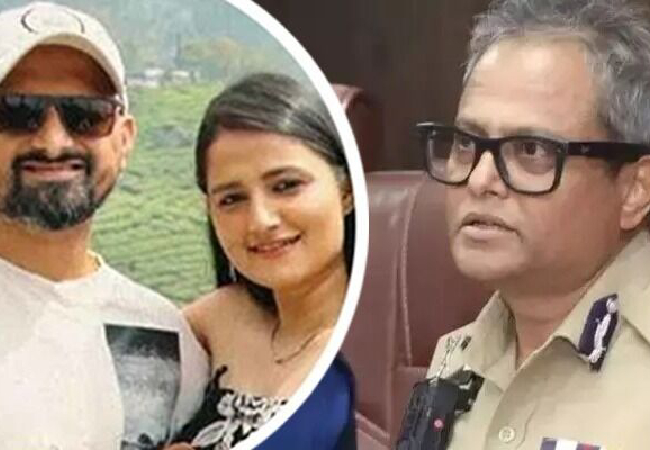
Bengaluru (PTI): The husband of a 32 year-old woman, whose body was found in a suitcase in the city, seems to be the main suspect in the case and was now undergoing treatment in Pune for alleged suicide attempt, police said on Friday.
The body of Gauri Khedekar was found on Thursday with severe injury marks and stuffed inside a suitcase here. She is a native of Maharashtra.
Her husband Rakesh Rajendera Khedekar fled to Pune after the crime where he allegedly attempted suicide by consuming poison, police said.
He has been detained in connection with the murder and is currently undergoing treatment at a hospital in the Maharashtra city.
Addressing a press conference here, City Police Commissioner B Dayananda said the police have registered a case in this regard and it is seen that the woman's husband only is the main suspect. He had flown out of the city earlier.
"He was found admitted in a hospital in Pune. Apparently, it is said he had consumed poison in a suicide attempt. He is in the hospital and our team has already contacted Pune police," he said.
According to him, a team of Bengaluru Police have gone to Pune, and as and when he is discharged from the hospital, he will be brought here for interrogation.
Marital dispute is said to be the reason behind the murder.
"Relatives of the deceased have come to Bengaluru and further details will be sought from them," he added.
Earlier, the police control room was alerted by the house owner at around 5.30 pm on Thursday.
The woman and her husband, who works as a project manager in an IT firm here, moved to Bengaluru last month and were living in a flat at Doddakammanahalli village in Hulimayu police station limits.
The victim's body was found dumped in the suitcase inside the bathroom of the flat. There were stab injuries on her body.
The exact motive behind the murder will be ascertained after the accused is brought here and interrogated, a senior police official said.
Responding to reports that the man had informed his wife's parents about killing her, the officer said, "the matter is under investigation and these details needs to be verified."
The woman had a Bachelors degree in Mass Media and her husband was working from home, police said.
Forensic experts visited the spot and collected samples, police said.
Let the Truth be known. If you read VB and like VB, please be a VB Supporter and Help us deliver the Truth to one and all.
Karnataka issues nutrition advisory for govt events; recommends millets, healthier options
_vb_61.jpeg)
Bengaluru (PTI): The Karnataka government on Monday issued a nutrition advisory recommending healthier food and beverage options at meetings, functions, and other official gatherings held in the state.
The advisory has been issued by the Department of Karnataka Health and Family Welfare Services to promote healthy dietary and nutritional habits among officials and staff, noting that food, refreshments and beverages served in government offices and official programmes are "often not aligned with nutrition standards."
The advisory recommends serving snacks such as millet-based, low-fat and low-sugar foods, fresh fruits, vegetable salads, sprouts, roasted nuts and seeds during in-house office meetings and breaks.
Beverages such as green tea, low-fat buttermilk, and locally filtered or boiled water served in glass bottles or steel flasks have also been suggested.
According to the advisory, for larger government events, conferences and exhibitions, departments have been advised to include at least one millet-based item during snacks and a minimum of two millet dishes in meals, along with local cuisine and at least one regional recipe.
It also recommends the use of brown rice instead of white rice, freshly prepared vegetable salads, and fresh fruits or low-sugar fruit juices.
If non-vegetarian food is served, it should consist of well-cooked lean or white meat, the advisory stated.
In eateries operating within government office campuses, the department has recommended millet-based foods, fresh vegetable salads, boiled pulses such as horse gram or chickpeas, and low-fat beverages.
It suggests serving food using reusable metal plates and glasses.
The advisory also recommends avoiding microwave-heated food, industrially processed food, fried snacks, high-fat or heavily spiced dishes, carbonated drinks, high-sugar fruit juices, and alcoholic beverages.
It further discourages serving milk-based tea or coffee and plastic-bottled water during official events.
“Overall, hygiene and cleanliness should be maintained while serving food and water. Local cottage industries, self-help groups, prison kitchens, nutri-gardens and others should be preferred for placing food and beverage orders,” the advisory added.
_vb_54.jpeg)
_vb_07.jpeg)
_vb_34.jpeg)