Bidar: Air balloon for weather study sent from TIFR in Hyderabad lands in Humnabad

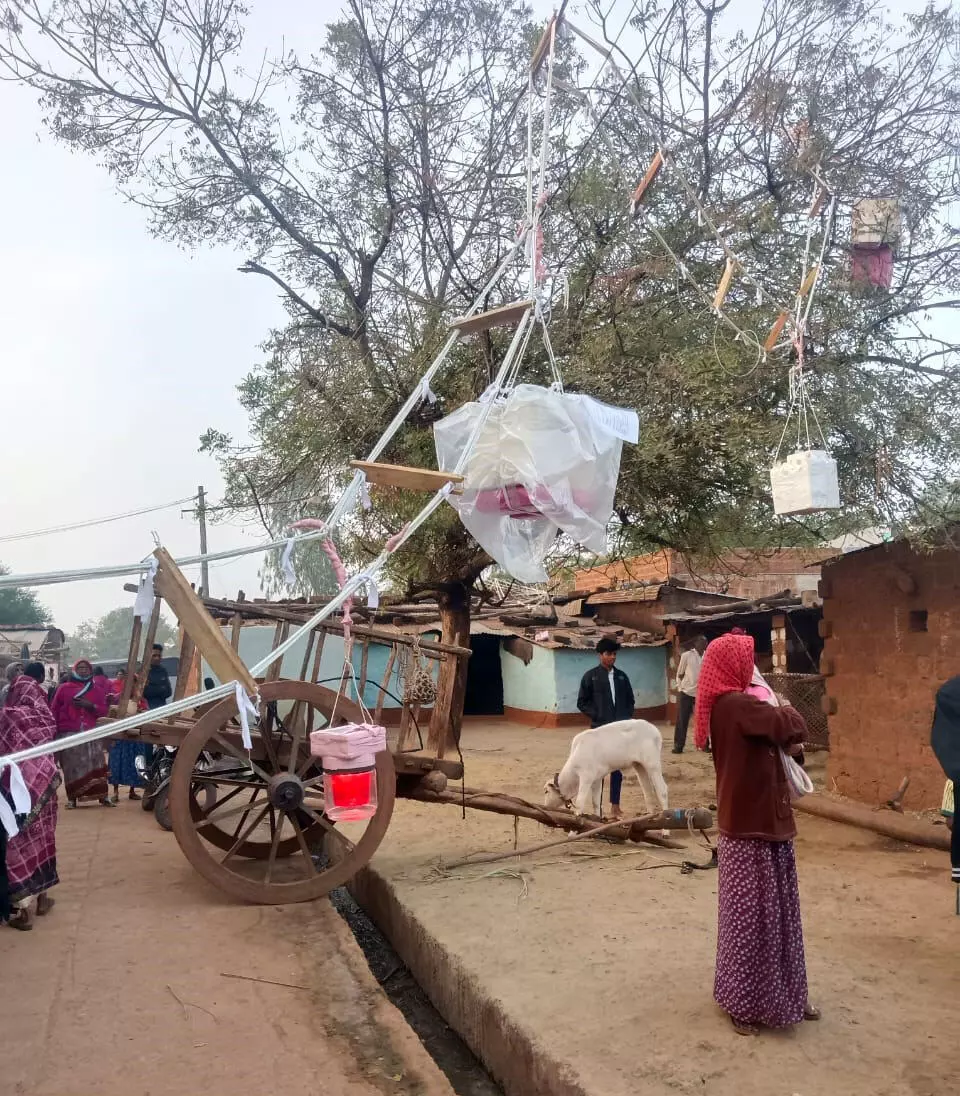
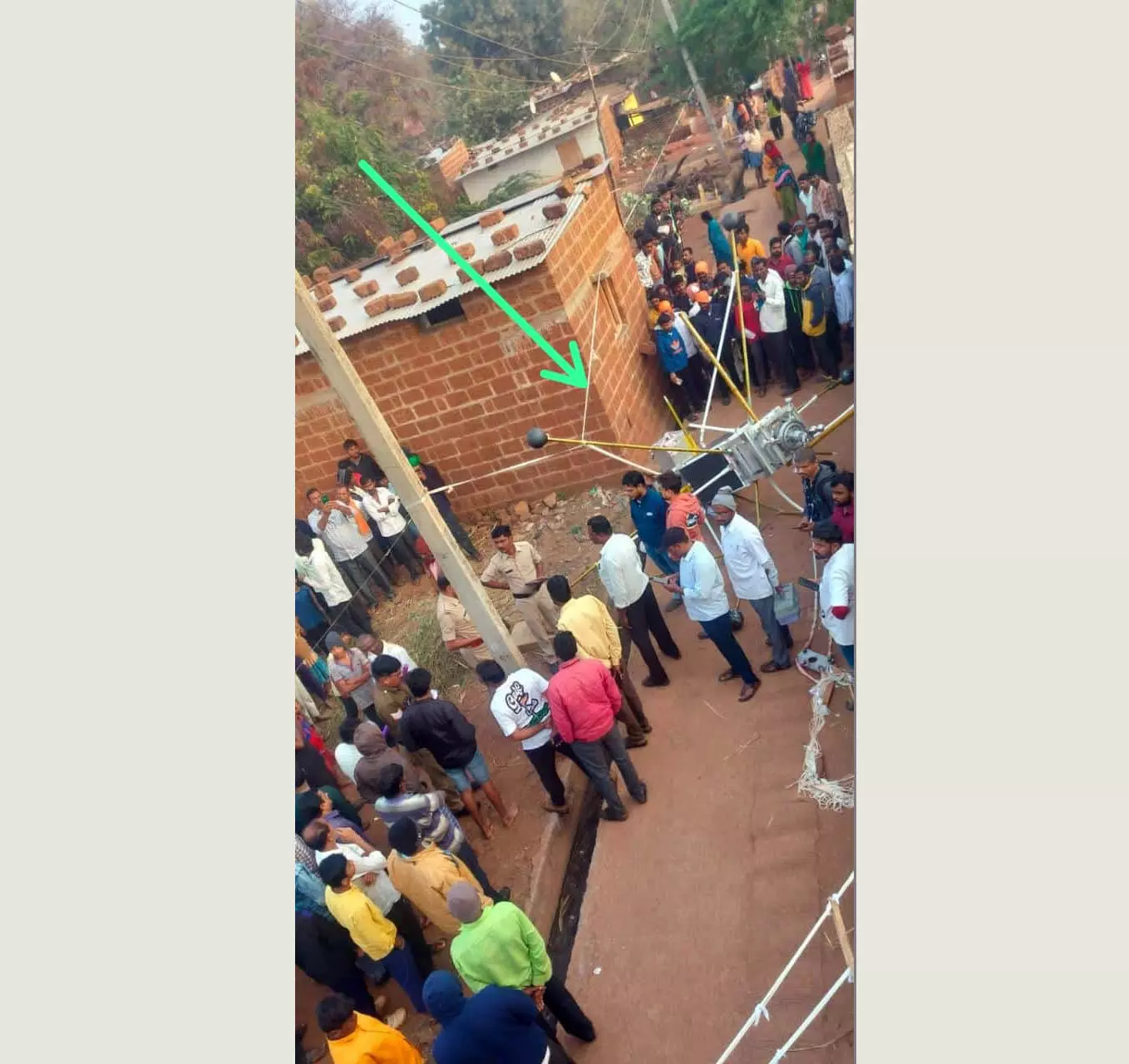
Bidar: The residents of Jalsangi village in Humnabad taluk had an unusual and unexpected ‘visitor’ on Saturday morning, with the air balloon launched from Hyderabad to study weather conditions landing in the village.
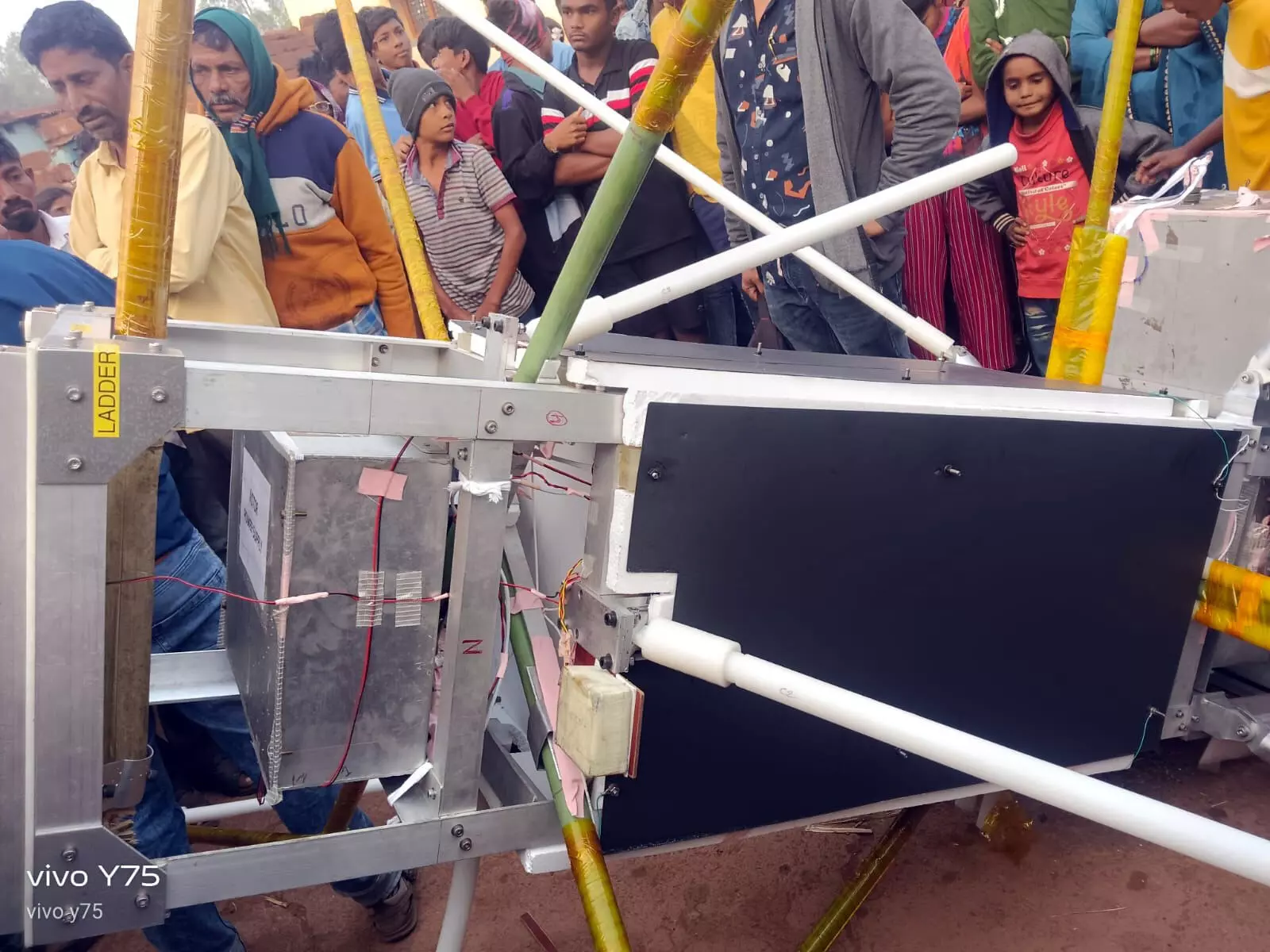
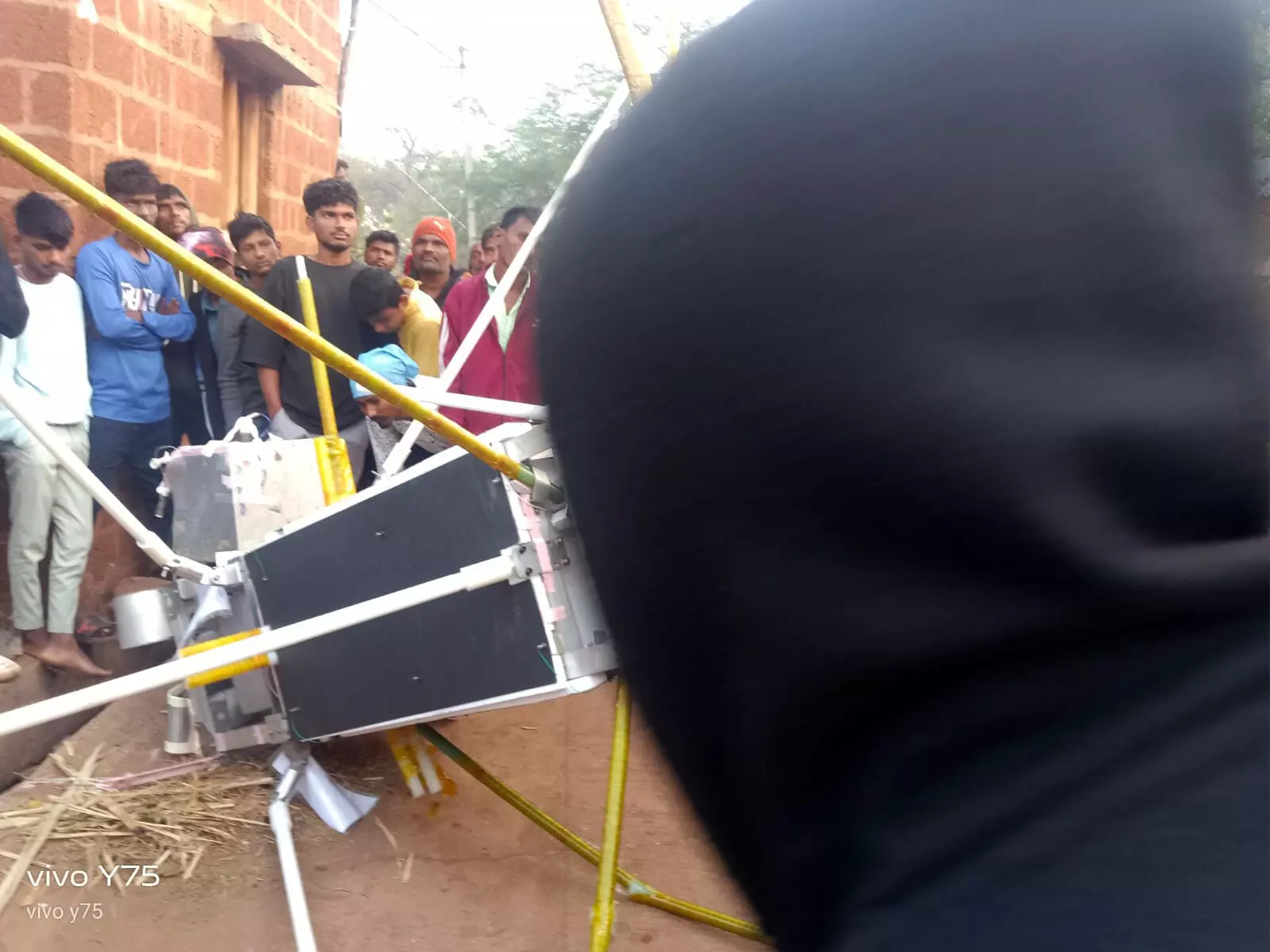
The air balloon had been launched from the Tata Institute of Fundamental Research (TIFR), Hyderabad, late Friday night, carrying technical equipment. The residents of Jalsangi, however, were taken aback on seeing the air balloon that landed in their village at around 6 am on Saturday.
The authorities from the TIFR centre had followed the air balloon from Hyderabad and reached Jalsangi village. The local police officers also visited the site where the air balloon had landed.
The villagers were provided necessary information about the balloon to clear doubts and fear regarding their safety due to the strange equipment that landed in their village.
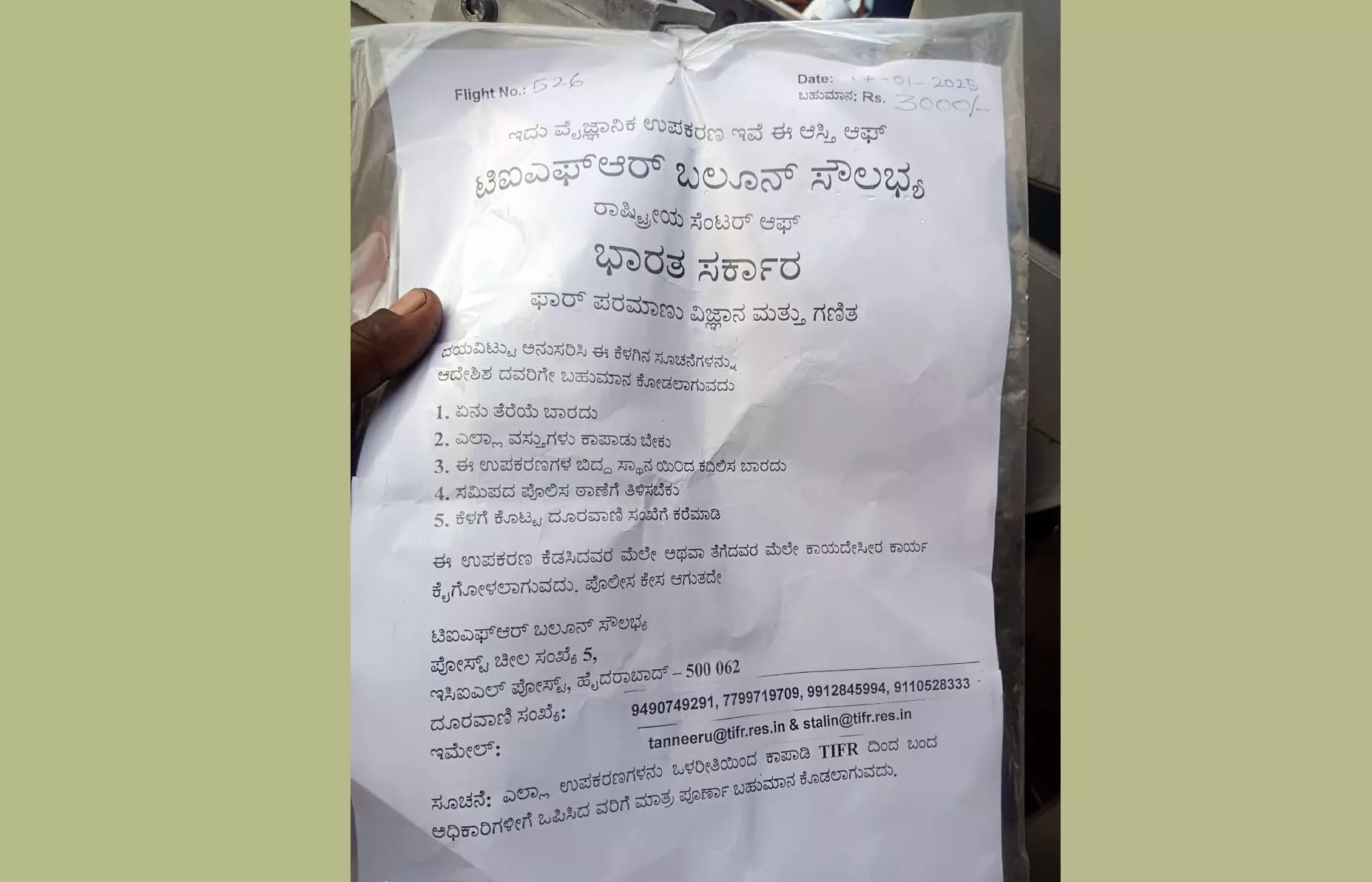
The balloon, which is a part of the research satellite payload of the Central government, reportedly had a weather study period of six to seven hours, before its landing. It carried a note stating in three languages, English, Kannada and Marathi, that the balloon had been launched for weather condition research and asking people who found it wherever it had landed not to damage it. The note also provided phone numbers for people who found the balloon to inform the centre of the landing of the air balloon.
The concerned officers have said that such air balloons are launched twice a year to study the weather conditions in the area.
Let the Truth be known. If you read VB and like VB, please be a VB Supporter and Help us deliver the Truth to one and all.
K’taka bypolls: Cong accepts Minority dept chief’s resignation amid claims of ‘internal conspiracy’
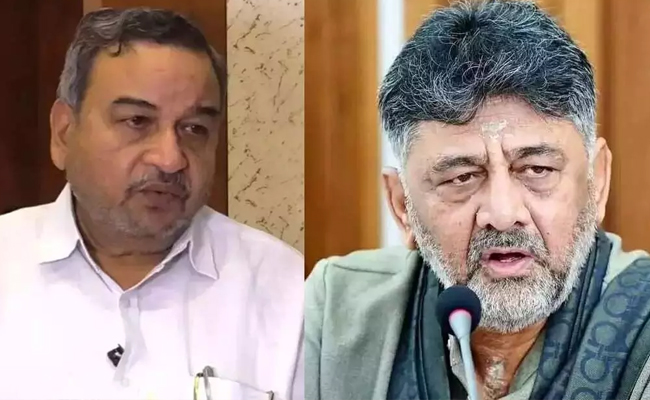
Bengaluru (PTI): Karnataka Congress president D K Shivakumar on Sunday accepted the resignation of party Minority Department chairman K Abdul Jabbar and dissolved the committees constituted under him.
Jabbar announced his resignation on Saturday, a day after a group of Muslim leaders accused members of their own party of “conspiring” to defeat the official candidate in Davanagere South.
In his letter to the party, Jabbar said minority voters and office-bearers are the backbone of the Congress and deserve better.
Later, speaking to reporters, he expressed shock at the party office being used by some minority community leaders as a platform to attack senior leaders from the same community.
Jabbar, an MLC, was an aspirant for the Congress ticket from the Davanagere South Assembly segment.
“K Abdul Jabbar has tendered his resignation from the post of chairman, KPCC Minority Department. The resignation has been accepted, and he stands relieved of the post with immediate effect. Further, the KPCC Minority Department committee stands dissolved with immediate effect,” Shivakumar said in a statement.
A rift surfaced within the Karnataka Congress on Friday, a day after bypolls to two Assembly constituencies, as a group of Muslim leaders alleged an “internal conspiracy” by some senior party leaders to defeat the official candidate in Davanagere South, where the minority community has a significant presence.
They said the party had named Samarth Mallikarjun as the candidate after considering all factors and taking Muslim leaders into confidence. Despite this, a campaign—allegedly involving some within the party—projected the Congress as having “betrayed” minorities by denying them the ticket.
Chief Whip in the Legislative Council Saleem Ahmed, MLAs Rizwan Arshad and Yasir Ahmed Khan Pathan, MLC Bilkis Bano and other leaders addressed a joint press conference on Friday, alleging an “internal conspiracy”.
Though the leaders did not name anyone, party sources said their remarks were directed at State Housing Minister B Z Zameer Ahmed Khan, Jabbar, and MLC and Political Secretary to the Chief Minister Naseer Ahmed.
Khan, who had openly demanded the Davanagere South ticket for a Muslim candidate, initially stayed away from campaigning in the constituency, citing commitments related to the Kerala polls. However, he later addressed a press meet with Samarth’s father and Minister S S Mallikarjun at the request of Chief Minister Siddaramaiah.
Jabbar, too, had not actively participated in campaigning, despite hailing from Davanagere.
Meanwhile, MLA Arshad said on Sunday that the party leadership was aware of those who allegedly tried to divide Congress votes and help the BJP. “But, thankfully, none of this has had any impact, and the Congress candidate will win,” he said.
He also alleged that Muslims lost the Davanagere South ticket because some senior minority leaders demanded it exclusively for Jabbar, rather than for any other eligible candidate from the community, despite Jabbar not being acceptable to all.
“Some leaders in the Congress think they are the only voice of the minority community and that there is no one else,” said Arshad, who represents the Shivajinagar constituency in Bengaluru.
Bypolls for Davanagere South and Bagalkot were held on Thursday. The elections were necessitated following the deaths of sitting MLAs Shamanur Shivashankarappa and H Y Meti, respectively. Samarth is the grandson of Shivashankarappa.
Muslim disgruntlement appears to be a concern for the Congress in Davanagere South. With 14 of the 25 candidates in the fray belonging to the community, the party fears a split in votes that could benefit the BJP.
Given its significant presence in the constituency, the Muslim community had strongly demanded the Congress ticket. Some party factions had opposed giving it to the Shamanur family.
Although the Congress persuaded rebel candidate Sadiq Pailwan to withdraw, he remained in the fray as the move came after the deadline for withdrawal of nominations.