Bidar police bust inter-state ATM robbery gang that stole Rs 1.58 crore from three states
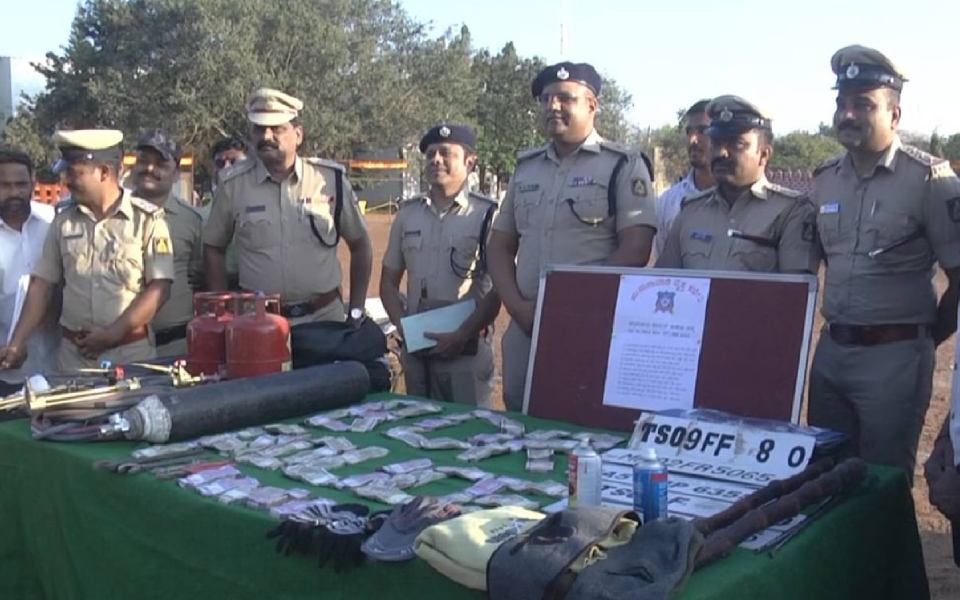
Bengaluru: An inter-state robber gang from Mewat in Haryana which had looted 12 ATMs in Karnataka, Maharashtra and Telangana was busted with the arrest of three members, police said on Wednesday.
The Mewati gang had stolen Rs 1.58 crore cash from various automated teller machines (ATMs), police said.
Those arrested have been identified as Shahid Kamaal Khan (45) of Navali in Nuh, Alim Akbar Khan (26) of Bhango in Nuh and Ilyas Abdul Rehman (45) of Mathepur in Palwal, Haryana.
These people would move around in a car and break ATMs using gas cutters and machine tools including spanners. A team comprising police personnel from Telangana, Karnataka and Maharashtra is being sent to Haryana to arrest the four absconding people, Bidar Superintendent of Police Chennabasavanna Langoti told reporters.
''We have produced the arrested persons in court and taken them into police custody. Those who harboured them have also been booked as accused in this case,'' Langoti said.
ALSO READ: College student killed after bull hits him during race in Shivamogga
According to him, the criminals would flee to Osmanabad (Dharashiv) district on the Karnataka-Maharashtra border after committing the crime, where they would meet in a shed on the outskirts and hatch their next plan.
''We have recovered Rs 9.5 lakh from them but the total loot is Rs 1.58 crore. I have spoken to the SPs of Osmanabad in Maharashtra and Ranga Reddy district in Telangana. A special police team of the three districts will be sent to Haryana to arrest the absconding accused and recover money from them,'' the SP said.
Let the Truth be known. If you read VB and like VB, please be a VB Supporter and Help us deliver the Truth to one and all.
Thunderstorm hits Lucknow, IMD issues red alert across multiple UP districts

Lucknow: Shortly after the India Meteorological Department issued a red alert warning of severe weather conditions in the region, a sudden thunderstorm hit Lucknow and adjoining districts on Monday morning.
The Indian Express reported that the skies turned dark around 8:45 am as strong winds lashed parts of the city. Incidents of tree falls were reported from several locations, disrupting traffic and normal movement.
The weather department said thunderstorms accompanied by lightning, hail and gusty winds of 40 to 60 kmph are likely to continue over the next three hours across several districts.
A red alert has been issued for districts including Unnao, Barabanki, Hardoi, Sitapur, Bahraich, Gonda, Shravasti and Lakhimpur Kheri, where moderate thunderstorms with hail and strong winds may damage trees, power lines and temporary structures.
An orange alert is in place for Rae Bareli, Amethi, Kanpur Nagar, Ayodhya, Kanpur Dehat, Auraiya, Kannauj, Farrukhabad, Shahjahanpur and Balrampur, where thunderstorms with lightning and winds up to 60 kmph could lead to localised disruptions.
Major parts of the state remains under yellow alert, including districts such as Prayagraj, Agra, Bareilly, Aligarh and Moradabad, where light rain, lightning and winds of 30 to 40 kmph are expected.
Authorities have advised residents to remain indoors, avoid open areas and trees during lightning, and secure loose objects.