Bill against unauthorised religious structures in public places tabled in Karnataka Assembly
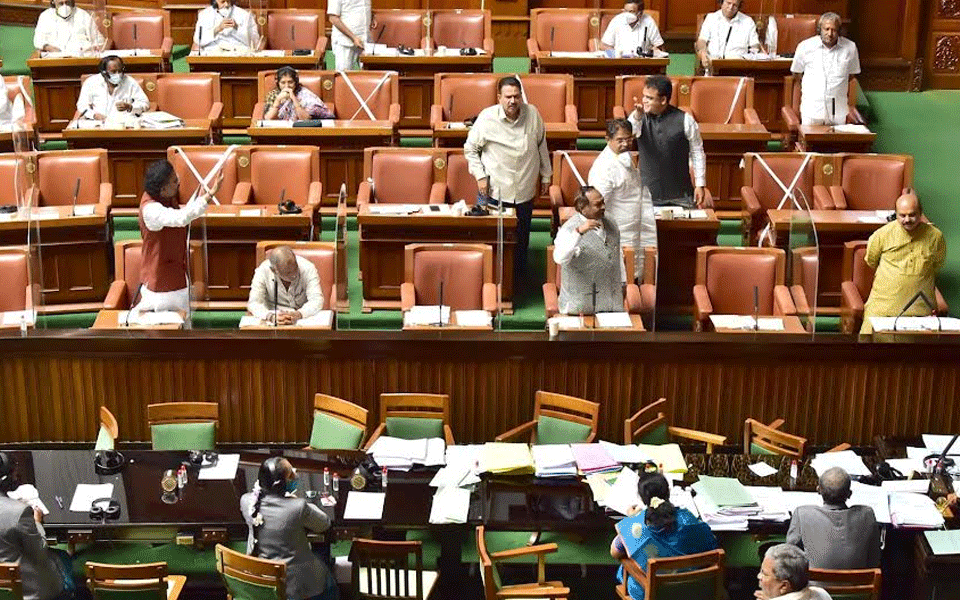
Bengaluru(PTI): Against the backdrop of the demolition of a temple at Nanjangud in Mysuru which triggered a backlash, Karnataka Chief Minister Basavaraj Bommai on Monday tabled the Karnataka Religious Structures (Protection) Bill, 2021, in the State Assembly seeking to protect religious structures already constructed illegally in public places.
"It is considered necessary to provide for protection of religious constructions in a public place constructed before the date of commencement of this Act in order to protect communal harmony and not to hurt the religious sentiments of the public. Further, to restrict unauthorised religious structures and constructions in public places in future," the government said in the statement of objects and reasons of the Bill.
The Bill tabled by Bommai further said, "Notwithstanding anything contained in any law for the time being in force of any judgment, decree or order of any court, tribunal or authority from the date of commencement of this Act, or the rules made there under, the government shall protect the religious structures existing on the date of commencement of this Act, in such manner subject to such conditions as may be presented."
However, the Bill made it clear that no protection will be given if any case relating to the removal of religious places was pending in any court of law and in such other circumstances.
It directs the authorities not to allow any religious structure and its construction in future in public places.
Religious activity in such protected structures is subject to custom, law, usage and other conditions as may be laid down by the State government from time to time.
Also, the government made it clear that no suit, prosecution or other legal proceedings will lie against it or any of its officer or employee for anything, "which is in good faith done or intended to be done under this Act or rules made there under."
The government hurriedly introduced this Bill just a week after the Nanjangud incident, which drew widespread criticism from within the ruling BJP, as well as opposition Congress and various other Hindu groups.
Former Chief Minister Siddaramaiah was quite vocal against the demolition of temple in Nanjangud.
Let the Truth be known. If you read VB and like VB, please be a VB Supporter and Help us deliver the Truth to one and all.
Himachal: Three killed, two injured as speeding car dashes against parked truck
Mandi (HP) (PTI): Three people were killed and two others sustained grievous injuries after a speeding car dashed against a stationary truck at Dadour near Nerchowk in Mandi district on Monday late at night, police said on Tuesday.
There were five people in the car when the tragedy struck. Three were declared dead in the hospital while two have been referred to AIIMS Bilaspur.
The deceased were identified as Anil Kumar (28), Rohit Kumar (26) and Subash Kumar (23), all residents of Mandi district, while the injured are Harish and Pankaj.
A case has been registered under relevant sections and investigations are underway, said Superintendent of Police (SP) Mandi Vinod Kumar.
He added that the bodies have been handed over to the family members of the deceased.
In a statement, Chief Minister Sukhvinder Singh Sukhu expressed grief over the loss of three lives in a road accident. He directed the district administration to ensure best possible treatment for the injured and wished them a speedy recovery.