BJP files complaint over wall demolition, tree felling in Freedom Park for Rahul Gandhi’s event
Bengaluru: The BJP’s Bengaluru Central unit has filed a complaint at the Upparpete police station against the alleged demolition of a compound wall and the felling of a tree inside Freedom Park, reportedly to facilitate a protest by Leader of Opposition in Lok Sabha Rahul Gandhi.
The Congress, which has alleged electoral malpractice in the 2024 Lok Sabha elections, had initially planned to protest in Freedom Park in Bengaluru on August 5 and later deferred it to August 8 in light of the demise of former Jharkhand Chief Minister Shibu Soren.
“In preparation for the event, an ancient compound wall in the park was allegedly demolished, causing inconvenience to the public, damaging public property, and resulting in a loss to the government exchequer. Additionally, a tree within the park premises was cut down,” BJP Bengaluru Central President Saptagiri Gowda, who filed the petition, was quoted as saying by The New Indian Express.
The complaint further alleged that Congress undertook these activities without obtaining any permission from the concerned authorities.
It also accused the Congress of misusing government power for political purposes. “They have destroyed public property for their personal interests by constructing a huge new compound wall inside Freedom Park. This is an illegal act and a misuse of power by the ruling party,” the petition stated, as per TNIE.
The BJP leaders have demanded legal action against the organisers of the protest and the government officials allegedly involved.
The Upparpete police said that they have received the petition, adding that a preliminary inquiry is underway.
Let the Truth be known. If you read VB and like VB, please be a VB Supporter and Help us deliver the Truth to one and all.
Congress using hijab issue to pacify minority anger, alleges Karnataka LoP R Ashoka
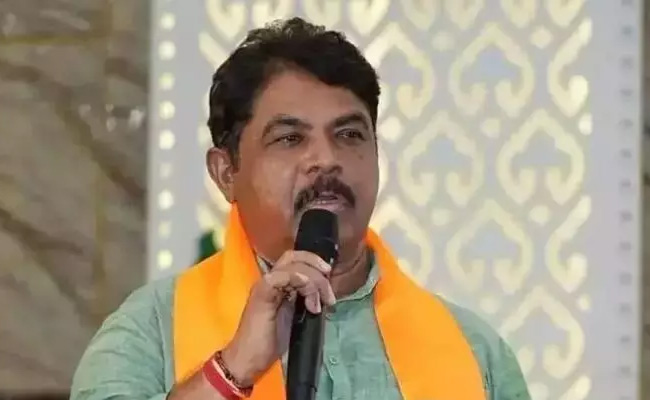
Bengaluru: Leader of Opposition in the Assembly R. Ashoka has accused the Congress government of using the hijab issue to placate what he described as discontent among minority voters after the Davanagere by-election.
In a post on X on Wednesday, Ashoka alleged that the state government, instead of addressing issues such as price rise, corruption, farmers’ distress and law and order, was attempting to retain its minority vote base by reviving the hijab issue.
Referring to the 2022 dress code introduced by the BJP government, which prohibited hijab in schools and colleges, Ashoka said the Karnataka High Court had upheld the policy and emphasised the importance of discipline in educational institutions.
He questioned the Congress government’s move to revisit the issue and asked whether setting aside the court-backed policy to benefit one community could be described as secularism.
Ashoka further alleged that while the government was willing to permit hijab, it continued to prohibit saffron shawls.
He accused the government of dividing students on religious lines rather than treating schools and colleges as spaces of equality.
Drawing a comparison with Mamata Banerjee’s government in West Bengal, Ashoka claimed that excessive appeasement politics had harmed the state and warned that the Congress in Karnataka could face a similar political response.
He said voters in Karnataka would teach the Congress a lesson for what he termed “vote-bank politics” and for compromising constitutional and judicial principles.