BJP leader G S Nagaraja, key accused in Chikkaballapura quarry blast arrested
Bengaluru, Feb 26: G S Nagaraja, one of the partners of the quarry and the prime accused in the Chikkaballapura quarry blast case has been arrested, police said.
Nagaraja, also a local BJP leader from Gudibande, who had been absconding since the blast was held on Thursday, police sources said.
Police have also picked up another person named Ganesh, who hails from Tamil Nadu and is said to be the person who regularly carried out blasting for the crusher unit, for investigation.
Six people were killed when the gelatin sticks they were trying to hide exploded accidentally at a stone quarry site at a village in Chikkaballapura district, early on Tuesday.
The incident was close on the heels of a similar blast at a quarry site in Shivamogga on January 22, which left six dead.
Police on Wednesday had announced the arrest of other three partners of the quarry-Raghavendra Reddy, Venkatashiva Reddy, Madhusudan Reddy- and employees Praveen and Mohammed Riyaz Ansari (driver), in connection with the case.
Gudibande Police Station Circle Inspector Manjunath and Sub-Inspector Gopal Reddy have been kept under suspension pending enquiry, on charges of dereliction of duty.
Police had raided the quarry and crusher unit on February 7 for illegally procuring and storing explosives, but had failed to do a thorough follow-up, and arrest the accused in the case, which if done could have prevented the explosion, officials said.
Let the Truth be known. If you read VB and like VB, please be a VB Supporter and Help us deliver the Truth to one and all.
Kerala CM Vijayan urges PM Modi to withdraw FCRA amendment provisions
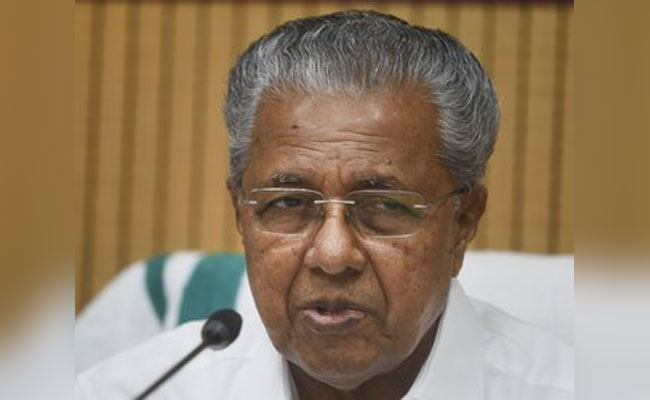
Thiruvananthapuram (PTI): Kerala Chief Minister Pinarayi Vijayan has expressed concerns over certain provisions in the proposed FCRA Bill and sought Prime Minister Narendra Modi’s intervention to withdraw them.
In a letter to Modi, Vijayan said the Foreign Contribution (Regulation) Amendment Bill, 2026, introduced in the Lok Sabha on March 25, has sparked concern among various sections of society, particularly minority communities.
A copy of the letter, sent on Sunday, was shared on his Facebook page on Monday.
In the letter, Vijayan noted that a perusal of the bill’s clauses indicates that powers have been granted to authorities to take over assets even for technical omissions.
“The apprehension is that granting such sweeping powers to authorities could lead to arbitrary exercise, and such concerns cannot be dismissed as baseless,” he said.
The chief minister pointed out that the existing law already provides sufficient powers to deal with misuse by entities permitted to receive foreign contributions.
He further said the amendment proposes enabling the takeover of assets, including places of worship and charitable organisations, even in cases involving technical issues such as violations of time limits.
Vijayan warned that the provisions could adversely affect institutions engaged in selfless service in areas such as education, healthcare, and the welfare of the poor and marginalised, even in the absence of significant lapses.
Stating that the issue has triggered concerns among religious groups and minority communities, the CM urged the prime minister to intervene in the matter at the earliest.
He also urged the PM to take steps to withdraw the provisions related to the takeover of assets in the amendment bill, noting that the existing Act has adequate safeguards to address violations.
The chief minister wrote to Modi at a time when reports about the proposed provisions in the FCRA Bill had triggered widespread reactions among political parties and various church denominations in poll-bound Kerala.