BJP leader R Ashoka urges CM Siddaramaiah to hand over stampede probe case to CBI
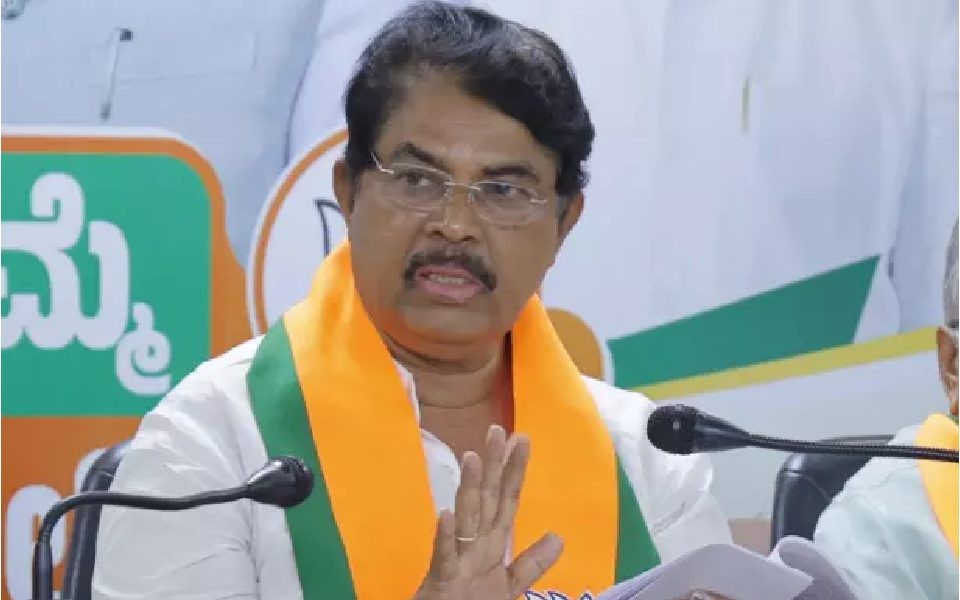
Bengaluru, Jul 19 (PTI): BJP leader R Ashoka on Saturday urged Karnataka Chief Minister Siddaramaiah to hand over the investigation into the stampede outside the Chinnaswamy Stadium here during the RCB victory celebration to CBI so that the real culprits behind the incident are identified and justice is served for the innocent lives lost.
The June 4 stampede outside the stadium led to the death of 11 people, while 56 were injured, as a large number of people thronged to participate in the Royal Challenger Bengaluru (RCB) team's IPL victory celebrations.
In a letter to the chief minister, Ashoka, Leader of Opposition in Karnataka Legislative Assembly, said that this "tragic" incident, which has sparked a statewide debate, has become a "black spot" in the history of Karnataka sports. There have been accusations and counter-accusations between the police and the state government on this issue.
Citing media reports, the BJP leader said that the stampede occurred due to the police's failure in crowd management. However, the government has merely suspended a few police officials and "washed its hands" off the matter.
In connection with the stampede tragedy, Bengaluru Police Commissioner B Dayananda and four other senior police officials, including Vikash Kumar Vikash, were suspended on the charge of dereliction of duty. Later, Vikash moved the Central Administrative Tribunal (CAT) challenging the state government's June 5 suspension order.
The tribunal later quashed the Karnataka government's suspension order against Vikash.
Ashoka, in his letter to Siddaramaiah, stated that the tribunal, during a hearing on the suspension of one such officer, also opined that holding only the police officials accountable is not appropriate.
"The question still remains as to who are the real culprits behind this incident that has claimed the lives of innocent people. The people of the state are also seeking answers to the same question," the BJP leader said.
"Therefore, I request you to hand over this case to the Central Bureau of Investigation (CBI) without any political interference, so that the real culprits behind the incident are identified and justice is served for the innocent lives lost," he added.
Recently, in its status report on the stampede that was submitted to the Karnataka High Court, the state government blamed IPL franchisee RCB, its event management partner, and the state cricket association for ignoring standard procedures and safety measures during the team's victory march here, leading to a stampede.
Let the Truth be known. If you read VB and like VB, please be a VB Supporter and Help us deliver the Truth to one and all.
Two arrested in K'taka for assaulting minors, uploading CSAM content

Bengaluru (PTI): Two men were arrested for allegedly sexually assaulting two minor girls, recording the acts on mobile phones and uploading the videos online as child sexual abuse material, police said on Thursday.
The accused have been identified as Kiran Kumar (29), hailing from Chitradurga district, and Aditya M K (20), hailing from Shivamogga district, they said.
A probe was initiated after information was received from the NCRP portal regarding a suspected instance of creation of Child Sexual Abuse Material (CSAM) for online dissemination, police said.
Accordingly, a case was registered at Kaggalipura Police Station under relevant sections of the IT Act on May 10, they added.
Investigation revealed that two minor girl victims were exploited and videos were created and uploaded to the internet. The child victims have subsequently recorded their statements as per procedure and further necessary legal steps have been taken, Pronab Mohanty Director General of Police, Cyber Command, said in a statement.
Based on the statements of the victims, the accused persons, who allegedly assaulted the minors, recorded the acts on mobile phones and uploaded the videos online, were arrested, he said.
Following the probe, sections 65(2) (rape) and 70 (gangrape) of the Bharatiya Nyaya Sanhita, along with relevant sections of the POCSO Act, have been added to the FIR, police said.
Officials collected relevant information and on May 12, arrested the accused persons and seized three mobile phones belonging to them, in which the videos had allegedly been recorded, he said.
The accused were later produced before the court and taken into police custody for further investigation, he added.
According to him, in CSAM cases, police usually apprehend offenders who have downloaded such content or have kept them in their possession after obtaining them from elsewhere, usually the internet.
"The present case is one of the very few instances where content creators and uploaders have been apprehended," Mohanty added.