BJP leaders Amit Shah, J P Nadda to hold roadshows in southern Karnataka
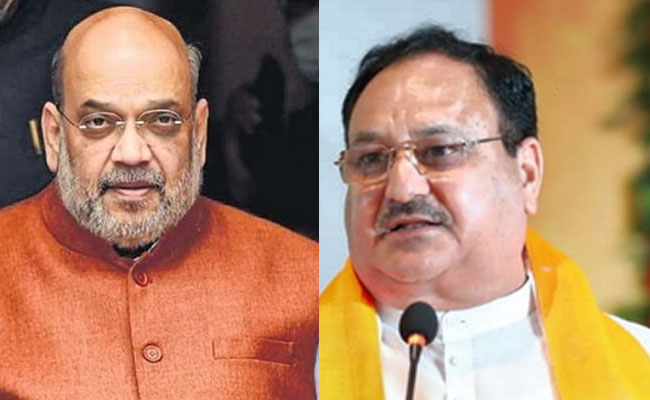
Bengaluru (PTI): In its latest round of electioneering in poll-bound Karnataka, Union Home Minister Amit Shah and BJP president J P Nadda will take part in separate roadshows in the southern part of the state on Monday.
Shah arrived in Bengaluru on Sunday night. According to the itinerary shared by the BJP, Shah will fly to Mysuru to pay his obeisance at the renowned Chamundeshwari Temple.
He will then take a helicopter ride from Mysuru to Gundlupet in Chamarajanagar district, and lead a roadshow from 1 pm to 2 pm.
The Home Minister, who was a former BJP chief, will then fly to Sakaleshpura where he will take out another roadshow to boost party cadres from 3 pm to 4 pm.
After heading back to Mysuru, he will fly in a special aircraft to Hubballi in northern Karnataka in the evening.
The BJP leader will hold an Election Working Committee meeting with party leaders at a luxury hotel in Hubballi where he will be staying for the night.
Meanwhile, BJP president J P Nadda will reach Bengaluru by a special flight in the afternoon from where he will then take a helicopter ride to Sidlaghatta in Chikkaballapur district.
Nadda will take part in a roadshow in Sidlaghatta for an hour from 2.30 pm to 3.30 pm. He will then go to Hoskote in Bengaluru Rural district to participate in another roadshow from 4.30 pm to 5.30 pm.
In the evening, Nadda will participate in a party meeting at Devanahalli in Bengaluru Rural district where he will discuss the status of poll preparations in Hoskote, Devanahalli, Doddaballapur and Nelamangala assembly constituencies.
After having dinner, Nadda will return to Delhi by the special aircraft.
The ruling BJP is going all out to retain power in the state where principal opposition Congress is vying to unseat it even as the JD(S) remains an important player with just weeks to go for polling.
Karnataka will be voting on May 10 and the results will come out on May 13.
Let the Truth be known. If you read VB and like VB, please be a VB Supporter and Help us deliver the Truth to one and all.
Two held in UP's Bijnor for contact with Pakistan linked Dubai handler
_vb_24.jpeg)
Bijnor (PTI): Two men were arrested in this Uttar Pradesh district on Friday for allegedly being in touch with a Pakistan-linked handler based in Dubai, police said.
Circle Officer, Najibabad, Anjani Kumar Chaturvedi said Uvaid Malik and Jalal Haider were arrested following inputs on their alleged links with Aqib, a resident of Meerut currently staying in Dubai.
According to police, Aqib had earlier come into the spotlight after a video surfaced on Instagram purportedly showing him displaying an AK-47 rifle and explosives.
During interrogation, the arrested men allegedly told police that Aqib used to incite youngsters against Hindus and encourage anti-national activities, the officer said, adding that detailed questioning of the accused is underway.
On April 6, Superintendent of Police (SP) Abhishek Jha said the video first surfaced in November last year. Aqib, a native of Sathla village in the Mawana area of Meerut, was allegedly seen in the video brandishing weapons.
Following the viral clip, a case was registered at the Nangal police station by sub-inspector Vinod Kumar. However, the then station house officer and investigating officer Satyendra Singh had recorded Aqib's statement and filed a final report, stating that the weapons seen in the video were toys, effectively giving him a clean chit.
Police said fresh developments have now revealed Aqib's suspicious links and the probe has been handed over to the Anti-Terrorist Squad (ATS).
The SP said action has been taken against the officials concerned, with the then SHO and investigating officer suspended and Circle Officer Nitesh Pratap Singh removed from his post.