BJP makes Ayodhya a political issue: H.S. Doreswamy
Bengaluru, September 30: “The BJP leaders have converted the Ayodhya dispute as a political issue to gain political mileage. If they have real concerns over the feelings of the people, they would have developed Ayodhya. But the BJP has gained political advantage due to Ayodhya Ram Mandir issue instead of developing the Ayodhya city”, said freedom fighter H.S. Doreswamy.
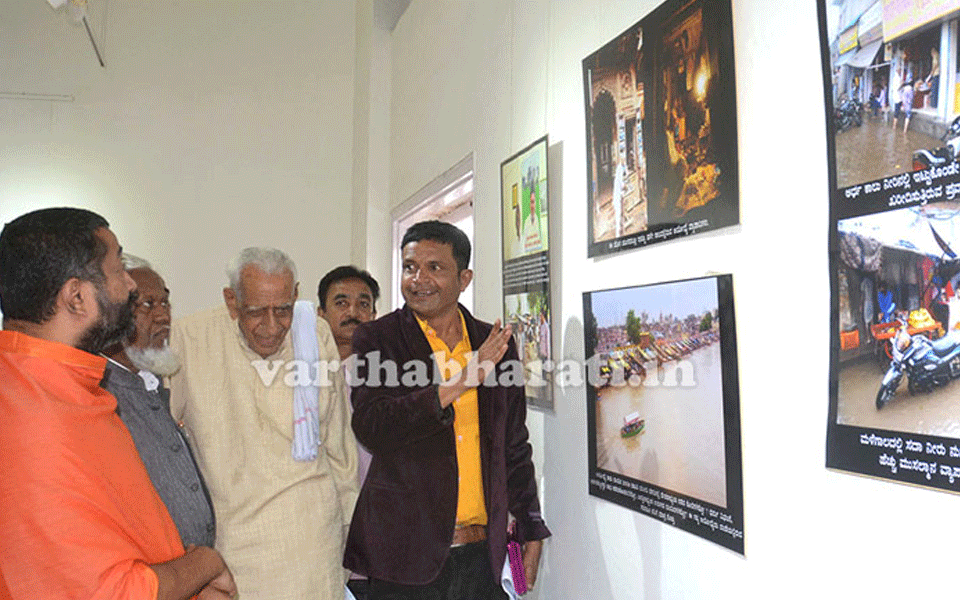
Speaking at a photo exhibition on the present situation of Ayodhya, organized by the photographer Sudhir Shetty near Metro Station on M.G. Road in the city on Sunday, Doreswamy said that BJP people do not want Rama. They just require communal clash in the name of Rama. They have made a big mistake by demolishing the Babri Masjid, he regretted.
As Ayodhya was in dispute, it was lagging behind in development. Though the people there were living together harmoniously, the outsiders had disturbed the situation. So, Ayodhya city had become a centre of dispute. Both BJP and RSS have gained the political mileage by making it a dispute instead of developing the city. Even today, they were trying to get the political benefit instead of developing the city, he alleged.
Former Lokayukta Justice Santosh Hegde said that Ayodhya people do not have incongruity among themselves. They have been living together. It was better to leave the issue to the locals to solve it. The recent Supreme Court verdict on Ayodhya issue was a welcoming note. But it would not solve the problem completely, he said.
It was not sure that the people would have harmony even after Supreme Court order on the issue. So, the locals should sit together and find an eternal solution to the problem. Interestingly the intervention of the outsiders was more in the issue. Because of the political interests, the issue was blown out of proportion. It was not possible to solve everything just with the Supreme Court verdict, he stressed.
Photographer Sudhir Shetty has exposed the reality and present situation of Ayodhya and Ram Janma Bhoomi. The locals would not require this dispute. In the name of dispute, the development works have taken a back seat. The Hindus and Muslims of Ayodhya want to solve the problem amicably. But the political leaders have been trying to keep this issue alive for their benefit. This was effectively exposed in the exhibition through photos.


Let the Truth be known. If you read VB and like VB, please be a VB Supporter and Help us deliver the Truth to one and all.
Bihar: Over 150 children fall ill after consuming 'mid-day meal' in Saharsa
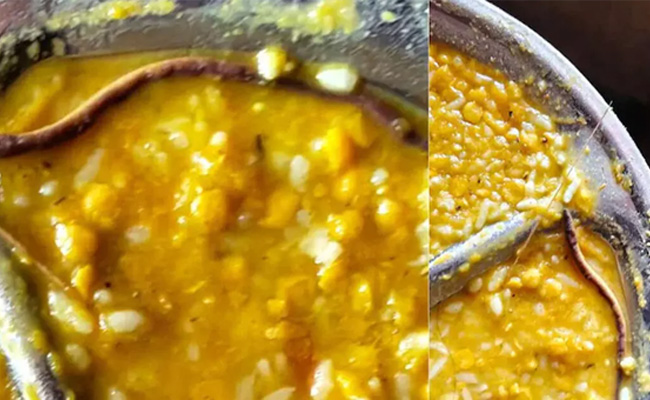
Saharsa (PTI): More than 150 children were taken ill after allegedly consuming food that was part of the mid-day meal in a school in Bihar’s Saharsa district, a senior official said on Thursday.
The incident occurred at a middle school in Baluaha village of the district.
The official said that 115 children were undergoing treatment at the Sadar Hospital, while around 50 students were admitted to Mahishi Public Health Centre.
“We received information that several children fell ill after consuming the mid-day meal in Baluaha. The children were initially treated at the primary health centre, but later, many were referred to the Sadar Hospital,” Saharsa District Magistrate Deepesh Kumar told reporters.
“According to doctors, the health condition of the children has improved, but they will be kept under observation for some time. There is no need to panic. Some kids are having mild fever. They are being treated accordingly,” Kumar said.
Meanwhile, family members of some children claimed that a snake was found in the container in which cooked pulses was stored at the school.
Of the 545 students present in the school, 200 had already eaten their meals by the time the snake was spotted, and later complained of stomach ache and vomiting, they said.
Regarding the claims, the DM said food samples have been collected from the school.
“We will be able to comment on this only after the results of the tested samples arrive,” he said.