BJP MLA Munirathna asks Speaker to ensure he gets protection
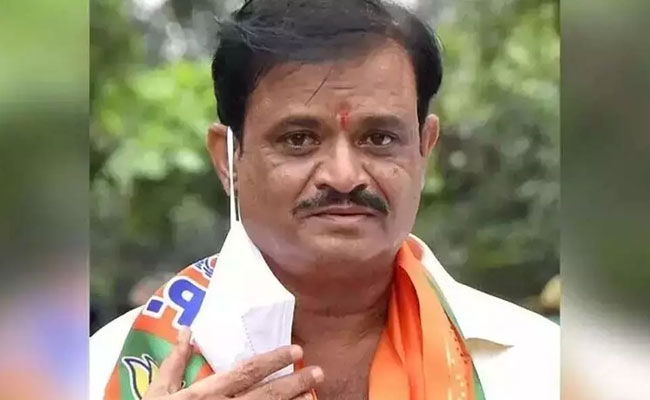
Bengaluru: BJP legislator Munirathna has requested Speaker UT Khader to ensure protection for him and cited instances when people threw eggs at him when he was on the streets, tore his shirt and also applied ash on his face.
Speaking during the debate in the Assembly on Thursday on the Governor's speech, Munirathna pointed out that Ballari witnessed violence following disagreement regarding putting up a banner and a flex and also urged the Speaker to ban the use of flexes.
“There are 138 bars in Rajarajeshwarinagar, the constituency I represent. FIRs are being filed against women who have been asking for the closure of these bars. Officers refuse to give people information on legal guidelines regarding bars and restaurants. I have filed about 1,380 RTI applications, but the officers have rejected the pleas,” the BJP leader told the Speaker.
Munirathna also complained that he had asked for protection as he feared that he could be attacked in his constituency, but was denied a gunman. “I had to appeal to the Supreme Court, which responded positively and directed that I be provided a gunman. I also had to request the Chief Minister directly, after which, a gunman was appointed for my protection,” he said.
The MLA accused Deputy CM DK Shivakumar of claiming that Muniratna's rival, who lost the polls from Rajarajeshwarinagar, was the local MLA and interfering in matters related to the constituency. “It is unbecoming of him to harass an elected representative and interfere in his works in a sadistic manner. Police officers are assigned to my constituency only if a complaint or a rape case is filed against the MLA,” he added.
Let the Truth be known. If you read VB and like VB, please be a VB Supporter and Help us deliver the Truth to one and all.
Mercury likely to touch 44 deg C in Delhi; IMD issues alert for heatwave-like conditions
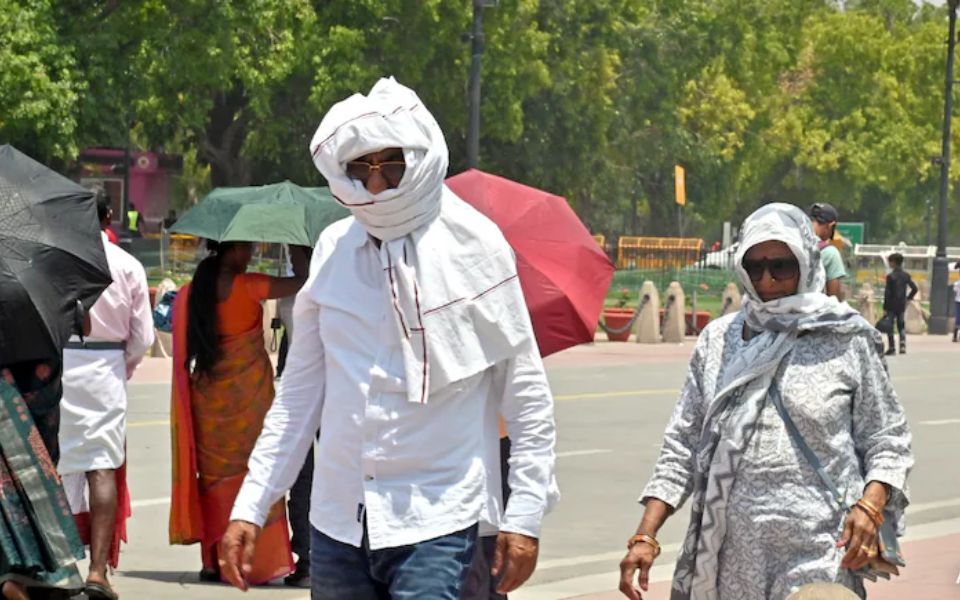
New Delhi (PTI): Delhi recorded a minimum temperature of 26.2 degrees Celsius on Sunday, 2.4 notches below the seasonal average, according to the India Meteorological Department.
The weather department has forecast partly cloudy sky with an orange alert for heatwave-like conditions at isolated places by the evening.
The maximum temperature is expected to reach around 44 degrees Celsius on Sunday, the IMD said.
The relative humidity in the capital was recorded at 43 per cent at 8.30 am.
The air quality was 'poor' at 9 am, with an Air Quality Index (AQI) reading of 223, Central Pollution Control Board (CPCB) data showed.
According to the CPCB, an AQI between zero and 50 is considered 'good', 51 and 100 'satisfactory', 101 and 200 'moderate', 201 and 300 'poor', 301 and 400 'very poor', and 401 and 500 'severe'.