BJP-run Karnataka govt is country's most corrupt: Rahul Gandhi
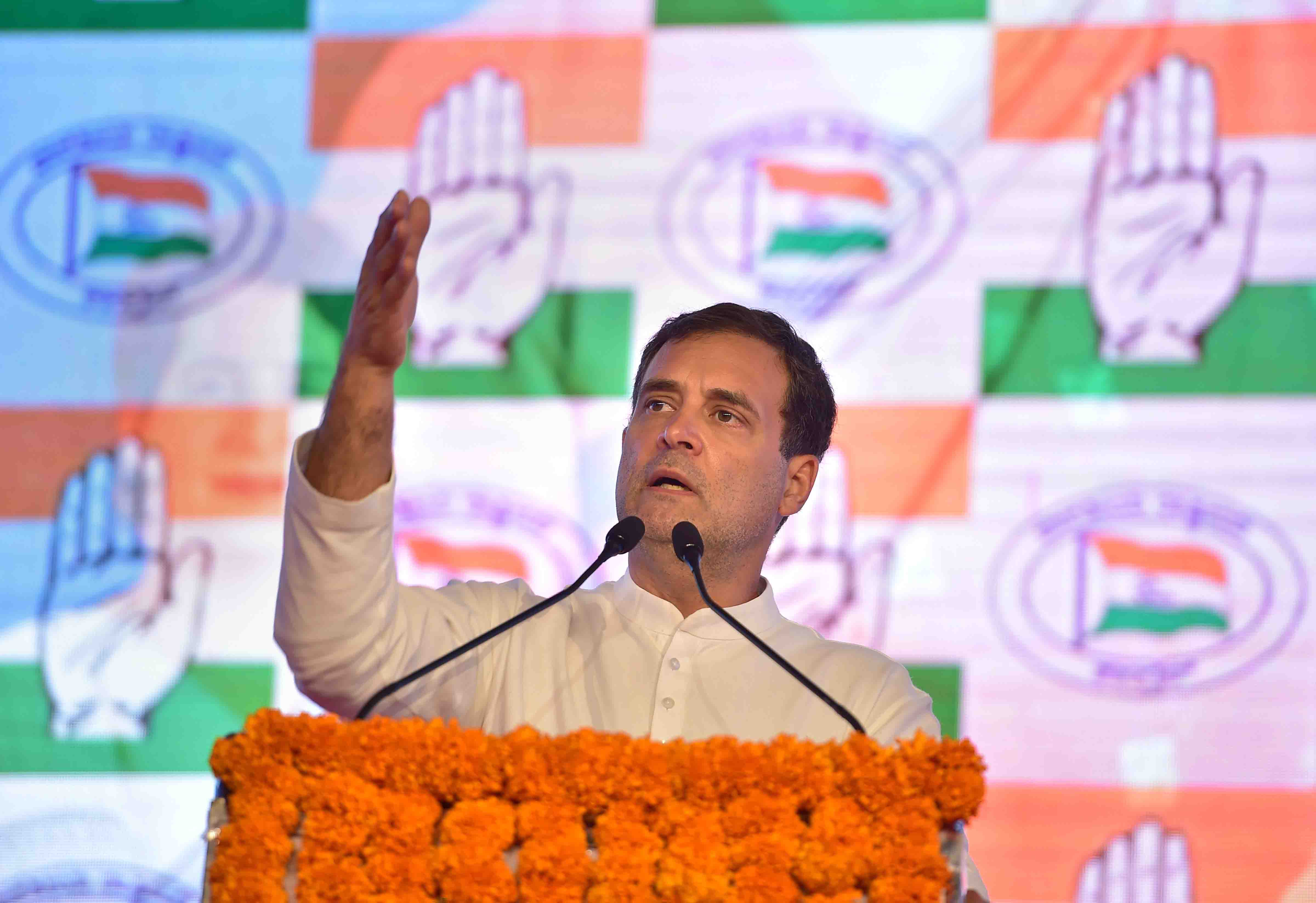
Bengaluru, Apr 1: Setting the mood for Assembly elections in Karnataka due next year, former Congress President Rahul Gandhi on Friday exhorted party leaders in the State to work together, as he set an ambitious target to win a minimum of 150 seats.
He said Prime Minister Narendra Modi used to speak about corruption in his election rallies, but the country's "most corrupt government" is in Karnataka, run by the BJP.
Gandhi said the Congress will win in Karnataka with a huge majority in the 225-member assembly, and will form a government that will work for poor, weaker sections, small traders , small and medium businesses, and take the state on the "right path once again".
"We are faced with an election in Karnataka, and Karnataka has always had the spirit of the Congress party. This is a natural Congress state," Gandhi said.
Addressing Karnataka Pradesh Congress Committee's extended executive meeting here, he said, "We should be very clear in our mind that we are going to get not less than 150 seats. So we should start our calculations."
Noting that winning a minimum 150 seats is not a difficult task, Gandhi said, this is actually quite an easy one for Congress, if the party gets together, fights together in a united way, fights on the right issues and if it guarantees merit as the criteria for candidates, leaders and workers.
He said it is very important to promote people based on the service they have done for the party, instead of promoting those based on likes and dislikes.
"....we should be absolutely ruthless with this idea. I don't think we should be deciding tickets based on past history, what a person has done 20 years ago. I think we should be basing tickets on the work the person is doing for the party today," he said, adding that loyal, good representatives of the party, must be protected and rewarded.
This is the first visit of the top Congress leader to the State as it prepares for the assembly elections, amid speculations that early polls is also a possibility.
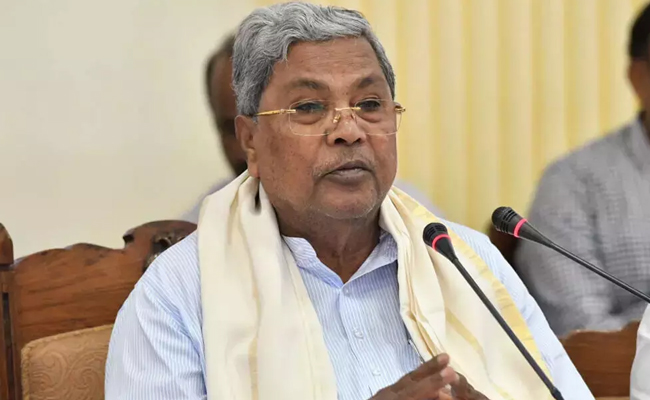
Congress general secretaries K C Venugopal and Randeep Singh Surjewala, Leader of Opposition in Rajya Sabha Mallikarjun Kharge, state Congress president D K Shivakumar, Congress Legislature Party leader Siddaramaiah were among a host of senior leaders present at the event.
Gandhi in his address called on Siddaramaiah, Shivakumar, Kharge and other senior leaders to fight the election unitedly.
"The most important thing is all of you must fight together, it is your biggest responsibility, you are already fulfilling it, but it has to be more intense. You should all together make Congress win 150 seats," he told them.
"We should not fight an election to make it a close election. We should fight the election to make it a decisive victory for the Congress party, minimum of 150 seats, not one less than that," he said, adding that there is not much time for elections and that he would travel in the state in the days to come.
Noting that unemployment, economic collapse, inflation were the biggest issues before the country, the Congress leader said, note ban, wrong GST and farm laws have caused damage to the country and the situation today is such that even if BJP government wants, they can't provide jobs as they have destroyed small and medium businesses.
"India today is not in a position to provide jobs for its youth, this has caused the biggest damage for the country and will cause much bigger damage in the days to come," he said.
Hitting out at the BJP government in the state, Gandhi said, it is not a legitimately elected government, as it was formed using financial resources and subterfuge.
He said: "Today if Modi comes to Karnataka and speaks about corruption and wants to fight against it, people might laugh. The BJP government here is known for 40 per cent (commission)....contractors are saying it and not Congress. Modi speaking on corruption is a joke, he cannot speak on the issue anywhere in the country," he said.
BJP's aim is to snatch money or resources of the poor and transfer it to two or three big businessmen, and it is basically a "financial transfer mechanism system", he said, adding that, "their method is to divide the country, create fear, which we call polarisation."
Gandhi said, Congress' responsibility is to raise real issues like jobs, setting right the economy, and bringing together different sections of the society. "They (BJP) divide, we unite....we should do this in Karnataka also."
Complimenting the state Congress unit for enrolling more than 60 lakh members into the party and most of them youth, he said, during the upcoming elections youth and women should be the focus of the party, whether it is in ticket distribution or in the organisation.
He also interacted with some party functionaries, connected to the event virtually, who had made maximum number of membership enrolments.
BJP’s Karnataka Model of Corruption
— Rahul Gandhi (@RahulGandhi) April 1, 2022
Pay 40% Commission, or face Omission! pic.twitter.com/ak00Rcdvaa
Let the Truth be known. If you read VB and like VB, please be a VB Supporter and Help us deliver the Truth to one and all.
Two arrested in K'taka for assaulting minors, uploading CSAM content

Bengaluru (PTI): Two men were arrested for allegedly sexually assaulting two minor girls, recording the acts on mobile phones and uploading the videos online as child sexual abuse material, police said on Thursday.
The accused have been identified as Kiran Kumar (29), hailing from Chitradurga district, and Aditya M K (20), hailing from Shivamogga district, they said.
A probe was initiated after information was received from the NCRP portal regarding a suspected instance of creation of Child Sexual Abuse Material (CSAM) for online dissemination, police said.
Accordingly, a case was registered at Kaggalipura Police Station under relevant sections of the IT Act on May 10, they added.
Investigation revealed that two minor girl victims were exploited and videos were created and uploaded to the internet. The child victims have subsequently recorded their statements as per procedure and further necessary legal steps have been taken, Pronab Mohanty Director General of Police, Cyber Command, said in a statement.
Based on the statements of the victims, the accused persons, who allegedly assaulted the minors, recorded the acts on mobile phones and uploaded the videos online, were arrested, he said.
Following the probe, sections 65(2) (rape) and 70 (gangrape) of the Bharatiya Nyaya Sanhita, along with relevant sections of the POCSO Act, have been added to the FIR, police said.
Officials collected relevant information and on May 12, arrested the accused persons and seized three mobile phones belonging to them, in which the videos had allegedly been recorded, he said.
The accused were later produced before the court and taken into police custody for further investigation, he added.
According to him, in CSAM cases, police usually apprehend offenders who have downloaded such content or have kept them in their possession after obtaining them from elsewhere, usually the internet.
"The present case is one of the very few instances where content creators and uploaders have been apprehended," Mohanty added.