BJP strengthened its position by installing Bommai as CM in Karnataka: Amit Shah
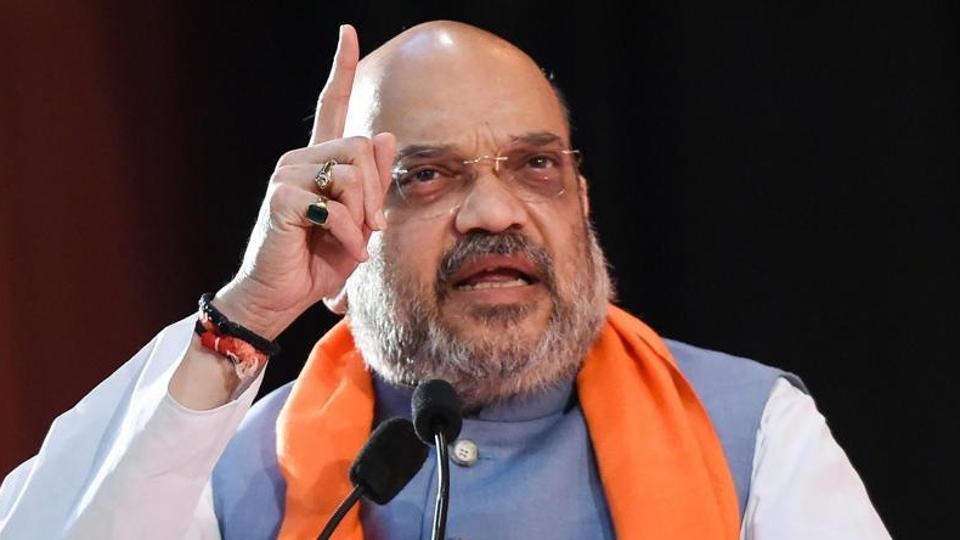
Davangere, Sep 2: Union Home Minister Amit Shah on Thursday lauded Chief Minister Basavaraj Bommai for his "small but significant moves" in a short time and said those monitoring Karnataka from the national capital say that the BJP has strengthened its position in the state by installing him.
"Bommai has made some small but significant beginning. He has stopped the tradition of receiving police guard of honour, put a brake on many VVIP practices and he has taken certain steps for transparency.
It is a very short time since Bommai took over but people who are sitting in Delhi and closely watching the developments in Karnataka, say that the BJP has strengthened its position by installing him as the Chief Minister," Amit Shah said at an event here.
In his maiden visit to Karnataka after Bommai took over as Chief Minister on July 28, the BJP leader exuded confidence that the party would come back to power by winning the Assembly election due in 2023.
"Bommai has experience of running the government and leading a decent public life, and he being in the BJP for a very long time, I have full confidence that under his leadership the BJP will come back to power with full mandate (in 2023)," Shah opined.
The Home Minister also heaped praises on former Chief Minister and BJP stalwart B S Yediyurappa, whose resignation as Chief Minister on July 26, brought Bommai to power.
"I am confident that Yediyurappa did not leave any stone unturned for the development of villages and farmers. If a new era of development has started in Karnataka, it happened in the BJP government during the tenure of Yediyurappa," Shah said.
According to him, Yediyurappa himself had decided to give new faces a chance to lead Karnataka and the BJP leadership decided to give the responsibility to Bommai.
Speaking about the COVID-19 management, Shah praised Prime Minister Narendra Modi for the best handling of pandemic and bringing out the country to a good extent from it with public support.
He said the entire world was watching with surprise how a nation of 1.3 billion population will face the challenge.
"However, under the leadership of the Prime Minister, the nation abided by the lockdown norms initially and then carried out the biggest vaccination drive of the world in India.Today we can proudly say that if there is a nation, which has given maximum vaccines, it is India," Shah said.
The Home Minister also pointed out that the country broke its own previous record of one crore jabs on a single day by vaccinating 1.36 crore people on a single day a couple of days ago.
Speaking about the vaccination drive in Karnataka, Shah said the state has vaccinated almost 90 per cent of its eligible population by carrying out 5.2 crore inoculations.
"Over four crore people have received the first dose while 1.16 crore people have taken the second dose. It is an example what a government can do by taking along people," he explained.
Noting that the economically weaker section was hit hard due to the pandemic, the Home Minister said the BJP government at the Centre gave five kg rice to each member of BPL families for 10 months from May last year.
According to him, 80 crore people from weaker sections had received five kg rice every month for 10 months.
Shah added that the Prime Minister has also announced financial packages to deal with any further wave of COVID-19.
Recalling the oxygen crisis during the second wave of COVID-19, the Home Minister said many new oxygen plants which came up in a very short period have started operations.
Exuding confidence that India will be self reliant in oxygen production in the event of any epidemic outbreak in future, Shah said the country will not require to go anywhere for oxygen.
Seeking public support in the fight against COVID-19, Shah expressed his disappointment over vaccine resistance among some communities. He said it is everyone's responsibility to make sure that no one in the family, friends, and neighbourhood is left without vaccine.
"The 'mantra' to win the battle against coronavirus is the vaccine," Shah said.
He appealed to BJP activists to work with people in spreading awareness about the vaccine and take those people to the vaccination centre who have not taken it.


Let the Truth be known. If you read VB and like VB, please be a VB Supporter and Help us deliver the Truth to one and all.
Allahabad HC orders probe into 'reinstatement' of teacher in UP's Barabanki
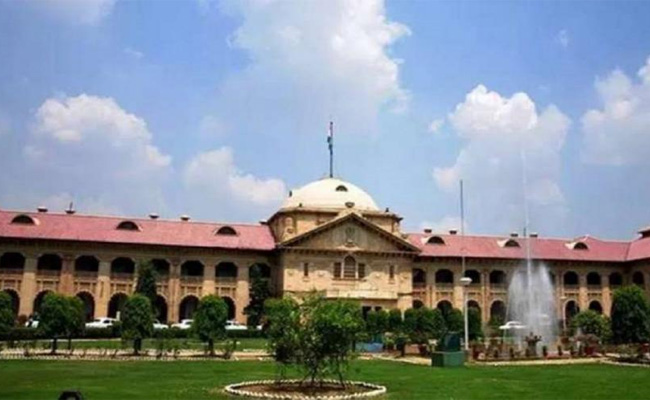
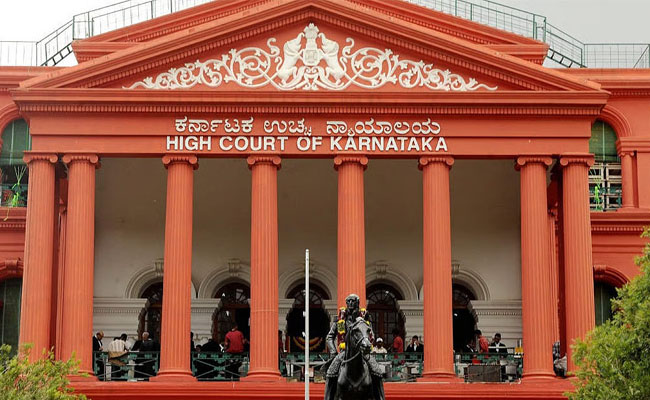
Lucknow (PTI): The Lucknow Bench of the Allahabad High Court on Friday ordered a probe by the special task force (STF) into alleged irregularities in the rejoining of a teacher at City Intermediate College in Barabanki, observing that the reinstatement appeared to be prima facie illegal.
The court also directed the recovery of the salary paid to the teacher during the disputed period.
A bench of Justice Rajeev Singh passed the order on a petition filed by the college management committee. The court expressed doubts over the roles of the District Inspector of Schools (DIOS), Barabanki, the college principal and the teacher concerned and hence, directed a detailed inquiry into the matter.
Taking note of alleged manipulation of records and misleading submissions, the court ordered the immediate transfer of the Barabanki DIOS to ensure a fair probe. It also directed the initiation of disciplinary proceedings against the then joint director of education of the Ayodhya division.
In its order, the court found that the teacher, Abhay Kumar, was initially appointed as an assistant teacher in 2018 but joined an Eklavya Model Residential School in Chhattisgarh as a lecturer in June 2024 without obtaining permission from the management. His subsequent request to retain the lien was rejected.
Despite this, he was allowed to rejoin the Barabanki College in September 2025 on the directions of the joint director of education and the DIOS, and was even paid the salary for October 2025. The court termed the rejoining "wholly illegal" and lacking any legal basis.
The bench also expressed concern over lapses in communication within the education department and directed the Uttar Pradesh chief secretary to ensure that official orders are communicated through email and WhatsApp as well, to prevent disputes.
The matter is next listed for hearing on May 28 when a compliance report is sought.