BMRCL MD agrees for ‘calibration’ of metro rail fare after criticism
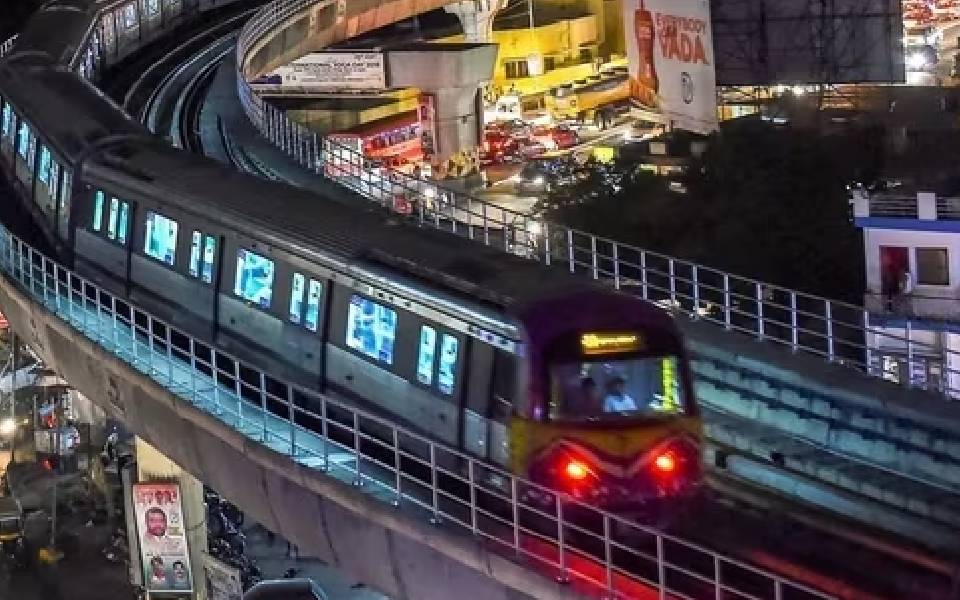
Bengaluru, Feb 13 (PTI): The Bangalore Metro Rail Corporation Limited's Managing Director M Maheshwar Rao on Thursday said there is scope for calibration of recently hiked fares.
He said this after the BMRCL came under sharp criticism for introducing steep hike in Metro Rail fares. In some cases the fare hike was over 100 per cent prompting Chief Minister Siddaramaiah to intervene.
Speaking to reporters in a press conference here, Maheshwar Rao however said, there will be no fare revision but only 'calibration,' in effect meaning easing of hike for some stages without disturbing the basic structure of revision.
The calibration proposed by BMRCL without diluting the provisions of the Metro Railways (Operaton and Maintenance) Act will provide relief to the 46 per cent of commuters, Rao said.
"The committee had given us a methodology to fix fares. We see some scope for corrections and calibration in the details," the BMRCL chief said.
"We were able to find out that in some cases the hike is over100 per cent or 90 per cent. Some people have complained that those who were paying Rs 18 are now spending Rs 40 for the same distance. Some people say that with Metro card the fare comes to Rs 36 (since there is five per cent concession on card user). Some people said that those who were paying Rs 22 earlier are now paying Rs 50," the BMRCL MD said.
Rao said they are correcting some errors in calculation of stages which will ease the fare hike.
"Out of the total 7.5 lakh to 8.5 lakh rides everyday, around three lakh people will get relief by these corrections. Because we will be able to reduce the jump,” he explained.
He added that the change has been done without diluting any of the recommendations, board discussions and the provisions of the Metro Railways Act.
Rao said for the past four to five years the BMRCL had been requesting for fare fixation.
“Last Sunday it (fare hike) came into effect and then we got the information that there was abnormal hike. People posted price comparison in social media. We too reviewed based on the fare matrix to check whether there is scope for corrections. We too discussed with the board members,” the BMRCL MD said.
Chief Minister Siddaramaiah, Deputy Chief Minister D K Shivakumar, some MLAs had asked the BMRCL to review it and people too had given representations, he explained.
The BMRCL Board held meetings in this connection since Wednesday.
Fare fixation committee recommendations are binding on the Metro Rail Board as per the Metro Railways Act, he said.
Rao said the Metro Rail has to go by the statute and it has to function for the benefit of people.
Many people think that the BMRCL is going to take huge benefit by increasing fare which was not true, he said.
"The total loan repayment that is to be made over the next four years ranges between Rs 770 crore Rs 2,700 crore including principal and interest. Government gives us principal and the interest part has to be borne by the Metro Rail,” the MD said.
Along with that the BMRCL has to make provision for depreciation such as replacing the rolling stock and other equipments over a period of time.
"So whatever we do we are always going to be a loss making organisation which has been subsidised by the Government. What we can do is to run it efficiently and think how to give best services to the people,” Rao explained.
He underlined that a lot of capital investment is required to run the BMRCL and the fare hike was done for that.
A statement issued by the BMRCL said Delhi Metro Rail Corporation’s fare at present is from Rs.10 to Rs. 60.
"However, this fare structure was fixed in 2017 and since then about 8 years have gone. Hence comparison with it is not appropriate," the statement read. Minimum fare of Mumbai Metro is also Rs.10 but the maximum is Rs.80, it further said.
Let the Truth be known. If you read VB and like VB, please be a VB Supporter and Help us deliver the Truth to one and all.
RCB beat MI by 18 runs after batters fire
Mumbai (PTI): Royal Challengers Bengaluru skipper Rajat Patidar, Phil Salt and Virat Kohli blasted half-centuries as the defending champions beat Mumbai Indians by 18 runs in an Indian Premier League match here on Sunday.
Salt (78 off 36 balls) and Kohli (50 off 38 balls) stitched together a 120-run stand for the opening wicket before Patidar scored a rapid 53 off just 20 balls as RCB posted 240 for 4.
In response, Mumbai Indians were restricted to 222 for 5, with RCB spinner Suyash Sharma (2/47) putting the skids on the home side with a double strike in the eighth over, from which they could not recover.
Sherfane Rutherford top-scored for MI with an unbeaten 71 off 31 balls.
While opener Rohit Sharma appeared to be struggling with a hamstring issue and had to retire hurt on 19, his partner Ryan Rickelton made 37, while Suryakumar Yadav (33) and Hardik Pandya (40) were the other contributors for MI.
Brief scores:
Royal Challengers Bengaluru 240 for 4 in 20 overs (Phil Salt 78, Virat Kohli 50, Rajat Patidar 53, Tim David 35 not out).
Mumbai Indians: 222 for 5 in 20 overs (Sherfane Rutherford 71 not out, Ryan Rickelton 37, Hardik Pandya 40; Suyash Sharma 2/47).