Border dispute: Situation not yet come to call all party meet, says Karnataka Minister Govind Karjol
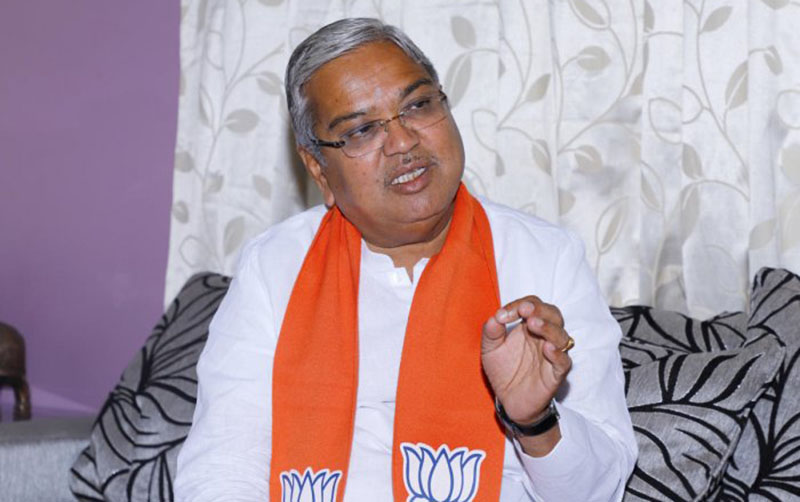
Bengaluru (PTI): Karnataka Irrigation Minister Govind Karjol on Wednesday said a situation has not yet arose for an all-party meeting to be convened, to discuss the border dispute with Maharashtra, and asserted that the state government was handling the case legally.
Leader of Opposition in the state assembly Siddaramaiah on Tuesday had expressed reservations about Chief Minister Basavaraj Bommai not calling an all party meeting yet, to discuss the dispute, with the issue intensifying.
"BJP is not ready to do politics the way Siddaramaiah wants. We know when to call, we are in government and definitely such a situation has not come, and there is no need for it now," Karjol said in response to a question regarding Siddaramaiah's statement.
Speaking to reporters here, he said steps have been taken by the government with regard to the case legally.
"Such a situation (to call an all party meeting) has not yet come, whenever required we have always taken all political parties and people into confidence, and we will continue to do it, but now such a situation has not arisen," he added
Siddaramaiah on Tuesday had said, the CM should have called an all party meeting by now to discuss the issue, but has not called. "The issue of jurisdiction and maintainability of the case has come before the Supreme Court for hearing."
When told that all the political parties in Maharashtra are united on the issue, Karjol said, "We need not become a part of their (Maharashtra's) drama, whenever they enact it. Yes, Maharashtra is staging a drama and we are not actors in it."
Responding to a query on Maharashtra Ministerial delegation reportedly still planning to visit the border district of Belagavi in the days ahead, the senior Minister in Bommai cabinet said, every one should keep in mind that we are all part of a federal set up.
"We had sent them (Maharashtra) a subtle message a couple of days ago, we had also sent a letter to the government there through our Chief Secretary and we have told them very strongly that if they come, the situation wont be right. No confusion should be created, we have to under stand that we are in a federal set up, whether it is a Karnataka Minister or Maharashtra Minister or from any other state," he added.
A Maharashtra ministerial delegation that was supposed to visit Belagavi and hold discussions with a pro-Marathi group active there on Tuesday, had postponed it, while Kannada organisations had staged a protest in the district in a show of strength.
Let the Truth be known. If you read VB and like VB, please be a VB Supporter and Help us deliver the Truth to one and all.
Young woman from MP who shot to fame during Kumbh found to be minor, case registered against husband
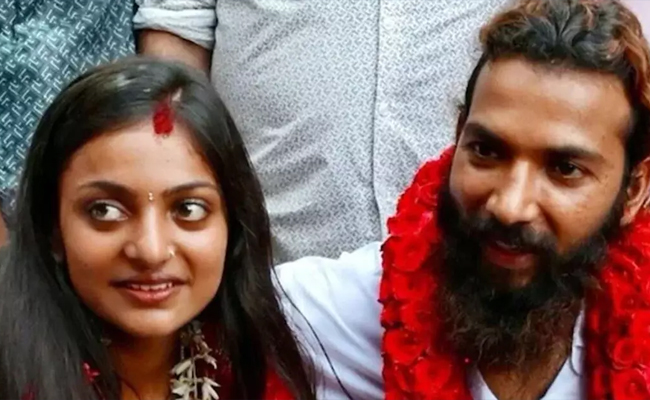
Khargone (MP) (PTI): The National Commission for Scheduled Tribes on Friday confirmed that a young woman from Madhya Pradesh who became famous due to her viral videos during the 2025 Maha Kumbh has been found to be a minor after an inquiry.
Citing the findings of an inquiry panel set up by the commission, local BJP leaders alleged that her interfaith marriage in Kerala last month was a case of "love Jihad", and sought legal action.
While the panel had submitted its report in March, ST commission chairman Antar Singh Arya confirmed its findings to the PTI on Friday.
A case for alleged kidnapping and offences under the Protection of Children from Sexual Offences (POCSO) Act has already been registered against her husband, a Muslim man, at Maheshwar on the basis of the inquiry findings, police said.
The girl gained national fame after her videos while selling garlands and rudraksha at the Maha Kumbh went viral on social media and also earned her a role in a film.
The National Commission for Scheduled Tribes set up an inquiry panel after receiving a complaint on March 17 from Pratham Dubey, a resident of Uttar Pradesh, that she was a minor and was being exploited.
Maheshwar BJP MLA Rajkumar Mev and BJP mandal president Vikram Patel, armed with documents, told reporters on Friday that her marriage in Kerala was a case of "love Jihad" and she should be brought back home.
'Love jihad' is a term used by right-wing groups to allege a conspiracy by Muslim men to lure Hindu women into marriage to convert them to Islam.
Police said an investigation is underway, and further action would be taken accordingly.
The girl, who belongs to the nomadic Pardhi community, got married at a temple in Kerala in March. The interfaith marriage drew angry reactions from rightwing Hindu groups.
Her family members and film director Sanoj Mishra -- who had offered her a film role after she became famous -- too alleged that it was 'love Jihad'.
As per the inquiry conducted by the ST commission, records at the Maheshwar government hospital showed the woman's date of birth as December 30, 2009 which meant she was 16 years and two months old at the time of marriage, said Dubey, the complainant.
On a complaint filed by her father, police registered a case against the girl's husband at Maheshwar police station on March 25 for alleged kidnapping and under the POCSO Act and the SC/ST (Prevention of Atrocities) Act.
Police sources said that a separate case was also registered on March 24 under section 137(2) of the Bharatiya Nyaya Sanhita (taking a minor from lawful custody of guardian without their consent) based on the the commission's findings.