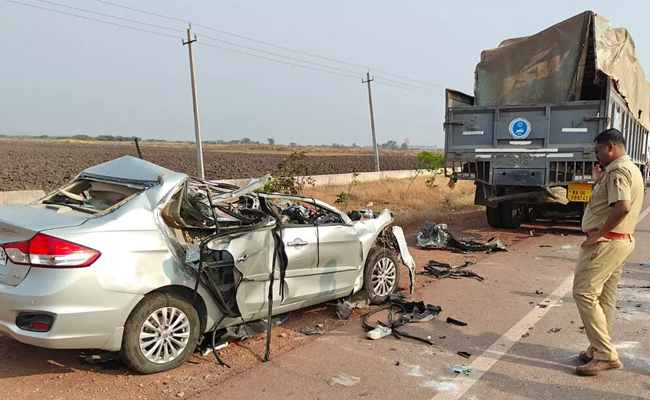
Burka-turban-clad people need not come to my office: BJP MLA Yatnal
Viral Video
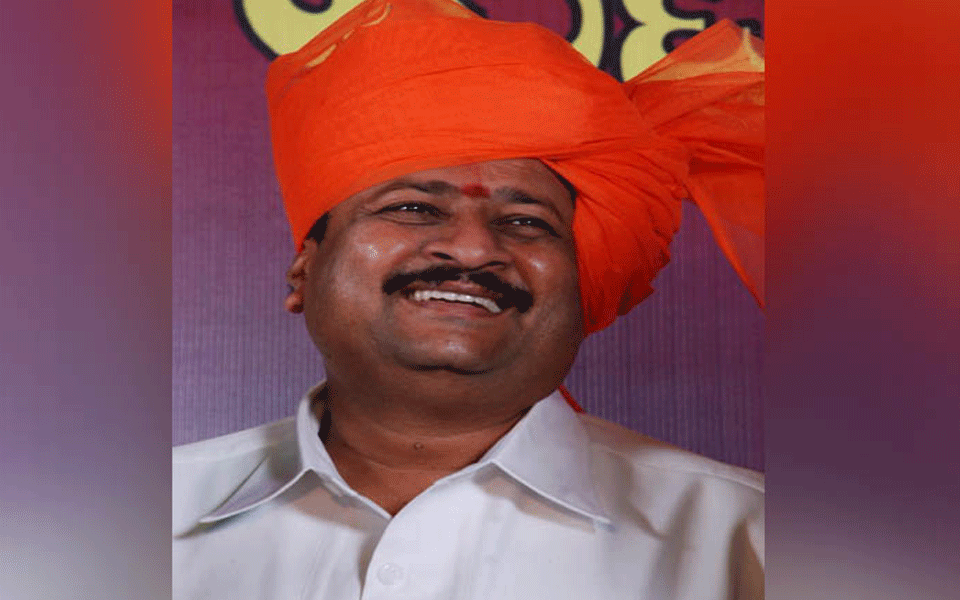
Vijayapura, June 7: BJP MLA Basanagouda Patil Yatnal triggered a controversy saying that burka and turban-clad people need not come to his office as he has got votes only from Hindus and he would work for them.
His statement made in a private programme recently has gone viral in social media triggering widespread resentment among people. “I have taken an oath not to see the Muslims till the election process is completed. Moreover, I have clearly said that I would not require the votes of Muslims.
The Hindus who have been supporting the Muslims might have born to them. They thought that I would bite the dust in the election”, he said.
He has asked even the city corporation members not to do any works for the Muslims. If the Muslims torture Hindu women and businessmen, action would be taken against them. He had informed the Hindus thatthey would not have a future if he was not elected. So, they have elected him, he claimed.
Statement is not acceptable
It is inhuman to say that burka and turban-clad people should not come to his office. It is proved from the statement of Yatnal that BJP is anti-Muslim. Such statements igniting hatred among religions are condemnable.
--MLC KT Srikante Gowda
‘I’m committed to my statement’
“Is it wrong to speak about Hindus in the country? I have cleared before the election that I would not require Muslim votes. I am committed to my statement even now. It is true that I have spoken about this during Shivaji Maharaj programme. You are questioning me for speaking about Hindu religion. Go and ask Asaduddin Owaisi instead of asking me”.
---Basana Gouda Patil Yatnal
Let the Truth be known. If you read VB and like VB, please be a VB Supporter and Help us deliver the Truth to one and all.
Two die, six injured as wall of house collapses in Bihar
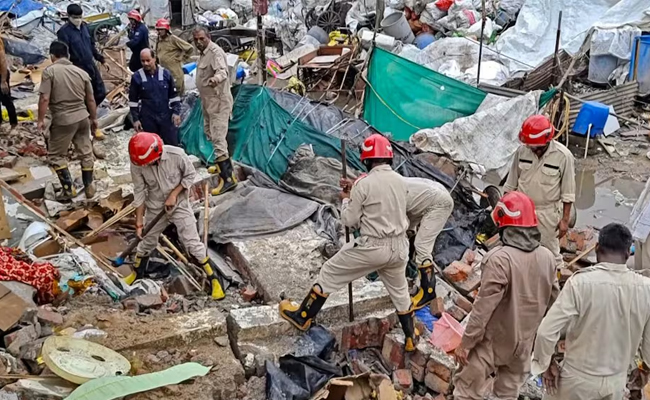
Aurangabad (Bihar) (PTI): Two persons were killed and six others injured after the wall of a house collapsed on them in Bihar’s Aurangabad district, police said on Sunday.
The deceased have been identified as Akhileshwar Yadav (55) and Satyanarayan Yadav (65), a senior officer said.
The incident took place on Saturday night when the people had gathered to watch a wedding ceremony in the Obra area, he said.
According to villagers, the wall of a house where the wedding ceremony was going on suddenly collapsed on them, Obra Police Station SHO Nitish Kumar said.
A police team reached the spot after receiving the information, the SHO said.
"Two died on the spot, and the six injured were immediately taken to the nearest government hospital. Their condition is stated to be out of danger," the station house officer said.
The bodies were sent for the post-mortem examinations, said the SHO, adding that the matter was being examined.