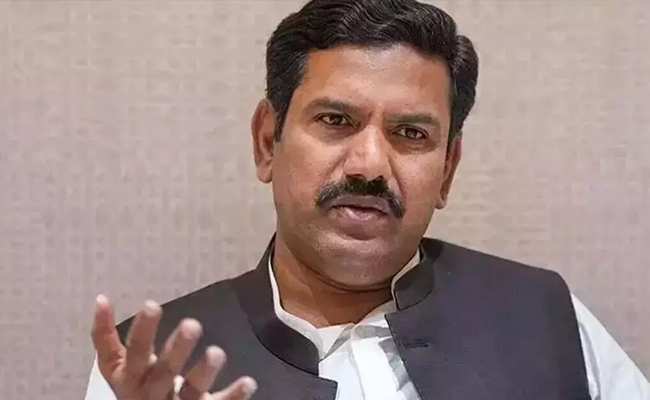
Businessmen controlling media: Dinesh Amin Mattu
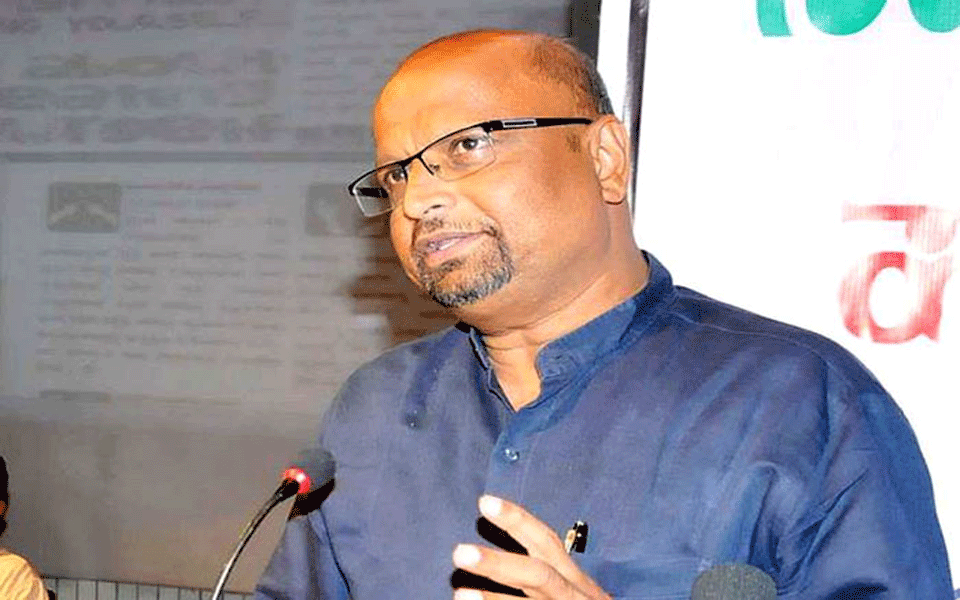
Bengaluru, July 07: Senior journalist Dinesh Amin Mattu has said that businessmen and advertisements are managing the media in recent times.
Speaking at Press Day function organized by the city's press club, he said, advertisements are being given more importance than the news in present days. For newspapers, advertising consumers have become more important than news readers. “Today the newspapers are being sold for less than the cost of production,” he added.
Dinesh further asked “how many reports regarding the irregularities of businessmen have been investigated and published by media so far? When politicians de-notify even one acre of land, whole day, it gets discussed in the media houses. That means today’s media is standing on entrepreneurs’ advertisements. Moreover, entrepreneurs have recently begun to control politicians as well. This is a dangerous development.”
“The way doctors, engineers, writers, and others are getting corrupted; in the same manner, journalists are becoming corrupt. Thus, if the media is not diagnosed, it is impossible to eradicate the disease from society,” he added.
We have imagined media as the fourth pillar of the Constitution. But there is no mention of it anywhere in the Constitution. Also, Dr. BR Ambedkar had rejected this. Instead, how much responsibility the general public has under the right to expression, the same duty is there on Journalists. In spite of that, it has been projected as the fourth organ of the constitution.
Those who work in the legislature, executive and judiciary are paid from ordinary people's taxes. But, those who work in the media are depending on the advertisers’ money. In such a case, how is it possible to stand the fourth pillar amid three pillars, he asked.
Journalists will be watching a scene even if they close their eyes. A subject is also heard if ears are closed. But it is not possible for them to independently express what they saw, heard, and felt. Everything is in the hands of the owner. Understand this hardship and find out a way, Dinesh Amin Mattu said.
Let the Truth be known. If you read VB and like VB, please be a VB Supporter and Help us deliver the Truth to one and all.
Online fraud: Hotel chef from Udupi cheated of over Rs 1 lakh by WhatsApp contact

Udupi: Udupi City Police have registered a case of online fraud after a 62-year-old hotel chef was allegedly cheated of Rs 1.13 lakh by a woman who befriended him on WhatsApp, claiming to be based in London.
The victim, identified as Pandu Kariappa Poojary, a resident of Kuthpadi in Udupi, was working at a hotel in Mangaluru.
He reportedly came into contact with a woman identifying herself as Emilda William on WhatsApp. During their interactions, she told Poojary that she planned to start a cosmetics and hotel business in India and would meet him during a visit to Mangaluru.
On April 7, Emilda sent Poojary a flight ticket from London to Delhi via WhatsApp. The following day, Poojary received a phone call from a woman who informed him that Emilda had arrived at Delhi airport carrying a demand draft worth Rs 5 crore along with other items. The caller allegedly asked him to pay Rs 70,000.
Subsequently, Poojary also received a call from Emilda, who was reportedly crying and spoke about the situation. Believing the claims, he transferred a total of Rs 1,13,300 in phases using a scanner. He later realised that he had been cheated.