Businessmen who do not do as Centre asks of them are harassed by IT, ED: Priyank Kharge
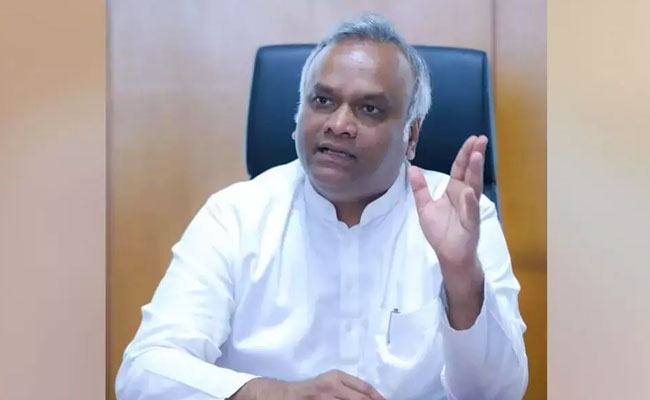
Bengaluru: Rural Development and IT-BT Minister Priyank Kharge has alleged that businesspersons who do not fall in line with the central government are being deliberately harassed through agencies such as the Income Tax Department, the Enforcement Directorate (ED), and the Goods and Services Tax (GST) authorities.
Speaking to reporters in Bengaluru on Saturday in connection with the suicide of businessman C.J. Roy, Kharge said that for the past ten years, central agencies have been used as tools to target entrepreneurs who refuse to follow the diktats of the Union government.
“There are several examples of businesspersons being subjected to harassment by the ED, IT and GST departments if they do not toe the Centre’s line. But such action is never seen against industrialists like Ambani and Adani,” Kharge alleged. He claimed that instead of scrutiny, the government changes policies to favour and expand the businesses of select corporate groups.
Referring to the death of C.J. Roy, the minister said the incident shows the extent of pressure faced by businesspersons. “If a businessman is driven to suicide, one can imagine the level of harassment involved. This is not limited to industrialists alone; even ordinary citizens are facing similar trouble,” he said.
Kharge further stated that the allegation of harassment was not being made by him alone but by the family of the deceased businessman. He demanded a thorough investigation into the matter to ascertain the role of central agencies and ensure accountability.
Let the Truth be known. If you read VB and like VB, please be a VB Supporter and Help us deliver the Truth to one and all.
Trump rushed out of dinner event after shots fired; one arrested
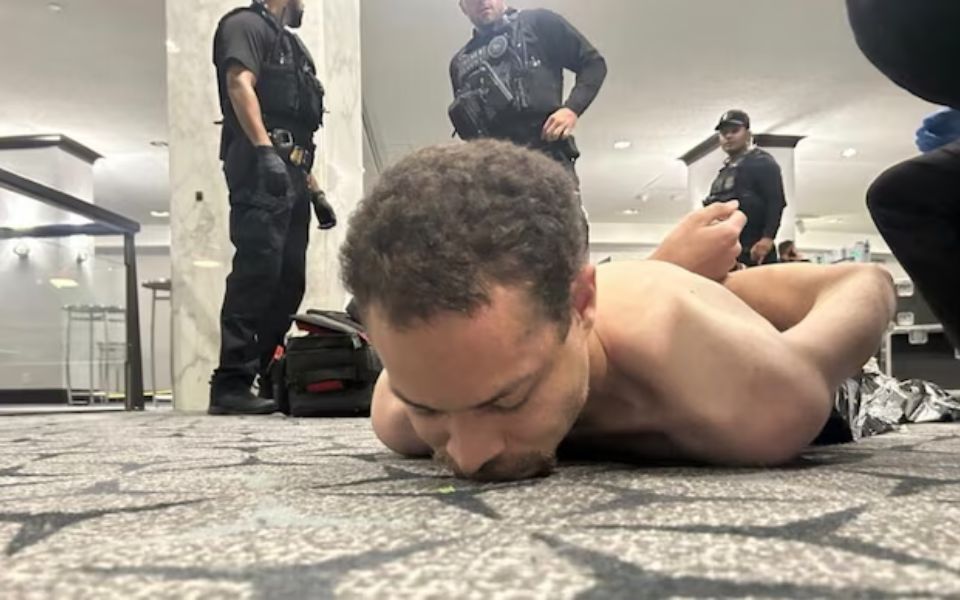
Washington (PTI): US President Donald Trump and other top White House officials were evacuated unharmed from the annual dinner of White House correspondents after a man armed with multiple weapons fired shots outside the ballroom of the hotel.
The incident took place at around 8:34 PM local time when dinner was served. At that time, Trump was seen having a conversation with Weijia Jiang, the President of the White House Correspondents' Association, and mentalist Oz Pearlman, who was scheduled to present a show at the marquee event at the Washington Hilton here.
Secret Service officials and other security personnel covered the President, First Lady Melania Trump, Vice President J D Vance, and the Second Lady Usha Vance, who were seated at the head table, and escorted them out of the ballroom.
Several guests at the dinner, including leaders across the political spectrum, journalists and other invitees, ducked under the table, apparently as a reflex reaction.
Putting up a brave face, President Trump later announced on Truth Social that the dinner would be rescheduled within 30 days.
“Boom, boom, boom, boom is all that I heard, and many guests ducked under the table,” a C-SPAN reporter at the dinner said.
Hours later, Trump addressed a press conference at the White House and announced that the security personnel had captured one person who hails from California.
“I heard a noise and sort of thought it was a tray going down. I've heard that many times. It was a pretty loud noise, and it was from quite far away. He (the attacker) hadn't reached the area at all. They really got him,” Trump told reporters, recalling the incident.
Trump said one security officer was shot at but saved as he was wearing a bulletproof vest.
Several protestors had lined up on the road outside the hotel, raising slogans against the Trump administration and Defence Secretary Pete Hegseth.
A CNN reporter who was outside the ballroom at the Washington Hilton said he saw a gunman opening fire just a few feet away. He was among the dozens of attendees who took cover as law enforcement swarmed the venue.
The suspect has been identified as 31-year-old Cole Tomas Allen from California.
Asked how Saturday’s incident impacts him as the US president, Trump told reporters he is in a dangerous job but that he is no “basket case.”
“I like not to think about it. I lead a pretty normal life, considering, you know, it’s a dangerous life. I think I handle it as well as it can be handled,” Trump said.
Trump has survived two assassination attempts over the past two years – first at a presidential election campaign rally in Butler, Pennsylvania, on July 13, 2024, and later in Palm Beach, Florida, on September 15, 2024.
“I will say you had Republicans, Democrats, independents, conservatives, liberals, and progressives...everybody in that room, big crowd, record-setting crowd,” he said.
“We had some great work done by law enforcement, but in light of this evening's events, I ask that all Americans recommit with their hearts in resolving our differences peacefully,” Trump said.