Cabinet meeting to be held in Kalaburagi on September 17: Minister Priyank Kharge
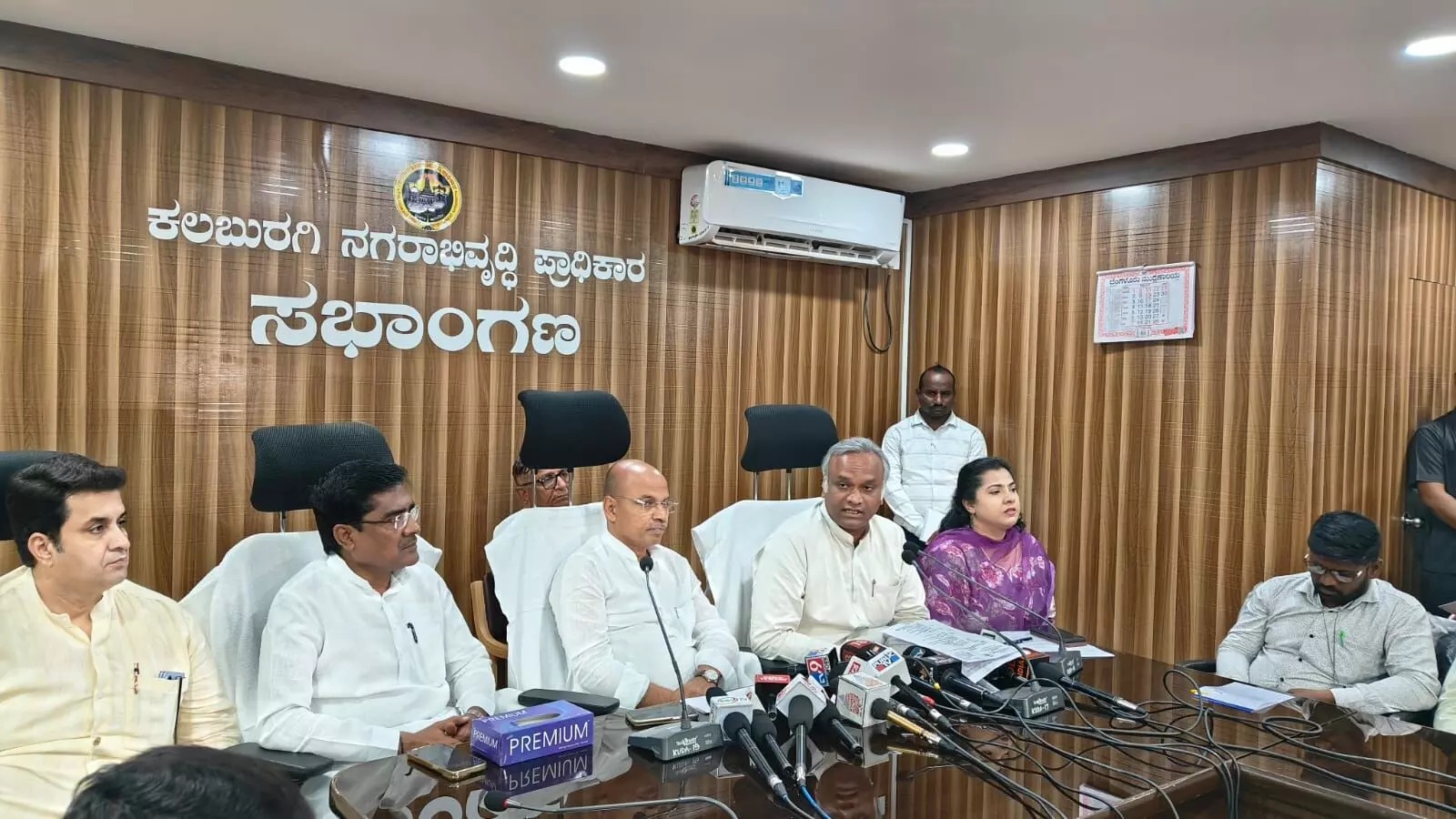
Kalaburagi: Chief Minister Siddaramaiah will preside over a cabinet meeting in Kalaburagi on September 17, as part of the much-anticipated Kalyan Karnataka Utsav celebrations, Kalaburagi District In-charge Minister Priyank Kharge informed.
Speaking at a press conference at the Urban Development Office, Kharge outlined the CM's schedule, stating that Siddaramaiah will begin the day by garlanding the statue of Sardar Vallabhbhai Patel, followed by participation in the flag-hoisting ceremony at the DAR ground. The cabinet meeting will focus on the comprehensive development of the Kalyan Karnataka region, with discussions to prepare a blueprint for the area's future growth.
Kharge mentioned that the demands of legislators from the region are extensive, comparable to the state budget. However, he assured that a macro plan will be implemented, and while some plans may take time to materialise, efforts are underway to address them in the coming years.
The minister also spoke about the government's commitment to filling vacancies, particularly in welfare departments, with high priority given to this matter. He noted that 800 engineer positions have already been filled, and efforts are ongoing to fill the remaining 2.5 lakh government vacancies across the state.
Kharge further highlighted development projects under the Kalyana Patha Yojana, which will see road upgrades in the region over the next two years. Proposals for irrigation projects in Kalaburagi, and Bidar districts have also been submitted, ensuring that the area will not face any neglect in terms of development, Kharge said.
Legislative Council Member Jagadev Guttedar, Kalaburagi Urban Development Authority Chairman Mazar Alam Khan, and others were present.
Let the Truth be known. If you read VB and like VB, please be a VB Supporter and Help us deliver the Truth to one and all.
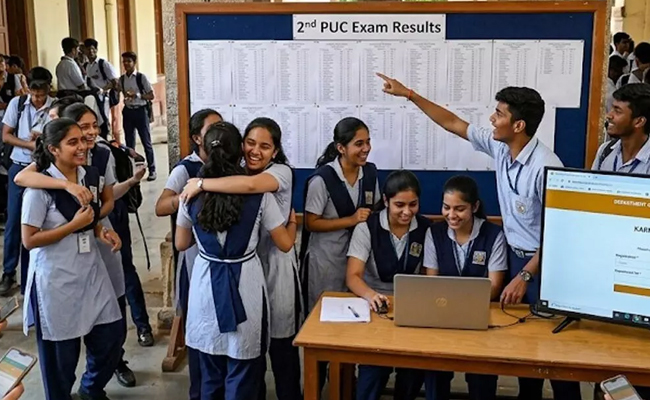
Second PUC results: Life convict clears exam with distinction, DGP lauds effort
_vb_63.jpeg)
Bengaluru: A life convict lodged in Ballari Central Prison has successfully cleared the second PUC examination.
Ashok Kumar S, who appeared for the examination under prison escort, secured 481 marks out of 600, registering 80.1 percent.
Director General of Police (Prisons and Correctional Services), Alok Kumar (IPS), shared the development on his official ‘X’ handle, commending the inmate’s achievement.
In his post, he stated that it was heartening to see a life convict score over 80 percent in the examination, adding that the inmate had appeared from Ballari Central Prison under escort.
It’s heartening to see that one of our life convict prisoners Ashok has obtained 80.1% marks in PUC exam. He appeared under Prison escort from Ballari Central Prison for his exams.
— alok kumar (@alokkumar6994) April 9, 2026
Glad to see that Walls of the prison has not subdued his hopes for a better future. pic.twitter.com/Nzlcy076SR
He further noted that the achievement reflected that the “walls of the prison have not subdued his hopes for a better future.”
Alok Kumar in his post also shared the result sheet of Ashok.
The Karnataka School Examination and Assessment Board (KSEAB) declared the second PUC results for 2026 on April 9.
A total of 6,32,200 students appeared for the examination across all streams, of whom 5,46,698 passed, recording an overall pass percentage of 86.48 per cent.