Case against Ola Electric founder Bhavish Aggarwal, senior officials after suicide of employee

Bengaluru (PTI): A case has been registered against the founder of Ola Electric and other senior officials of the company following the suicide of a 38-year-old engineer, who had accused them of "harassment", police said on Monday. The deceased identified as K Aravind, had been working as a Homologation Engineer with Ola Electric in Koramangala since 2022.
In a statement, the company spokesman said the firm has challenged the registration of the FIR before the Karnataka High Court, and protective orders have been passed in favor of Ola Electric and its officials.
"We are deeply saddened by the unfortunate demise of our colleague, Aravind, and our thoughts remain with his family during this difficult time. Aravind had been associated with Ola Electric for over three and a half years and was based at our headquarters in Bengaluru," the statement said.
It also said that during his tenure, Aravind never raised any complaint or grievance regarding his employment or any harassment. His role also did not involve any direct interaction with the company’s top management, including the promoter.
"To provide immediate support to the family, the company said it promptly facilitated the full and final settlement to his bank account," the statement added.
According to the police, Aravind’s brother, Ashwin Kannan, stated in a complaint that on September 28, Aravind allegedly attempted suicide at his apartment in Chikkalasandra and was rushed to Maharaja Agrasen Hospital, where he later succumbed to his injuries despite medical efforts.
A 28-page handwritten note was recovered from Aravind’s room, in which he purportedly blamed his superiors for mental harassment and non-payment of salary and allowances, leading him to consume poison.
Citing the death note of Aarvind, his brother complained that Subrat Kumar Das, Head of Homologation Engineering, Ola Electric founder Bhavish Aggarwal, and other company officials had subjected Aarvind to "sustained workplace harassment and withheld his salary and dues, causing him severe distress".
The complaint also mentioned that Rs 17.46 lakh was transferred to Aravind’s bank account through NEFT on September 30, two days after his death, which the family termed “suspicious.”
When questioned, the company representatives allegedly gave “unclear explanations” and appeared to be an attempt to cover up internal lapses, the complaint said.
Based on the complaint, a case was registered on October 6 at Subramanyapura police station against Subrat Kumar Das, Bhavish Aggarwal, and others under Sections 108 (abetment of suicide) and 3(5) (common intention) of the Bharatiya Nyaya Sanhita. Further investigation is underway, police said.
The company statement also said that "Ola Electric is fully cooperating with the authorities in their ongoing investigation and remains committed to maintaining a safe, respectful, and supportive workplace for all employees," the statement added.
Let the Truth be known. If you read VB and like VB, please be a VB Supporter and Help us deliver the Truth to one and all.
Pune airport runway restored after IAF aircraft snag; ops resume
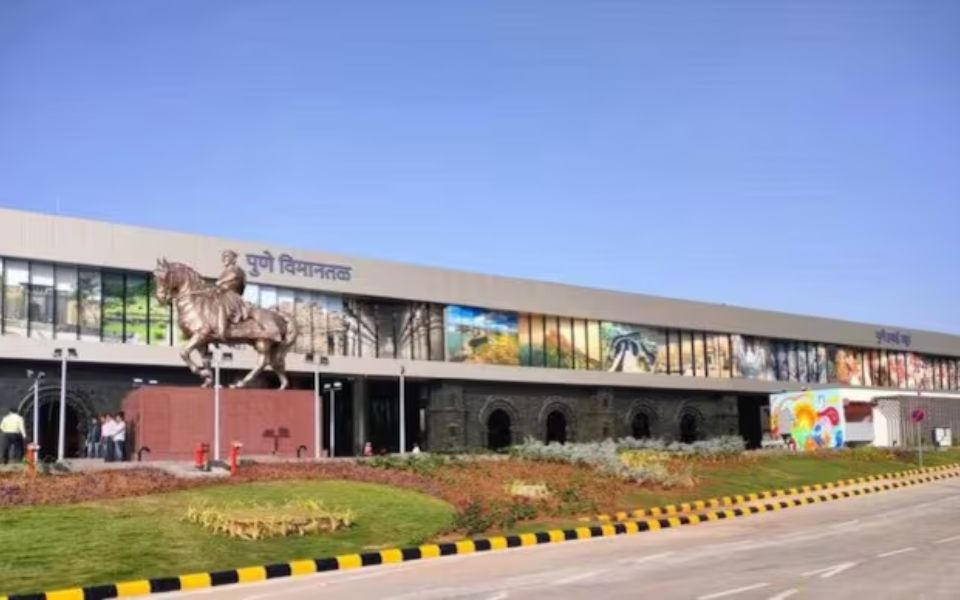
Pune (PTI): The runway at Pune airport, which was temporarily unavailable due to an incident involving an Indian Air Force (IAF) aircraft, has now been restored and declared operational, the Air Force said on Saturday.
The authorities at the Pune International Airport had earlier said that around 10.25 pm on Friday, a fighter aircraft experienced an undercarriage failure during landing, causing the runway to be blocked.
As many as 91 flights of airlines, including IndiGo, Air India, SpiceJet, Akasa, and Air India Express, were affected due to the incident, they said.
Earlier on Friday night, the Air Force had stated that the runway at Pune airport was temporarily unavailable following an incident involving one of its fighter aircraft. The aircrew are safe, and there is no damage to civil property, it had said.
"The runway at Pune Airport, which was temporarily unavailable due to an incident involving an Indian Air Force aircraft, has now been restored and declared operational. All necessary safety inspections and clearances have been completed. Operations are resuming in a phased manner," it said in a post on X.
Flight operations at Pune airport are being gradually restored. The situation has been brought under control with the highest priority given to the safety of citizens, a Defence PRO said.