Caste census: Cong govt trying to divide Hindu society, it's 'unfortunate', says BJP
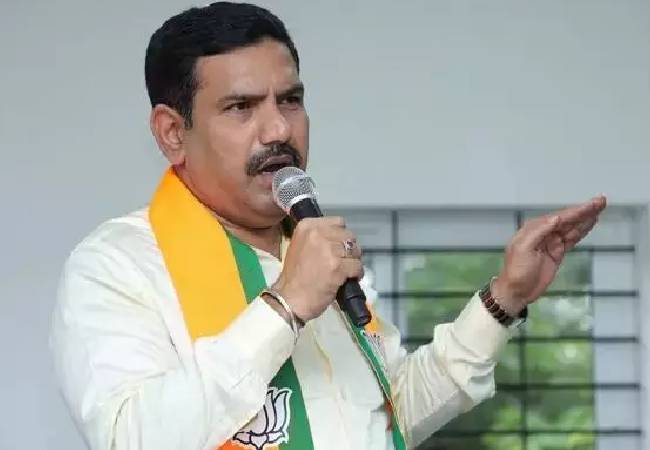
Shivamogga (PTI): With the Social and Education Survey, popularly known as 'caste census' commencing in Karnataka on Monday, state BJP President B Y Vijayendra accused the Congress government and Chief Minister Siddaramaiah of trying to divide the Hindu society, and called it "unfortunate".
He termed the caste census as the "misadventure" of the state government, despite it not having any powers to conduct such a survey.
"The caste census has reached the High Court...the chief minister, who should be thinking about the development of the state, is involving himself in attempts to divide the Hindu society. This is an unfortunate thing for the state," Vijayendra said.
Speaking to reporters here, he said, "People are discussing it. People and society have become aware now, but there is a need for Hindu society to become more aware. This misadventure of the state government, despite them not having any powers to do the cast census is condemnable. We will see what happens at the court."
The survey by the Karnataka State Commission for Backward Classes that will go on till October 7, will see as many as 1.75 lakh enumerators, mostly government school teachers, covering around 7 crore people in approximately 2 crore households across the state.
The survey, at an estimated cost of Rs 420 crore, will be conducted "scientifically," with a 60-question questionnaire prepared for the exercise, according to officials.
Regarding International Booker Prize winner writer Banu Mushtaq inaugurating Mysuru Dasara, despite objections, Vijayendra said, this shows the mindset of CM Siddaramaiah and the Congress government.
"There have been enough discussions on this issue for the last one month. A petition challenging this has been rejected at the Supreme Court. More than what has happened in the High Court and Supreme Court, the chief minister wanting to play a mad game even in connection with Dasara festival is something people are discussing," he said.
The famous Mysuru Dasara was inaugurated on Monday amid controversy, with objections from some sections, against the government's decision to invite Mushtaq to inaugurate the festival.
Pointing to the government's attitude in connection with the Dharmasthala issue, Ganesha festival celebrations and Mysuru Dasara, the BJP chief said, nowhere such issues are happening in the country.
On matters concerning Hindus, their religious celebrations, culture and traditions, there is no problem in other states. Problems are occuring in Karnataka because the chief minister of the state is giving an opportunity for it. Let anyone inaugurate Dasara, but the people of the state have understood the mindset of this government and the CM, he said.
The Supreme Court on Friday dismissed a plea challenging the Karnataka High Court's decision upholding the state government's invitation to Mushtaq to inaugurate Dasara.
The controversy surrounding the government's decision to invite Mushtaq to inaugurate Dasara, stems from allegations that she has made statements in the past that are perceived by some as "anti-Hindu" and "anti Kannada".
Critics have argued that her selection for the festival, which traditionally begins with Vedic rituals and floral offerings to Goddess Chamundeshwari, disrespects religious sentiments and long-standing traditions associated with the event.
Objections have been raised by BJP leaders and others to the state government's decision to invite Mushtaq to inaugurate the Dasara festivities, following an old video that went viral, in which she has reportedly expressed reservations about worshipping the Kannada language as "Goddess Bhuvaneshwari", stating that it was exclusionary to people like her (minorities).
However, Mushtaq, on her part, has said that her statement has been distorted by making selective parts of her old speech go viral on social media.
Let the Truth be known. If you read VB and like VB, please be a VB Supporter and Help us deliver the Truth to one and all.
Indian crew killed in 'unfortunate' maritime incident: Indian mission in Dubai

Dubai (PTI): An Indian crew member was killed in an "unfortunate" maritime incident, the Indian mission said on Friday, extending assistance.
The Indian Consulate in Dubai did not give much information about the incident but said it was "saddened to learn of the unfortunate incident at Sea that caused the tragic death of an Indian crew of a ship".
In a post on X, the Consulate said it was in touch with the ship's owner and is ascertaining further details.
"The Consulate will render all possible assistance in this matter on priority. Our deepest condolences," it said.