Caste census report is 'most scientific': Karnataka Home Minister G Parameshwara
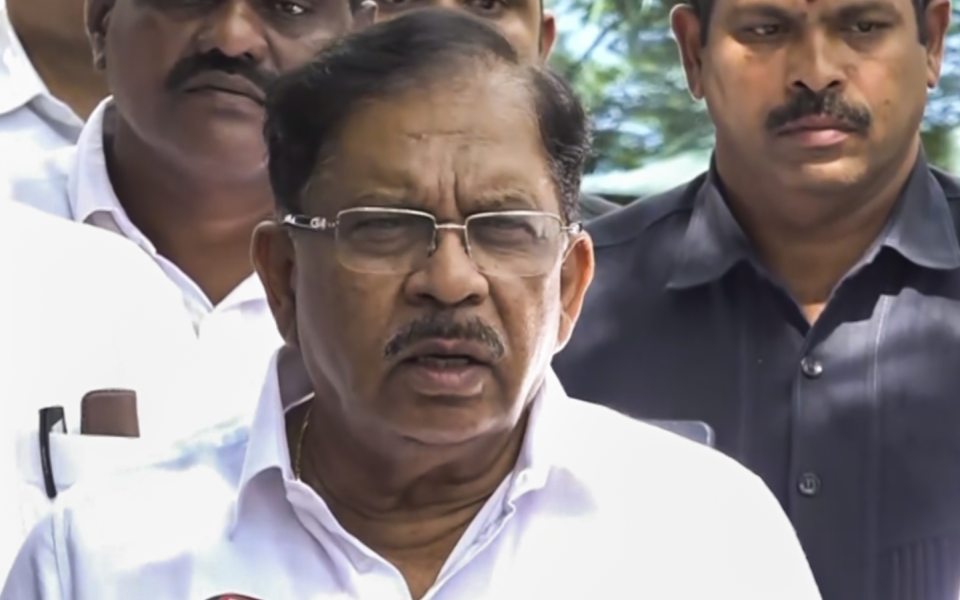
Bengaluru, Apr 19 (PTI): Terming the caste census as a "most scientific" exercise, Karnataka Home Minister G Parameshwara on Saturday said the cabinet will take a decision on its implementation after hearing opinion of all the ministers.
His comments come amidst opposition to the survey report from various sections of the society calling it "unscientific". They have demanded that it be rejected, and a fresh survey be conducted.
A special cabinet meeting convened to deliberate on the caste census report on Thursday had ended inconclusive, reportedly amid internal differences within the government.
The cabinet is scheduled to take up the matter again on May 2.
"All ministers have been asked to share their opinion, some of us have participated in the discussion during the cabinet, the discussion will continue, everyone will share their opinion. After hearing everyone's opinion the cabinet will take a decision. It is going to be a cabinet decision, not individuals or the Chief Minister's," Parameshwara said.
Speaking to reporters here, he said, some communities have expressed concern that their population strength has been shown less in the survey.
Stating that after studying the survey, he feels that this is one of the "most scientific" exercise, Parameshwara said, the survey has gone to the extent of gathering information whether the borewell dug by a person was successful with adequate amount of water or whether it turned out to be dry.
"Signatures have been taken after gathering data from every household and supervisor's signatures are also there. These data are available. 1.37 crore families were visited and all the data with signatures are there," he added.
According to sources, some Ministers expressed reservations about the survey report during the cabinet meeting on Thursday, citing concerns expressed from several quarters calling it unscientific and outdated, and about undercounting. Following this Chief Minister Siddaramaiah asked all Ministers to give their opinion in writing or verbally.
Various communities, especially Karnataka's two dominant ones -- Vokkaligas and Veershaiva Lingayats -- have expressed strong reservations about the survey that has been done, calling it "unscientific", and have demanded that it be rejected, and a fresh survey be conducted.
Objections have also been raised by various sections of society, and there are also strong voices against it from within the ruling Congress.
However, not everyone is opposed. Leaders and organisations representing Dalits and some sections of OBCs, among others, are in support of it, and want the government to make the survey report public and proceed with it, stating the government has spent about Rs 160 crore public money on it.
Responding to a question on the opposition's criticism that the report was written sitting at some corner, the Home Minister said, the opposition makes such criticism, and the government has taken note of their criticism and comments.
The main intention and terms of reference for this survey was to study the status of various communities socially, eductionally and economically, and during the survey they have naturally collected data regarding the population of communities, and it has been submitted to the government.
"It is being discussed in the government, ultimately after accepting it the government will prepare programmes and schemes based on it," he added.
Asked if the caste census data was so accurate, why the same data is not being used to provide internal reservation among Scheduled Castes (SCs), instead of going for a fresh survey for that purpose, Parameshwara said, the Justice H N Nagmohan Das Commission which has been mandated to gather empirical data for internal reservation, will compare caste census data too.
"The Nagmohan Das commission was given the mandate for a survey before this caste census report came, there is no need to withdraw it now as it may lead to confusion, it will be good if there are double reports," he said responding to a question about some Vokkaliga and Lingayat Ministers questioning why can't there be a fresh caste census survey, when a separate survey was being done to gather data for internal reservation in a particular community (SCs).
Nagmohan Das Commission has been given two months time for the survey, based on which the government plans to implement internal reservation among SCs. The internal reservation is aimed at slicing up the 17 per cent reservation matrix given to 101 scheduled castes.
Commenting on the incidents, where some students were allegedly asked to remove their Janivaras (sacred thread worn by Brahmins) before entering the CET examination hall at centres in Bidar and Shivamogga districts, the Home Minister said, "it is a big mistake and I can't accept such things."
"Some general guidelines would have been given for conducting exams, will any one instruct such things in guidelines? These acts by individuals are not acceptable," he added.
Let the Truth be known. If you read VB and like VB, please be a VB Supporter and Help us deliver the Truth to one and all.
Karnataka readies for deficit monsoon; CM Siddaramaiah orders water supply measures
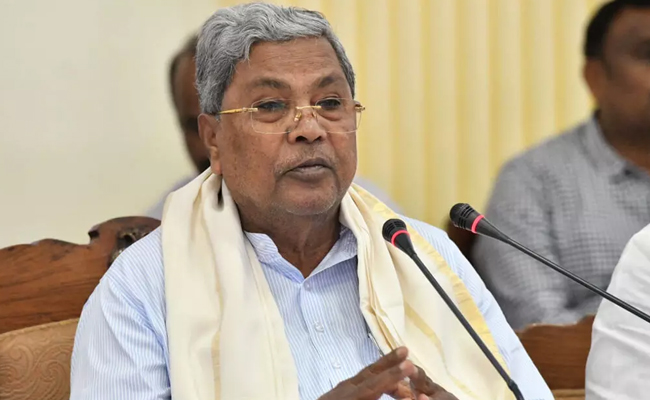
Bengaluru (PTI): Warning of a likely deficit monsoon across the state, barring five districts, Karnataka Chief Minister Siddaramaiah on Thursday instructed deputy commissioners to take precautionary measures to prevent disruption to the drinking water supply.
The CM chaired a meeting with district-in-charge ministers, deputy commissioners, and Zilla Panchayat chief executive officers to review drinking water supply in rural and urban areas during the peak of summer.
"The meteorological department has predicted below-normal monsoon rainfall this year. There is a possibility of normal rainfall in August, while less rainfall is expected in September," Siddaramaiah was quoted as saying in a statement issued by his office.
"If there is any disruption in the drinking water supply, the respective Deputy Commissioners will be held responsible," he said, directing the Revenue, Panchayat Raj and Urban Development departments to coordinate closely.
Stating that most districts in the north interior region are likely to experience more hot days than usual between April and June, the CM asked deputy commissioners to take appropriate precautionary measures.
He said forecasts by the meteorological department should be taken seriously.
Public shade and drinking water facilities should be provided, he said, adding that there is no shortage of funds to ensure water supply.
He also said the Finance Department has been instructed to release funds based on reports from deputy commissioners.
A total of 213 taluks and 2,410 gram panchayats have been identified as potentially facing drinking water shortages during summer. At present, 598 gram panchayats across 114 taluks are facing shortages.
Drinking water is being supplied to 137 villages through 129 tankers. As many as 585 private borewells have been rented to supply water to 515 villages.
The CM said shortages are likely in several districts, including Kalaburagi (147 gram panchayats), Bagalkot (114), Belagavi (127), Chikkamagaluru (115), Haveri (138), Mandya (130), Tumakuru (141) and Uttara Kannada (125).
At present, 27 urban local bodies are facing water shortages, while 95 have been identified as vulnerable. A total of 145 wards are being supplied water through 57 tankers, and 22 borewells have been taken on rent.
Tankers should be used only in emergencies, with priority given to renting private borewells, he said, adding that borewells can be drilled if necessary.
Highlighting that 321.93 TMC of water is currently available in the state’s 14 major reservoirs—36 per cent of total capacity—Siddaramaiah said this compares with 330.35 TMC during the same period last year. "Sufficient water is available in reservoirs for drinking purposes at present," he said.
With the monsoon likely to be delayed, he directed officials to ensure adequate drinking water availability in reservoirs till mid-July.
Drinking water supply should be prioritised over irrigation, he said, directing officials to identify and repair leakages in reservoirs.
Public grievances related to drinking water should be addressed promptly, with control rooms set up at the taluk and ward levels. District-level task forces should function actively, he added.
Cautioning about possible disruption in fertiliser supply due to the situation in the Middle East, the CM directed officials to prevent hoarding and ensure timely availability to farmers.
"Ensure proper distribution of urea and DAP and prevent their diversion to other states," he said, adding that inspections at check posts should be intensified.
He noted that due to good rainfall over the past two years, there is no immediate shortage of fodder, but availability should continue to be monitored. The CM directed that task force meetings on drinking water be held in all taluks and reports be submitted.
He also stressed the need to prevent the supply of contaminated water, saying deputy commissioners are responsible for ensuring safe drinking water and preventing related health issues.
Officials were asked to continuously monitor fertiliser sales to ensure an adequate supply for eligible farmers.
"Some districts, including Haveri, have recorded higher fertiliser sales than last year. What is the reason?" he asked, calling for close monitoring to prevent shortages.