Cauvery water row: Congress government in Karnataka is a slave of Stalin, alleges BJP

Bengaluru: The Karnataka unit of the BJP has severely criticized the state government for letting the Cauvery water to Tamil Nadu, calling the Karnataka state government a 'slave of the Stalin government in Tamil Nadu', in a post on its official X account.
On Friday, the BJP Karnataka posted in reference to the state government and Cauvery water row, "Kannadigas are greatly upset and scornful of the Congress government, which came to power speaking highly of the valour, achievement, greatness and self-pride of Kannadigas during the campaigns for the Assembly elections but is betraying the people of the state when they are in need. The Congress government is merely a slave of MK Stalin's government of Tamil Nadu and working against Karnataka."
Criticizing the state government further in relation to the Cauvery water issue, the state unit has said, "The Congress government, which had used the card of existence and respect of the people of Karnataka prior for the election campaign, has auctioned the life and honour of Kannadigas by letting the Cauvery water to Tamil Nadu. All these are acts of betrayal against Karnataka."
BJP Karnataka also accused the Congress government of Karnataka of failing to argue appropriately in favour of Kannadigas in the Cauvery water issue merely to save the INDIA bloc and please Rahul Gandhi. "Siddaramaiah or representatives of the Karnataka government did not bother to hold discussions and convince the Tamil Nadu government of the struggle for water in Karnataka," the state unit posted on X.
Let the Truth be known. If you read VB and like VB, please be a VB Supporter and Help us deliver the Truth to one and all.
Unidentified men set fire to TVK campaign office near Srirangam
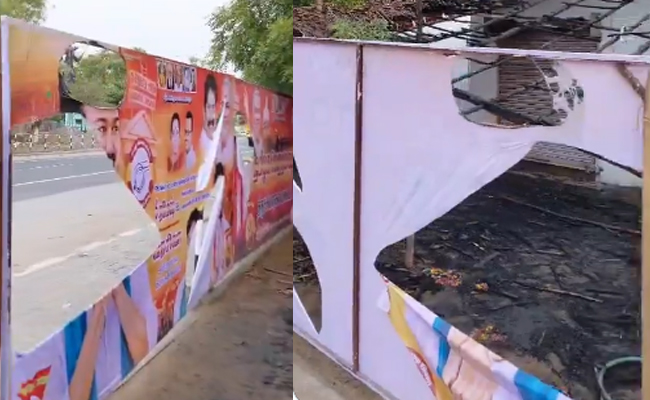
Tiruchirapalli (PTI): A campaign office of the actor Vijay-led TVK was allegedly torched by unidentified miscreants in Kamanayakkanpalayam village near Srirangam in the early hours of Friday, police said.
According to the police, the damage is minimal. Fire had engulfed the thatched roof providing shade at the entrance of the building that served as the party’s election office for the Srirangam constituency.
While on social media, a CCTV footage of two unidentified men fleeing on motorbike is being circulated as the culprits, police said the video footage is yet to be verified.
Based on a complaint lodged by TVK, the Pettaivaithalai Police have registered a case and initiated a search for the perpetrators.
திருவரங்கம் தொகுதியில் த.வெ.க வேட்பாளரின் தேர்தல் அலுவலகம் மர்ம நபர்களால் தீவைக்கப்பட்டு சேதப்படுத்தப்பட்டுள்ளது. @TNelectionsCEO @ECISVEEP#TVKVijay #தமிழகவெற்றிக்கழகம் pic.twitter.com/ImDZfTkuAq
— Thanjavur_District_Head (TVK) (@TVK_Thanjai) May 1, 2026