Mahagathbandhan gets boost: Chandrababu Naidu to meet Deve Gowda tomorrow
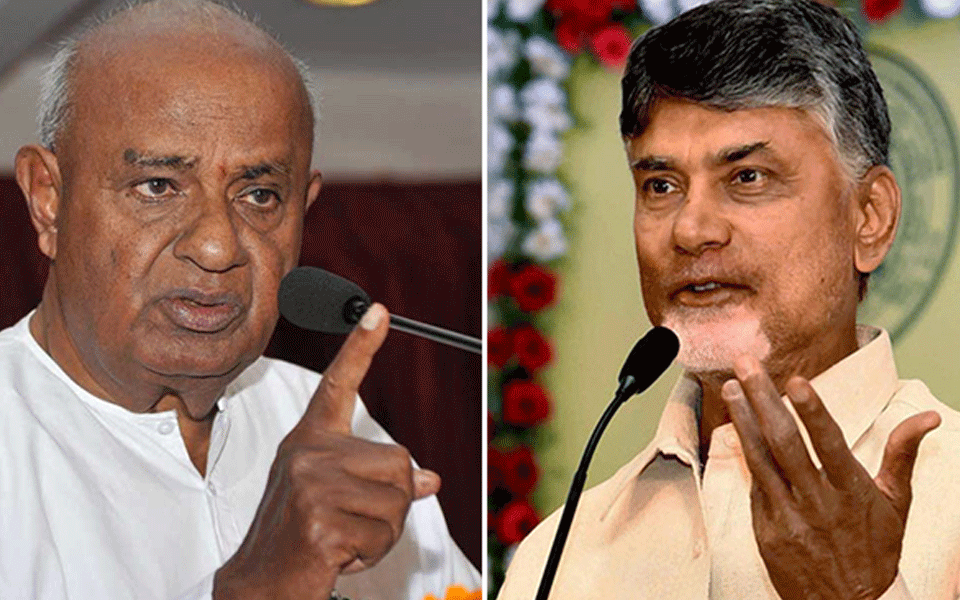
Bengaluru, Nov 7: TDP supremo and Andhra Pradesh Chief Minister N Chandrababu Naidu, who is trying to unite opposition parties to take on BJP in the Lok Sabha Elections next year, will meet former Prime Minister H D Deve Gowda and Chief Minister H D Kumaraswamy here on Thursday.
Naidu will meet Gowda at his residence at Padmanabha Nagar and Kumaraswamy would also be present during the meeting, JD(S) said on Wednesday.
Interestingly, Naidu's meeting with the JD(S) supremo comes in the backdrop of Congress-JD(S) coalition resolving to contest the 2019 Lok Sabha elections together against the BJP,buoyed by the victory in the bypolls.
The Congress-JD(S)coalition in Karnataka on Tuesday won two of the three Lok Sabha seats and both assembly constituencies in the fiercely fought by-polls, giving a shot in the arm to the ruling combine that faces frequent questions about its longevity.
BJP had managed to hold on to the Shivamogga Lok Sabha seat.
The electoral sweep by the ruling coalition comes as a boost to it as the by-polls were seen as a barometer of the public mood ahead of the 2019 Lok Sabha polls.
Naidu had called his Karnataka counterpart over phone on Tuesday and congratulated the latter on the JD(S)-Congress combine's "spectacular victory" in the by-elections.
JD(S) MLC Saravana said Naidu's meeting with Gowdais in continuation of the discussions the Andhra Chief Minister was holding with "secular" party leaders across the country.
"The bypolls results that have come is a good development as people of state have understood the need for secular forces. He (Naidu) is expected to seek Deve Gowda's cooperation," he added.
Naidu had also recently met NCP chief Sharad Pawar And National Conference president Farooq Abdullah, among others.
Let the Truth be known. If you read VB and like VB, please be a VB Supporter and Help us deliver the Truth to one and all.
Samson's unbeaten 87 powers CSK to eight-wicket win over DC
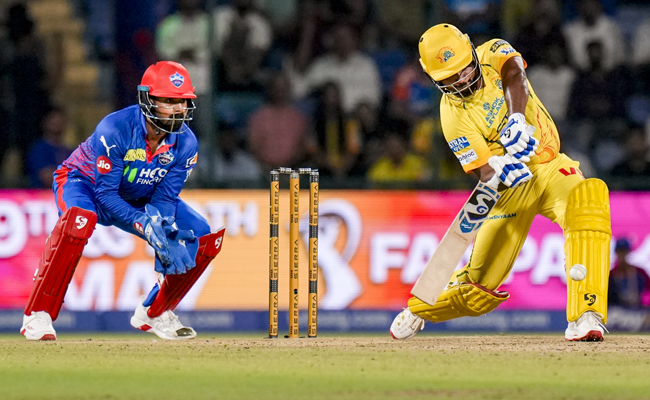
New Delhi (PTI): Sanju Samson bossed the chase with authority, anchoring a modest 156-run target with a fluent 87 not out as Chennai Super Kings outclassed Delhi Capitals by eight wickets in the IPL here on Tuesday.
Samson's knock came off just 52 balls with seven fours and six sixes, batting through the innings as CSK completed the chase in just 17.3 overs giving a huge boost to their net run-rate.
Electing to bat on a tricky surface, Delhi Capitals were restricted to 155/7.
West Indies left-arm spinner Akeal Hosein set the tone with the new ball, returning tidy figures of 1/19, including 14 dot balls.
Reduced to 69/5 in 11 overs, Delhi found some late impetus through Tristan Stubbs (38; 31 balls) and Sameer Rizvi (40 not out; 24 balls), who stitched together a crucial 65-run (off 47 balls) stand to give the innings a respectable total.
Brief Scores:
Delhi Capitals: 155 for 7 in 20 overs (Tristan Stubbs 38, Sameer Rizvi 40 not out; Noor Ahmed 2/22)
Chennai Super Kings 159 for two in 17.3 overs (Sanju Samson 87 not out, Kartik Sharma 41 not out). CSK win by eight wickets.