Chargesheet filed against Darshan, other accused in Renukaswamy murder case
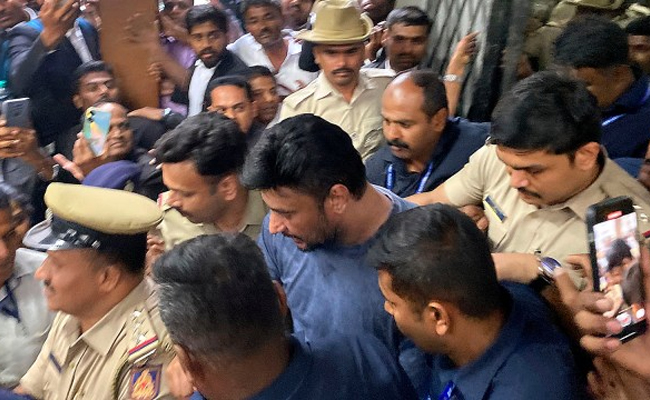
Bengaluru (PTI): The Bengaluru Police on Wednesday filed a chargesheet against 17 accused in the Renukaswamy murder case, including Kannada actor Darshan Thoogudeepa.
The case was investigated from all angles, Bengaluru Police Commissioner B Dayananda told reporters here.
The 3991-page chargesheet, which includes 231 witness statements, was submitted to the 24th Additional Chief Metropolitan Magistrate court.
Darshan along with his friend Pavithra Gowda and 15 others, who are accused in the case, are currently under judicial custody in different prisons in the state.
According to police sources, 33-year-old Renukaswamy, a fan of the actor, had sent obscene messages to Gowda, which enraged Darshan, allegedly leading to his murder. His body was found near a stormwater drain next to an apartment in Sumanahalli here on June nine.
Raghavendra, one of the accused who is part of Darshan's fan club in Chitradurga, had brought Renukaswamy to a shed in R R Nagar here, on the pretext that the actor wanted to meet him. It was in this shed that he was allegedly tortured and murdered.
According to the post-mortem report, Renukaswamy, a native of Chitradurga, died due to shock and haemorrhage as a result of multiple blunt injuries.
Police sources said Pavithra, who is accused number one, was the "major cause" for Renukaswamy’s murder, claiming that it has been proved from the probe that she instigated other accused, conspired with them, and took part in the crime.
Let the Truth be known. If you read VB and like VB, please be a VB Supporter and Help us deliver the Truth to one and all.
11k litres of milk poured into Narmada river after religious event; environmentalists see red
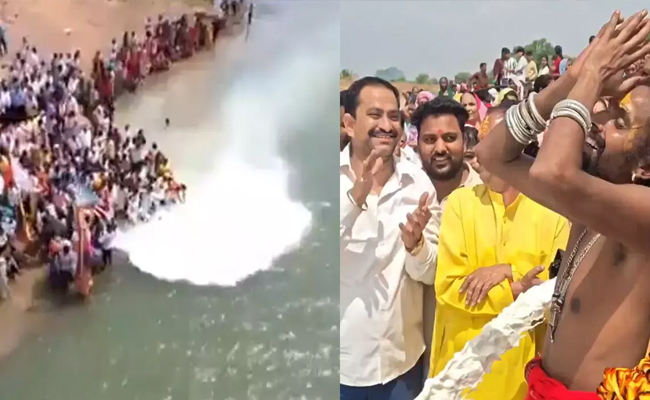
Sehore (PTI): Around 11,000 litres of milk were poured into Narmada river, often called the lifeline of Madhya Pradesh, in Sehore district on the culmination of a 21-day religious event as part of a sanctification ritual, prompting environmentalists to flag its negative impact on the ecosystem.
The event concluded at Satdev village in Bherunda area, located about 90 km from the district headquarters, with a 'mahayagna' on Wednesday.
The milk was offered to the river as part of rituals and prayers for the purity of the waters, the well-being of pilgrims and prosperity, organisers said.
The milk was brought in tankers to the riverbank and later poured into the flowing water amid chanting of mantras in the presence of a crowd of devotees.
However, environmentalists raised concerns over the practice, warning of its potential ecological impact.
"Such large quantities of organic matter can deplete dissolved oxygen in water, adversely affecting the river ecosystem. These impact local communities dependent on the river for drinking water and threaten aquatic life as well as domestic animals," noted environmentalist and wildlife activist Ajay Dube said.
Religious offerings should be symbolic and mindful, he asserted.
Renowned environmentalist Subhash Pandey said 11,000 litres of milk acts as a significant organic pollutant.
"It is highly oxygen-demanding and can lead to oxygen depletion, aquatic mortality, eutrophication (process of plants growing on river surface) and loss of potability. These effects are predictable from dairy-effluent chemistry and have been documented in similar incidents worldwide," Pandey pointed out.
Narmada originates at Amarkantak in the state and traverses 1,312 km westward to Maharashtra and Gujarat, emptying into the Arabian Sea via the Gulf of Cambay.
It is the largest west-flowing river in the peninsula, passing through a rift valley, and acts as a crucial water source for irrigation in MP, Gujarat and Maharashtra.