Checkposts will come up in border regions having village-to-village contact to stop COVID surge: CM
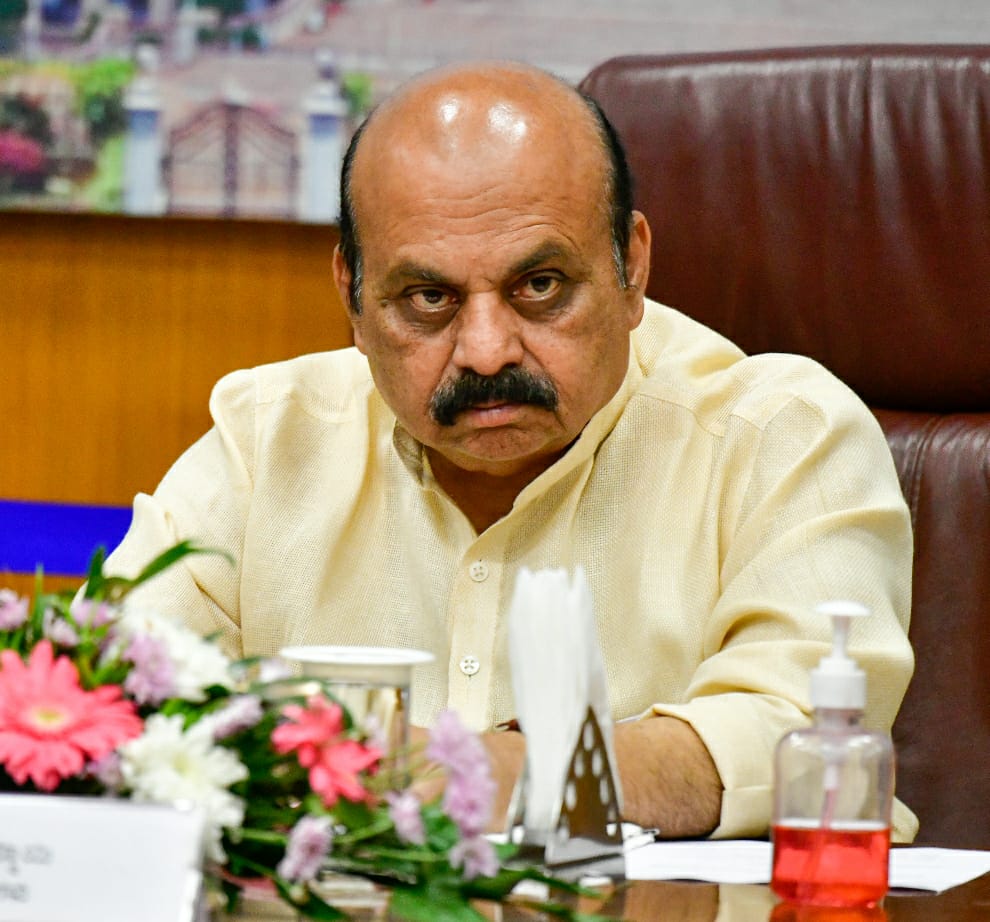
Kalaburagi, Jan 4: With rising COVID-19 cases in Maharashtra and Kerala, Chief Minister Basavaraj Bommai on Tuesday said checkposts will be set up in places where there are village-to-village contacts between Karnataka and neighbouring states.
He also said the police station under the jurisdiction will be responsible for such checkposts.
"Our experiences since the first and second wave have been that the infections in Karnataka rise whenever COVID-19 cases spiral in our neighbouring states, with whom we have daily business activities. We have to focus on that area," Bommai told reporters.
When asked about the laxity in the border regions, the Chief Minister said the border is vast and checking is happening at the main checkposts only. However, there are contacts with neighbouring states at the village level.
"Today, I am going to issue a direction to hold the police stations responsible for places where there is village-to-village contact. We will set up checkposts in such villages there and deploy people," the Chief Minister said.
To a query on the possibility of a lockdown, semi-lockdown or weekend curfew, Bommai said he will have to wait for the experts' view on it. He, however, pointed out that the lockdown will have an adverse effect on the economy.
"We have to keep the economy moving along with taking care of public health. That's the thinking of our government. I seek public support to contain the spread of the disease," Bommai said.
Regarding the possibility of closure of schools and colleges in view of rising COVID cases, Bommai said he will go by what the experts say in the meeting later in the evening.
The state on Monday reported 1,290 cases and five deaths of which 1,041 infections and three fatalities were in Bengaluru itself.
Let the Truth be known. If you read VB and like VB, please be a VB Supporter and Help us deliver the Truth to one and all.
Ordinance issued to increase number of Supreme Court judges from 34 to 38
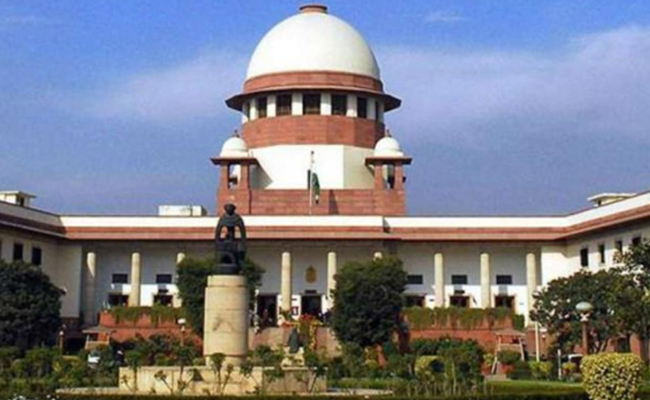
New Delhi (PTI): The government has promulgated an ordinance to increase the strength of the Supreme Court from the present 34 judges to 38, including the Chief Justice of India.
The law ministry notified the ordinance on Saturday, which amended the Supreme Court (Number of Judges) Act, 1956, to increase the sanctioned strength of the top court.
So far, the sanctioned strength of the top court was 34, including the Chief Justice of India (CJI). Now, the number of judges has been increased by four, taking the sanctioned strength to 38.
The top court will now have 37 judges, other than the CJI.
With the apex court having two vacancies at present, and the ordinance coming into force immediately, the Supreme Court Collegium will now have to recommend six names for appointment as judges in the top court.
A bill will be brought in the Monsoon Session of Parliament to convert the ordinance – an executive order – into a law passed by Parliament.
The Union Cabinet had cleared a draft bill on May 5 to increase the number of apex court judges.
The strength of the Supreme Court was last increased from 30 to 33 (excluding the CJI) in 2019.
The Supreme Court (Number of Judges) Act, as originally enacted in 1956, put the maximum number of judges (excluding the CJI) at 10.
This number was increased to 13 by the Supreme Court (Number of Judges), Amendment Act, 1960, and to 17 by another amendment to the law.
The Supreme Court (Number of Judges) Amendment Act, 1986, augmented the strength of judges from 17 to 25, excluding the CJI.
A fresh amendment in 2009 further increased the strength from 25 to 30.
Article 124(3) of the Constitution lists the qualifications required to become a Supreme Court judge.
An Indian citizen who has either served as a high court judge for at least five years, or as an advocate for 10 years, or is a distinguished jurist, can be appointed to the top court.
The strength of the Supreme Court is increased based on the recommendations of the CJI, who writes to the Union law minister. After consulting the finance ministry, the Department of Justice under the law ministry moves the Cabinet with a draft bill.