Chikkamagaluru: Depressed over crop loss due to drought, farmer in Ajjampura commits suicide.
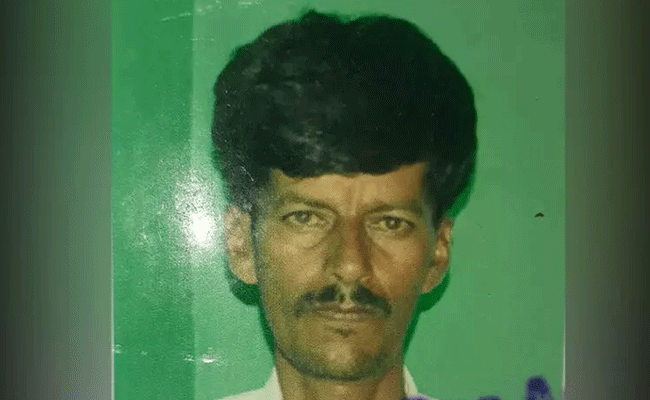
A 52-year-old farmer named Parameshwarappa reportedly took his own life in Chikkanallur village, Ajjampura taluk. The farmer had been grappling with severe distress caused by the loss of his crop due to inadequate rainfall.
Parameshwarappa had invested significant effort and resources in cultivating onions on his three-acre land. Unfortunately, his entire onion crop was devastated due to unfavorable weather conditions, leading to a substantial financial setback. To compound his worries, he had also taken a loan of Rs 5 lakh from a bank without providing any collateral.
The immense stress resulting from the crop failure and the mounting debt is believed to have driven Parameshwarappa to take the drastic step of ending his own life. A case has been registered with the Ajjampura Police Station, and an investigation is currently underway.
This tragic incident follows another farmer suicide in the region, highlighting the profound impact of drought and crop loss on the livelihoods of farmers. In Kadur taluk, a 48-year-old farmer took his own life on Thursday, as he was reportedly overwhelmed by the burden of unpaid loans resulting from crop failure.
Let the Truth be known. If you read VB and like VB, please be a VB Supporter and Help us deliver the Truth to one and all.
Rickelton's ton in vain as SRH beat MI by 6 wickets
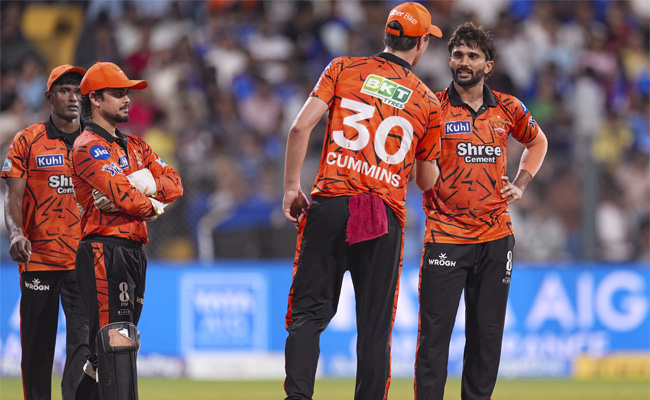
Mumbai (PTI): Ryan Rickelton's whirlwind unbeaten ton was overshadowed by Heinrich Klaasen's unbeaten 65 as Sunrisers Hyderabad defeated Mumbai Indians by six wickets in an IPL match here on Wednesday.
Chasing an imposing 244-run target, Travis Head (76 off 30) and Abhishek Sharma (45 off 24) shared 129 runs for the opening wicket to set the platform for SRH.
Klaasen (65 not out off 30 balls) then displayed his all-round hitting abilities to guide SRH home with the help of Nitish Kumar Reddy (21) and Salil Arora (30 not out off 10) in 18.4 overs.
Earlier, Rickelton's knock powered MI to 243 for five.
MI rode on a 93-run stand between Rickelton (123 not out off 55 balls) and Will Jacks (46 off 22) in 7.1 overs for the opening stand to power the side.
MI skipper Hardik Pandya scored a valuable 31 off 15 balls before being dismissed.
Praful Hinge (2/54), Eshan Malinga (1/29), Sakib Hasan (1/39) and Nitish Kumar Reddy (1/31) were the wicket-takers for SRH.
Brief Scores:
Mumbai Indian: 243 for 5 in 20 overs (Ryan Rickelton 123 not out; Praful Hinge 2/54).
Sunrisers Hyderabad: 249 for 4 in 18.4 overs (Travis Head 76, Heinrich Klaasen 65 not out; AM Ghazanfar 2/51).