Chikkamagaluru: News of KSRTC bus ETM blast false, machine melted due to heat
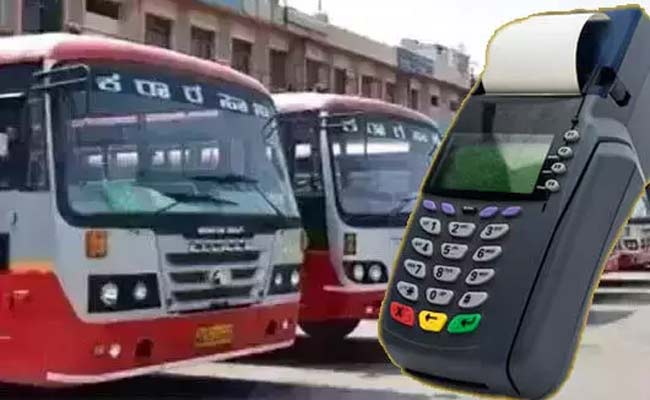
Chikkamagaluru: KSRTC has clarified that viral news regarding the explosion of an Electronic Ticketing Machine (ETM) on a bus operating on the Chikkamagaluru-Sringeri-Bengaluru route is false.
According to the complete information, there was no ETM blast. Instead, the machine melted due to prolonged exposure to heat on the bus bonnet. The conductor had placed the ETM on the bonnet, which became excessively hot due to the sun.
The driver-conductor placed the machine in a plastic pouch, which did not withstand the bonnet's heat, causing the machine to melt. There was no explosion, and the transport department has instructed conductors not to place machines on hot surfaces.
Let the Truth be known. If you read VB and like VB, please be a VB Supporter and Help us deliver the Truth to one and all.
ISRO successfully conducts second integrated air drop test for Gaganyaan mission
New Delhi (PTI): Space agency ISRO has successfully conducted the second integrated air drop test (IADT-02) for the upcoming Gaganyaan mission at the space station in Andhra Pradesh's Sriharikota.
The system is essential to ensure a safe recovery of the crew module -- the capsule in which astronauts sit during a human flight -- during re-entry and landing.
Union minister Jitendra Singh congratulated the Indian Space Research Organisation (ISRO) for successfully conducting the test.
"Congratulations #ISRO for the successful accomplishment of Second Integrated Air Drop Test (IADT-02) for #Gaganyaan, India's first Human Space flight scheduled next year. The second Integrated Air Drop Test (IADT-02) was successfully conducted at Satish Dhawan Space Station Sriharikota," Singh said in a post on X.
The IADT-02 follows the successful completion of the first IADT, which took place on August 24, 2025, at the Satish Dhawan Space Centre in Sriharikota.
Air drop tests recreate the last leg of a spacecraft's return to Earth. An aircraft or helicopter drops the spacecraft from a height to test various systems under different scenarios.
These are the deployment of the parachute system in case the mission is aborted mid-flight, system performance when one parachute fails to open and the spacecraft's orientation and safety during splashdown etc.
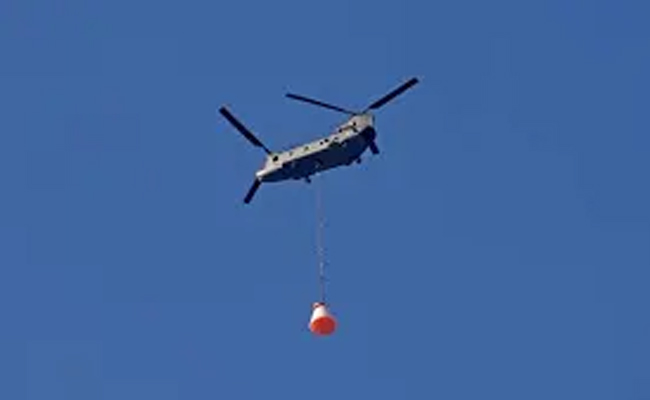
In the IADT-02 test, a simulated crew module, weighing about 5.7 tonnes, was lifted by an Indian Air Force Chinook helicopter to an altitude of about three kilometres and released over a designated drop zone in the sea, near the Sriharikota coast.
In a statement, the ISRO said, "Ten parachutes of four types were deployed in a precise sequence during the descent of the crew module, gradually reducing the velocity for safe touchdown. Subsequently, the simulated crew module was successfully recovered in coordination with the Indian Navy."