Chitradurga: Private sleeper bus catches fire after truck crosses divider; at least 17 burnt alive

Chitradurga: At least 17 passengers were burnt alive in a horrific road accident that occurred in the early hours of Thursday near Gorlattu Cross in Hiriyur taluk of Chitradurga district on National Highway–48.
The tragedy took place when a container truck crossed the road divider and rammed into a private sleeper coach bus coming from the opposite direction. Due to the severity of the collision, the bus immediately caught fire and was engulfed in flames within minutes.
According to police, the rapid spread of fire prevented several passengers from escaping, leading to massive loss of life. Many others sustained serious injuries, and officials fear that the death toll may rise.
The truck was travelling from Hiriyur towards Bengaluru, while the bus was on its way from Bengaluru to Shivamogga. Preliminary investigations indicate that negligence on the part of the truck driver caused the accident. The truck driver, identified as Kuldeep, died on the spot.
Police stated that the sleeper coach bus had a seating capacity of 32 and was carrying 29 passengers at the time of the accident, including 15 women and 14 men. Most of the passengers were residents of Gokarna in Uttara Kannada district, while others were from Kumta and Shivamogga.
The bus driver, conductor, and a few passengers reportedly managed to escape by jumping out of the bus in time, thereby saving their lives.
The accident resulted in a massive traffic jam stretching nearly 30 kilometres on National Highway–48, with vehicles stranded for several hours.
The injured have been admitted to nearby hospitals, and the condition of some is said to be critical.
Chitradurga Superintendent of Police Ranjith visited the accident site and conducted an inspection. A case has been registered at the Hiriyur Rural Police Station, and further investigation is underway.
Let the Truth be known. If you read VB and like VB, please be a VB Supporter and Help us deliver the Truth to one and all.
Kerala polls: ‘People rejected 10 years of misrule’, says AICC gen secy
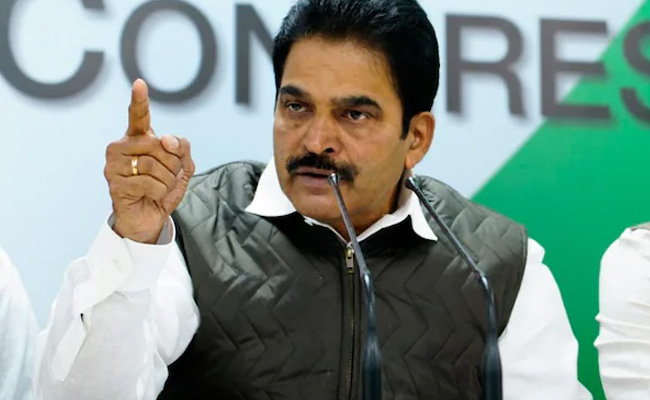
Thiruvananthapuram (PTI): AICC General Secretary K C Venugopal on Monday said the Congress-led UDF’s sweeping victory in the Kerala Assembly polls was a clear verdict against the “arrogance”, corruption, and nepotism of the CPI(M)-led LDF government headed by CM Pinarayi Vijayan.
Addressing a press conference as counting of votes for all 140 Assembly constituencies neared completion, Venugopal said the outcome reflected public anger against what he termed “10 years of misrule” by the Left government.
He claimed that Vijayan’s victory in his home constituency, Dharmadam, was “only technical”, alleging that the CM trailed the UDF candidate in the initial rounds of counting and failed to secure a majority in his own village.
“He just escaped. He suffered a setback even in his home turf. He was the only person who did not realise the people’s mood in this election,” Venugopal said.
Alleging that the CPI(M) and the LDF had resorted to “communal and opportunistic politics”, he further claimed that the ruling front had entered into a “secret understanding” with the BJP in a bid to retain power for a third consecutive term.
He said that when a government driven by power and arrogance attempts to align with anyone to stay in office, even its own cadre turns against it.
Referring to the results, Venugopal said that while the UDF expected rebel CPI(M) leaders, including K Kunhikrishnan in Payyannur, to impact the vote share, their victories came as a surprise.
Describing the UDF’s performance as a “historic victory”, he attributed it to coordinated teamwork, grassroots mobilisation, and the dedication of party workers, adding that the alliance accepted the mandate “with humility”.
Venugopal also credited Rahul Gandhi’s campaign guarantees, calling them a “trump card” that helped voters focus on real issues and reject what he described as the LDF’s “false narratives”.
He claimed that the Congress witnessed one of its lowest levels of rebellion in this election, which contributed to the alliance’s strong performance.
The senior Congress leader further alleged that the BJP managed to win two seats with the help of the CPI(M), and asserted that forces attempting to divide society on communal lines should “learn a lesson” from Kerala’s verdict.
“This is the real Kerala story,” he said.
On the question of the next Chief Minister, Venugopal said the party leadership would decide at the earliest after due consultations.
The counting of votes began on Monday morning for all 140 Assembly constituencies in Kerala, where the Congress-led UDF secured a decisive majority, defeating the CPI(M)-led LDF, which was seeking an unprecedented third consecutive term in office.
Congress MP Rahul Gandhi (@RahulGandhi) posts, "Thank you to my brothers and sisters in Keralam for a truly decisive mandate. Congratulations to every UDF leader and worker for a hard-fought, well-run campaign. As I said before, Keralam has the talent, Keralam has the potential… pic.twitter.com/6T4IZbEmp4
— Press Trust of India (@PTI_News) May 4, 2026