
CID begins probe into 'honeytrap' attempt on Minister Rajanna: MLC Rajendra
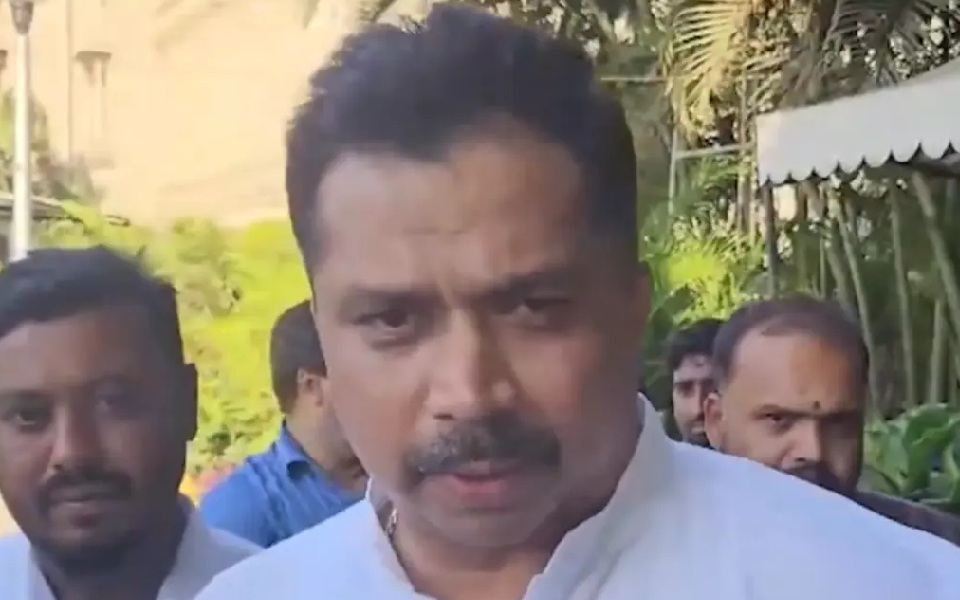
Bengaluru, Mar 27 (PTI): Karnataka Cooperation Minister K N Rajanna's son and Congress MLC K N Rajendra on Thursday said officials from the Criminal Investigation Department (CID) of the state police have begun a preliminary investigation into the alleged attempts to "honeytrap" his father and had visited his official residence.
He stated that he had met Karnataka DGP and IGP Alok Mohan today to share information regarding an alleged attempt to "murder" him.
"I believe the ('honeytrap' attempts) case has been handed over to the CID. The CID visited the government house (allocated to Rajanna) on Jayamahal Road here and questioned the staff. They have initiated a preliminary inquiry—this is the information I have," Rajendra said.
Speaking to reporters, he said since the DGP had assigned the case to the CID, they began their investigation today: "It is based on the petition submitted to the Home Minister."
On Tuesday, Rajanna had submitted a petition to State Home Minister G Parameshwara, seeking a probe and necessary action regarding the alleged attempts to "honeytrap" him.
Parameshwara stated that the government would examine Rajanna's petition judiciously within the framework of the law and take necessary action after consulting legal experts and discussing it with the Chief Minister.
Last Thursday, Rajanna informed the Assembly that "honeytrap" attempts had been made on him and that at least 48 politicians across parties had fallen victim to such schemes.
Asked whether he had filed a complaint regarding the "honeytrap" case with the DGP, Rajendra clarified that there was no such attempt against him.
He said he had only informed the media about certain phone calls.
"November 16 was my daughter's birthday. A day before, some individuals arrived to set up a 'shamiana'. Allegedly, they had come intending to assault or murder me on a supari (contract). Their attempt was unsuccessful. I learned about it in January after receiving a voice recording from my source," he claimed.
He mentioned that two names—Soma and Bharath—surfaced in the recording, which captured a conversation between two individuals discussing a Rs 5 lakh payment made to their account.
Rajendra said he had recently brought this matter to the attention of Chief Minister Siddaramaiah, who advised him to gather all relevant information and submit it to the DGP.
"I don't know the two people mentioned in the conversation nor their intentions. I have brought the matter to the notice of the Chief Minister and the Home Minister. I have also submitted the audio recording and all related information to the DG, who advised me to approach the SP (Tumakuru) and file a complaint there, which I will do tomorrow," he added.
Let the Truth be known. If you read VB and like VB, please be a VB Supporter and Help us deliver the Truth to one and all.
Karnataka issues nutrition advisory for govt events; recommends millets, healthier options
_vb_61.jpeg)
Bengaluru (PTI): The Karnataka government on Monday issued a nutrition advisory recommending healthier food and beverage options at meetings, functions, and other official gatherings held in the state.
The advisory has been issued by the Department of Karnataka Health and Family Welfare Services to promote healthy dietary and nutritional habits among officials and staff, noting that food, refreshments and beverages served in government offices and official programmes are "often not aligned with nutrition standards."
The advisory recommends serving snacks such as millet-based, low-fat and low-sugar foods, fresh fruits, vegetable salads, sprouts, roasted nuts and seeds during in-house office meetings and breaks.
Beverages such as green tea, low-fat buttermilk, and locally filtered or boiled water served in glass bottles or steel flasks have also been suggested.
According to the advisory, for larger government events, conferences and exhibitions, departments have been advised to include at least one millet-based item during snacks and a minimum of two millet dishes in meals, along with local cuisine and at least one regional recipe.
It also recommends the use of brown rice instead of white rice, freshly prepared vegetable salads, and fresh fruits or low-sugar fruit juices.
If non-vegetarian food is served, it should consist of well-cooked lean or white meat, the advisory stated.
In eateries operating within government office campuses, the department has recommended millet-based foods, fresh vegetable salads, boiled pulses such as horse gram or chickpeas, and low-fat beverages.
It suggests serving food using reusable metal plates and glasses.
The advisory also recommends avoiding microwave-heated food, industrially processed food, fried snacks, high-fat or heavily spiced dishes, carbonated drinks, high-sugar fruit juices, and alcoholic beverages.
It further discourages serving milk-based tea or coffee and plastic-bottled water during official events.
“Overall, hygiene and cleanliness should be maintained while serving food and water. Local cottage industries, self-help groups, prison kitchens, nutri-gardens and others should be preferred for placing food and beverage orders,” the advisory added.
_vb_54.jpeg)
_vb_07.jpeg)
_vb_34.jpeg)