Citizens body urges PM Modi, Siddaramaiah to speed up Bengaluru Suburban Rail Project
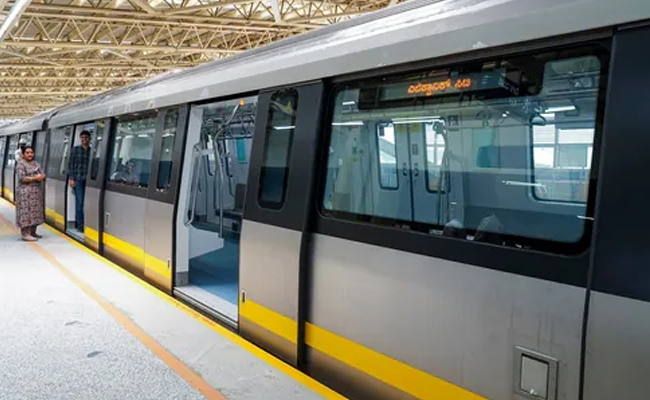
Bengaluru (PTI): A citizens' organisation has urged Prime Minister Narendra Modi and Chief Minister Siddaramaiah to personally intervene to expedite Corridor-1 of the BSRP.
The Bengaluru Suburban Rail Project (BSRP) was commissioned in 2020 to connect Bengaluru with its suburbs and satellite towns via dedicated rail corridors -- similar to suburban rail systems in Mumbai, Chennai, and Kolkata.
The project with an estimated cost of Rs 15,767 crore was supposed to be completed in December 2025, but now March 2030 is the fresh deadline given by the Rail Infrastructure Development Company (Karnataka) (K-RIDE), a joint venture of the Ministry of Railways and the Karnataka government.
The Citizens for Citizens (C4C) has said that there was unacceptable delays in the crucial Majestic-Kempegowda International Airport corridor, a project expected to significantly improve the quality of life for nearly two crore people in and around Bengaluru.
ALSO READ: CM Siddaramaiah, Shivakumar court arrest protesting against MGNREGA scrapping
In a detailed letter to Modi and Siddaramaiah, the group said the Bengaluru Suburban Rail Project, being executed by K-RIDE, has fallen far behind schedule despite its strategic importance to the city's public transport ecosystem and the state government holding a 51 per cent stake in the implementing agency.
In the letter to Siddaramaiah on January 23, the C4C founder and convener Rajkumar Dugar said, "BSRP being executed by K-RIDE - in which GoK has 51 per cent stake - is running way behind schedule."
The forum recalled that the project was reviewed by the Prime Minister on December 31, 2025, during which directions were issued for speedy execution.
The citizens' body pointed out that when BSRP was sanctioned in October 2020, Corridor-1 was considered the most vital stretch connecting the city centre to the airport.
The stretch was prioritised for completion within 36 months, which was also endorsed by the State's Directorate of Urban Land Transport (DULT).
However, Dugar noted that even 63 months after sanction, no on-ground work has commenced on the corridor.
Highlighting the missing deadlines, C4C founder said, "63 months post-sanction, on-ground work is yet to start on Corridor-1, and shockingly, the latest target for completion of C1 is March 2030, i.e., 50 months from now." This, he said, would mean a total of 113 months for a project originally planned for completion in three years.
He requested a strong budgetary allocation for C1 in the upcoming budget as well as facilitation of Land Acquisition (LA) along with directions for C1 to be completed in next 24 months.
"We firmly believe with your kind intervention, January 2028 for commissioning of C1 is 100 per cent doable," Dugar said in his letter to Modi and Siddaramaiah.
While laying foundation stone for the BSRP in June 2022, the Prime Minister had announced that the project which was delayed for 40 years would be completed in 40 months. With this announcement, Modi had set a deadline of December 2025.
As the project delayed, the Karnataka Infrastructure Development Minister M B Patil announced in February 2024 that the project would be completed by December 2027.
Let the Truth be known. If you read VB and like VB, please be a VB Supporter and Help us deliver the Truth to one and all.
Polling begins for 152 assembly seats in 1st phase of Bengal elections
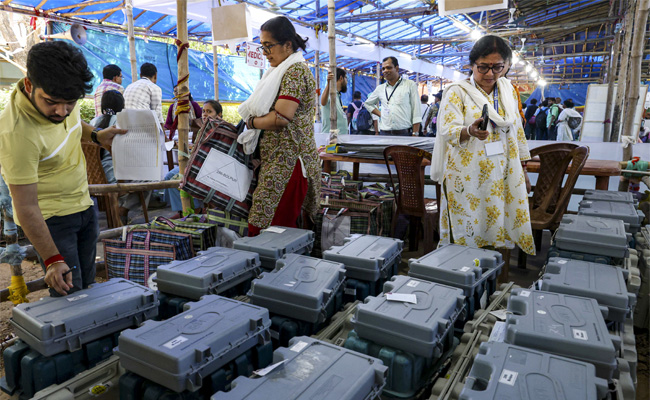
Kolkata (PTI): Voting began on Thursday in 152 constituencies in the first phase of the West Bengal assembly elections, amid unprecedented security arrangements and a high-stakes battle that could shape the direction of the entire contest.
Polling started at 7 am with voters queueing up outside booths in districts ranging from Darjeeling and Jalpaiguri in the north to Murshidabad, Nadia, Birbhum and Hooghly in the south.
The opening round covers more than half of the state's 294 assembly seats and is being seen as the BJP's best opportunity to make an early breakthrough and the ruling Trinamool Congress' most important test in its bid for a fourth consecutive term.
According to the Election Commission, over 3.60 crore electors are eligible to vote in this phase, including around 1.75 crore women and 465 third-gender voters.
A record 2,450 companies of central paramilitary forces, comprising nearly 2.5 lakh personnel, have been deployed across the state for the polls, with over 8,000 polling stations identified as highly sensitive.
The Election Commission has placed districts such as Malda, Murshidabad, Uttar Dinajpur, Cooch Behar, Birbhum and Purba Bardhaman under special surveillance.
More than 2,193 quick response teams, surveillance units and flying squads have also been deployed to prevent violence and ensure free and fair polling.
The first phase assumes political significance because it includes all 54 seats in north Bengal, the region that powered the BJP's rise in the 2019 Lok Sabha elections and helped it emerge as the principal challenger to the TMC in the 2021 assembly polls.
Of the 152 seats, the BJP had won 59 in 2021, while the TMC had secured 93.
For the saffron camp, retaining its dominance in north Bengal is crucial if it is to remain in contention in the statewide battle. For the TMC, led by Chief Minister Mamata Banerjee, preventing a BJP sweep in the north is equally important to establish momentum before the second round.
This phase is also being closely watched because it comes after the Special Intensive Revision of electoral rolls, which resulted in the deletion of around 91 lakh names from the state's voter list.
The controversy has sharply polarised the campaign, with the BJP alleging that the revision weeded out infiltrators and bogus voters, while the TMC has accused the Centre and the Election Commission of disenfranchising genuine electors, especially minorities and migrant workers.
Several high-profile candidates are in the fray in the first phase.
Key candidates in this phase include leader of the opposition Suvendu Adhikari (BJP, Nandigram), former Union minister Nisith Pramanik (BJP, Mathabhanga), state minister Udayan Guha (TMC, Dinhata), Goutam Deb (TMC, Siliguri), and Adhir Ranjan Chowdhury (Congress, Baharampur).
The second phase of polling will be held on April 29. Counting of votes will take place on May 4.