Citizens’ group terms resistance to K'taka socio-educational survey “irrational, anti-marginalised"
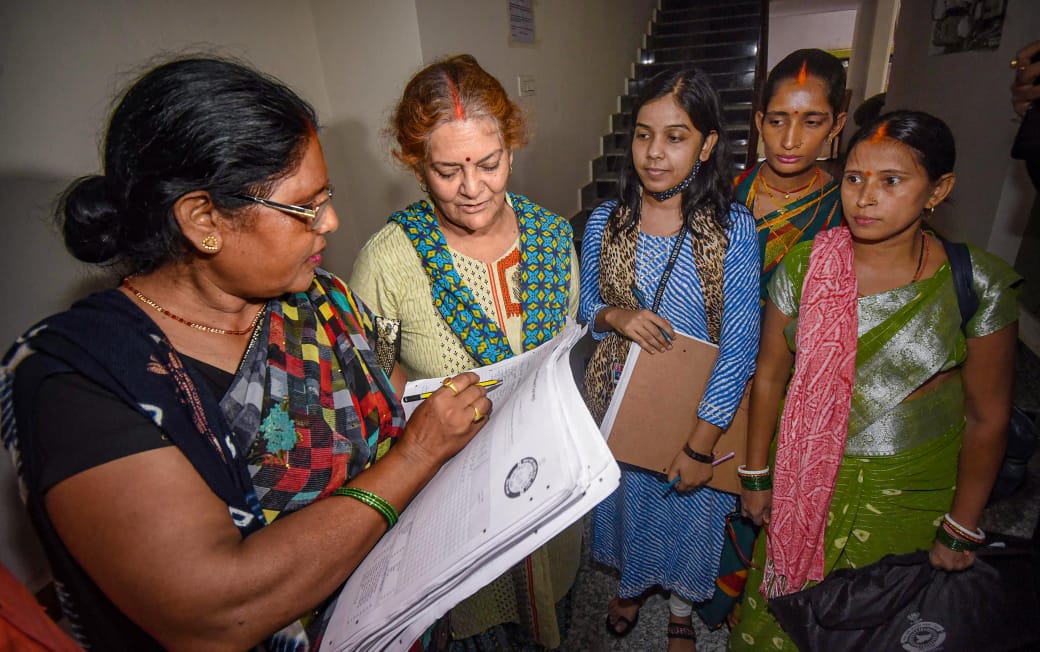
Bengaluru: Participants at a panel discussion on Sunday criticised the opposition to Karnataka’s ongoing socio-educational survey, commonly referred to as the caste census, describing the resistance as irrational and detrimental to the welfare of marginalised communities and the state’s overall development.
The discussion, organised by the citizens’ collective Bahutva Karnataka, brought together experts including academic and writer Professor A. Narayana, former head of the Department of Women’s Studies at Karnataka Women’s University Professor R. Sunandamma, research scholar Dr Azhar, and journalist Anisha Sheth.
Professor Narayana said it was concerning that an exercise aimed at gathering data had become a point of contention. “Development in India has largely benefited some groups over others. Without updated and reliable data, it is difficult to ensure equitable growth,” Deccan Herald quoted him as saying. He added that in the absence of fresh data since the 1931 census, the current survey holds great significance.
Professor Sunandamma observed that the earlier 2015 survey report had shortcomings, as several of its conclusions were not adequately substantiated. She said the new survey must address those gaps to ensure credibility.
Dr Azhar pointed out that previous reports of Karnataka’s Backward Classes Commissions consistently showed that religious minorities, particularly Christians and Muslims, remain underdeveloped in terms of education, employment, and gender balance. He said that while governments often announce welfare schemes for minorities, there is little focus on long-term development and poor utilisation of allocated funds. “This survey could provide the foundation for evidence-based policies to improve social and educational outcomes among minorities,” he added.
Journalist Anisha Sheth observed that both the government and the commission had not sufficiently communicated the constitutional and legal basis of the survey to the public. She noted that dominant castes had earlier criticised the 2015 survey as unscientific without providing valid reasoning. “A survey that covered 94 percent of the state cannot simply be dismissed as unscientific,” she said, urging better communication and transparency in the process.
Let the Truth be known. If you read VB and like VB, please be a VB Supporter and Help us deliver the Truth to one and all.
Iran reimposes restrictions on Strait of Hormuz, accusing US of violating deal to reopen it
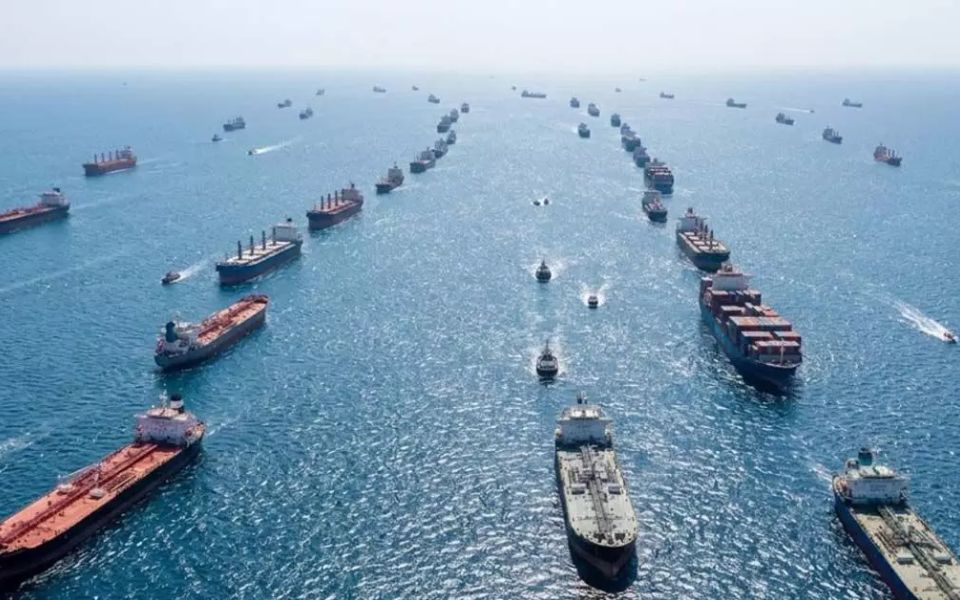
Cairo (AP): Iran swiftly reversed course on reopening the Strait of Hormuz, reimposing restrictions on the critical waterway on Saturday after the US said it would not end its blockade of Iran-linked shipping.
Iran's joint military command said on Saturday that “control of the Strait of Hormuz has returned to its previous state ... under strict management and control of the armed forces.” It warned that it would continue to block transit through the strait as long as the US blockade of Iranian ports remained in effect.
The announcement came the morning after US President Donald Trump said that even after Iran announced the strait's reopening on Friday, the American blockade “will remain in full force” until Tehran reaches a deal with the US, including on its nuclear programme.
The conflict over the chokepoint threatened to deepen the energy crisis roiling the global economy after oil prices began to fall again on Friday on hopes the US and Iran were drawing closer to an agreement. Roughly one-fifth of the world's oil passes through the strait, and further limits would squeeze already constrained supply, driving prices higher once again.
Control over the strait has proven to be one of Iran's main points of leverage and prompted the United States to deploy forces and initiate a blockade on Iranian ports as part of an effort to force Iran to accept a Pakistan-brokered ceasefire to end almost seven weeks of war that has raged between Israel, the US and Iran.
Iran said it fully reopened the Strait of Hormuz to commercial vessels after a 10-day truce was announced between Israel and the Iranian-backed Hezbollah militant group in Lebanon. But after Trump said the blockade would continue, top Iranian officials said his announcement violated last week's ceasefire agreement between Iran and the US and warned the strait would not stay open if the US blockade remained in effect.
A data firm, Kpler, said movement through the strait remained confined to corridors requiring Iran's approval.
US forces have sent 21 ships back to Iran since the blockade began on Monday, US Central Command said on X.
Truce in Lebanon could help US-Iran peace efforts
------------------------------------------------------------
The ceasefire in Lebanon could clear one major obstacle to an agreement. But it was unclear to what extent Hezbollah would abide by a deal it did not play a role in negotiating, and which will leave Israeli troops occupying a stretch of southern Lebanon.
Trump said in another post that Israel is “prohibited” by the US from further strikes on Lebanon and that “enough is enough” in the Israel-Hezbollah war.
The State Department said the prohibition applies only to offensive attacks and not to actions taken in self-defence.
Shortly before Trump's post, Israeli Prime Minister Benjamin Netanyahu said Israel agreed to the ceasefire in Lebanon “at the request of my friend President Trump,” but that the campaign against Hezbollah is not complete.
He claimed Israel had destroyed about 90 per cent of Hezbollah's missile and rocket stockpiles and added that Israeli forces “have not finished yet” with the dismantling of the group.
In Beirut, displaced families began moving toward southern Lebanon and Beirut's southern suburbs despite warnings by officials not to return to their homes until it became clear whether the ceasefire would hold.
The Lebanese army and UN peacekeepers in southern Lebanon reported sporadic artillery shelling in some parts of southern Lebanon in the hours after the ceasefire took effect.
An end to Israel's war with Hezbollah was a key demand of Iranian negotiators, who previously accused Israel of breaking last week's ceasefire with strikes on Lebanon. Israel had said that the deal did not cover Lebanon.
The fighting has killed at least 3,000 people in Iran, more than 2,290 in Lebanon, 23 in Israel and more than a dozen in Gulf Arab states. Thirteen US service members have also been killed.