Civic woes: BJP levels "tax chori" allegations against Cong govt in Bengaluru
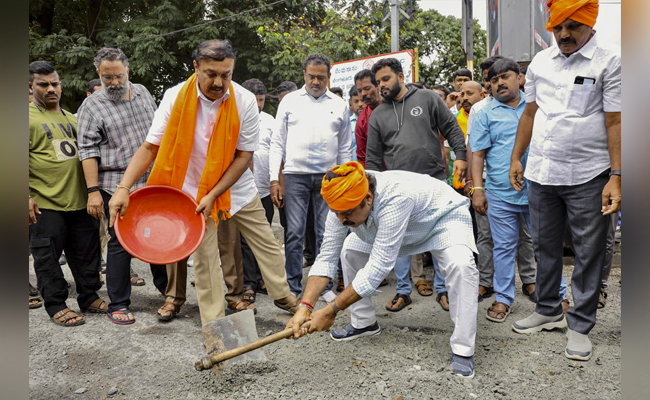
Bengaluru (PTI): In an apparent counter to Congress leader Rahul Gandhi's "vote chori" barb centered around Karnataka, the state BJP on Tuesday levelled "tax chori" allegation against the party-led government following a citizens forum's recent grievance aired to the state Chief Minister.
BJP leader R Ashoka accused the Siddaramaiah-led Congress government of "tax Chori" (tax theft) and said Bengaluru deserves action to address its infrastructure woes, not excuses and intimidation.
Ashoka, the Leader of Opposition in the Karnataka Assembly, attacked the government by highlighting a citizens forum's letter urging Chief Minister Siddaramaiah to intervene and direct the Greater Bengaluru Authority (GBA) not to collect property tax from residents, complaining that "unscientific and incomplete" civic works in their locality have led to flooding and poor road conditions.
Ashoka's tax theft allegation is also seen as a counter to Lok Sabha LoP Rahul Gandhi's "vote chori" (votes theft) charge made against the BJP and the Election Commission, citing certain alleged irregularities in Karnataka's Aland (Kalaburagi dt) and Mahadevpura (Bengaluru) Assembly segments in the 2023 Assembly polls and 2024 Parliamentary elections, respectively.
"Mr Rahul Gandhi, Bengaluru has a new slogan: CONGRESS TAX CHOR HAI! (Congress is tax thief)," Ashoka said in a post on 'X' alleging that the government is collecting taxes, but not building roads or fixing drains.
"Thanks to the apathy of CM Siddaramaiah and Deputy CM D K Shivakumar, Bengaluru citizens are fed up and demanding: STOP THIS TAX CHORI!" he said.
Ashoka said it is 'unprecedented' in India's history, where citizens are writing to the CM saying-- "stop collecting our taxes until you stop stealing our money!"
"Bengaluru deserves action, not excuses and intimidation," he added.
In a letter dated October 13, addressed to the CM, the residents of the Varthur-Balagere-Panathur area, under the banner of the "Individual Tax Payers Forum", which represents income tax payers and advocates for their rights, alleged that they have been suffering due to "half-measured, unscientific, and poorly coordinated" road white-topping and stormwater drainage works carried out by municipal authorities in their areas.
The state government has of late come under criticism over the poor state of infrastructure like roads and traffic issues in the city, with industry veterans like former Infosys CFO Mohandas Pai and Biocon Chairperson Kiran Mazumdar-Shaw repeatedly openly urging the state government to immediately intervene.
There was no immediate response from the ruling Congress to Ashoka's charge.
Let the Truth be known. If you read VB and like VB, please be a VB Supporter and Help us deliver the Truth to one and all.
Pune airport runway restored after IAF aircraft snag; ops resume
Pune (PTI): The runway at Pune airport, which was temporarily unavailable due to an incident involving an Indian Air Force (IAF) aircraft, has now been restored and declared operational, the Air Force said on Saturday.
The authorities at the Pune International Airport had earlier said that around 10.25 pm on Friday, a fighter aircraft experienced an undercarriage failure during landing, causing the runway to be blocked.
As many as 91 flights of airlines, including IndiGo, Air India, SpiceJet, Akasa, and Air India Express, were affected due to the incident, they said.
Earlier on Friday night, the Air Force had stated that the runway at Pune airport was temporarily unavailable following an incident involving one of its fighter aircraft. The aircrew are safe, and there is no damage to civil property, it had said.
"The runway at Pune Airport, which was temporarily unavailable due to an incident involving an Indian Air Force aircraft, has now been restored and declared operational. All necessary safety inspections and clearances have been completed. Operations are resuming in a phased manner," it said in a post on X.
Flight operations at Pune airport are being gradually restored. The situation has been brought under control with the highest priority given to the safety of citizens, a Defence PRO said.