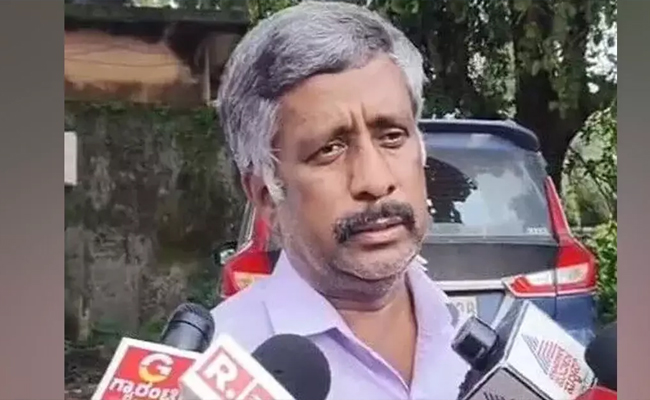
Civil society condemns harassment of activist Nadeem Khan, demands action against Delhi Police

Bengaluru: Several civil society organisations have strongly condemned the alleged harassment of human rights activist Nadeem Khan, the National General Secretary of the Association for Protection of Civil Rights (APCR), by the Delhi Police. They have described the filing of an FIR against him as malicious and part of a broader campaign to intimidate and silence dissenting voices.
On November 30, 2024, four police personnel, including the Station House Officer (SHO) of the Shaheen Bagh Police Station in Delhi, reportedly arrived at a private residence in Bengaluru where Nadeem Khan was staying. The police allegedly attempted to detain him without an arrest warrant or prior notice, violating established legal procedures. The FIR, filed earlier the same day in Delhi, cited offences under Sections 196, 353(2), and 61 of the BNS Act. These offences carry punishments of less than three years, which, according to the Supreme Court’s guidelines in Arnesh Kumar v. State of Bihar, do not warrant arrest. Despite this, the police reportedly pressured Khan for nearly six hours to accompany them to Delhi. It was only after hours of alleged intimidation that they issued a formal notice under Section 35(3) of the BNSS Act.
The police action is said to have caused significant distress to Khan and his family. Civil society groups have also accused the officers of trespassing on private property and intimidating Khan’s relatives. This incident follows another alleged raid on the APCR office in Delhi on November 29, 2024, where 20-25 police personnel reportedly arrived without prior notice, legal justification, or even an FIR copy. The groups argue that these actions demonstrate a targeted campaign against the APCR, which is known for addressing issues like mob lynching, hate crimes, and upholding constitutional values.
The FIR against Khan is believed to have been triggered by his involvement in an exhibition that highlighted incidents of hate crimes and hate speeches in India. The exhibition also showcased significant Supreme Court judgments, including Tehseen Poonawalla v. Union of India, which outlines measures to address mob violence. Civil society organisations view this FIR as part of a broader attempt by the Union Government to suppress dissent and penalize organisations critical of its policies.
The incident has also raised concerns about violations of India’s federal structure. Civil society organisations have criticized the Delhi Police for failing to coordinate with the Karnataka Police before acting in Bengaluru, a clear breach of the guidelines set by the Delhi High Court in Sandeep Kumar v. NCT of Delhi. These guidelines require cooperation with local police for interstate arrests. The groups pointed out that this is not an isolated incident, citing a 2020 case where the Delhi Police, under a BJP-led central government, arrested a Bengaluru resident without adhering to proper interstate protocols.
In a joint statement, organisations including Bahutva Karnataka, Campaign Against Hate Speech, Eddelu Karnataka, Jagruta Karnataka, Karnataka Janashakti, People’s Union for Civil Liberties-Karnataka, and Thamate, have demanded the immediate withdrawal of the FIR against Nadeem Khan. They also called for an end to the harassment of Khan and his family, compensation for the intimidation they faced, and action against the SHO of the Shaheen Bagh Police Station for alleged criminal intimidation, harassment, and trespassing. The Karnataka government has also been urged to act against the Delhi Police based on a complaint filed by Khan’s family.
Civil society groups have termed the harassment of Nadeem Khan as an attack on the fundamental rights of free speech, expression, and association. They have further argued that the actions of the Delhi Police represent a breach of India’s federal framework, highlighting the need for state governments and civil society to resist what they see as a growing threat to democratic and constitutional principles.
Let the Truth be known. If you read VB and like VB, please be a VB Supporter and Help us deliver the Truth to one and all.
DGGI, Hyderabad unearths Rs 13,000 cr syndicate involved in operating 'illegal' online gaming sites

Hyderabad (PTI): The DGGI, Hyderabad zonal unit, on Thursday said it has identified an alleged organised syndicate worth Rs 13,000 crore involved in operating "illegal" online gaming websites in the country with the assistance of associated fintech companies and arrested one of the masterminds.
It further said it has launched a massive crackdown on online gaming syndicates, including action against associated fintech companies, freezing bank accounts to the tune of Rs 100 crore and has begun arresting the masterminds.
As part of the online gaming investigation, GST Intelligence, Hyderabad arrested Pankaj Kumar, founder and director of Adsum Advisory Service Pvt Ltd, the city-based firm, which provides services for fraud detection and customer verification/digital KYC verification, a release from the Directorate General of GST Intelligence (DGGI), Hyderabad zonal unit said.
"Evidence gathered during the investigation pointed to the identification of an organised syndicate worth Rs 13,000 crore involved in operating illegal online gaming websites with assistance of associated fintech companies, including payment aggregator, payment gateway and third-party technology service providers, wherein Pankaj Kumar is one of the masterminds responsible for fraudulent KYC verification of merchants and shell entities on behalf of RBI regulated entities like Payment Gateways and Banking as Payment Aggregator (BAPA)," it said.
Being director of a company responsible for KYC verification process, Kumar "failed" to develop risk profiling of customers based on ownership and control structure and helped in onboarding of shell entities for UPI integration required for flow of money from online gaming, it alleged.
The DGGI, Hyderabad unit, further alleged Kumar, is one of the beneficiaries who received "illegitimate" proceeds of crime generated by the online gaming syndicate.
Further investigation is under progress, the release added.