Clamour for CM Siddaramaiah’s resignation continues on day 5 of opposition protest march
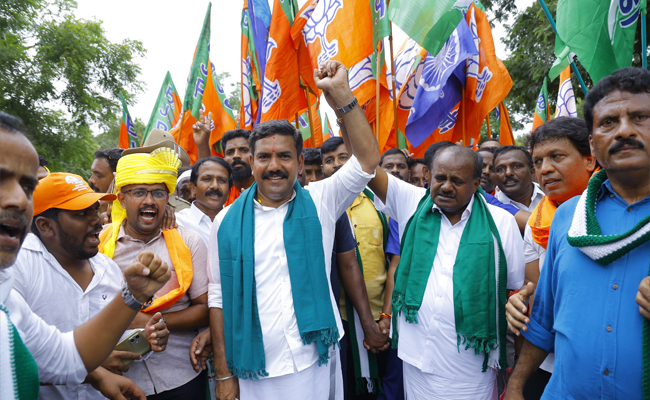
Mandya (PTI): The opposition BJP and JD(S)’ clamour for Chief Minister Siddaramaiah’s resignation, over an alleged land allotment scam continued with their protest march entering the fifth day on Wednesday.
This even as Governor Thaawarchand Gehlot is weighing options vis-a-vis the petition seeking sanction for Siddaramaiah's prosecution in connection with the scam, after the Congress government urged him to withdraw show-cause notice to the CM.
The week-long Bengaluru -Mysuru 'padayatre' (foot march) has sought to highlight the alleged fraudulent allotment of sites to land losers by Mysuru Urban Development Authority (MUDA), including to Siddaramaiah's wife Parvathi.
The fifth day of the 'Mysuru Chalo' march began in the city here and is scheduled to cover a distance of 15 km to reach Tubinakere in the district.
ALSO READ: Vinesh will always be country's champion: CM Siddaramaiah on wrestler's Olympics exit
BJP State President and MLA B Y Vijayendra, JD (S) state president and Union Minister H D Kumaraswamy, several legislators, leaders and workers from both parties took part as the march resumed.
Large number of workers and leaders from both parties were seen shouting slogans against Siddaramaiah and the Congress government, holding BJP and JD(S) party flags and placards, amidst drum beats.
The stretch through which the march passed was decked up with flags of both parties, buntings and portraits of prominent leaders at several places.
Kick started on Saturday at Kengeri near Bengaluru, the march on its first day had covered a distance of 16 km to reach Bidadi, 22 km on the day two to reach Kengal, 20 km on day three to reach Nidaghatta, and 20 km to reach Mandya city on day four.
In the MUDA 'scam', it is alleged that compensatory sites were allotted to Siddaramaiah's wife Parvathi in an upmarket area in Mysuru, which had higher property value as compared to the location of her land which had been "acquired" by the MUDA.
The MUDA had allotted plots to Parvathi under a 50:50 ratio scheme in lieu of 3.16 acres of her land, where MUDA developed a residential layout.
Under the controversial scheme, MUDA allotted 50 per cent of developed land to the land losers in lieu of undeveloped land acquired from them for forming residential layouts.
The Congress government on July 14 constituted a single member inquiry commission under former High Court Judge Justice P N Desai to probe the MUDA 'scam'.
Based on a petition filed by advocate-activist T J Abraham, Karnataka Governor Thaawarchand Gehlot had issued "showcause notice" on July 26 directing the Chief Minister to submit his reply to the allegations against him within seven days as to why permission for prosecution should not be granted against him.
The Karnataka government on August 1 had "strongly advised" the Governor to withdraw his "show-cause notice" to the Chief Minister, and alleged "gross misuse of the Constitutional Office '' of the Governor.
Let the Truth be known. If you read VB and like VB, please be a VB Supporter and Help us deliver the Truth to one and all.
Bengal: Over 55 pc turnout till 1 pm in repoll in 15 booths of 2 assembly seats
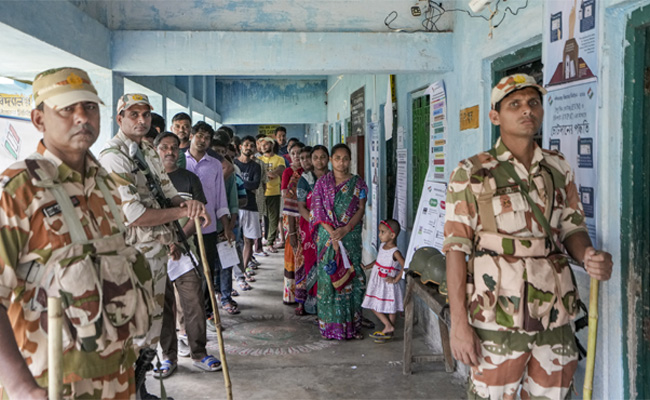
Kolkata (PTI): Over 55 per cent turnout was recorded till 1 pm in repoll in 15 booths of two assembly constituencies in West Bengal's South 24 Parganas district on Saturday, an official said.
Voting was underway more or less peacefully at 11 polling stations of Magrahat Paschim assembly constituency and four in Diamond Harbour, where the EC ordered repoll a day ago, following reports of electoral malpractices.
However, at booth number 179 at Chanda Primary School of Diamond Harbour seat, the Trinamool Congress alleged that a specially abled voter and his mother were harassed by central forces. The alleged incident sparked protests by party workers and locals.
The TMC claimed that the voter's mother, who had entered the booth to assist him, and her son were detained for a considerable time by central forces over alleged rule violations.
ALSO READ: Man arrested for duping Delhi resident of Rs 2 lakh in online car sale fraud
"TMC leaders Manmohini Biswas and Pratik Ur Rahman reached the spot and led the protests, with residents terming the action unwarranted harassment. The matter has been taken care of by our officials there," an official of the poll body said.
Polling was otherwise peaceful across 15 booths in the area, he added.
Voting began at 7 am and will continue till 6 pm, the official said, adding that till 1 pm, the turnout was 55.57 per cent.
Magrahat Paschim registered 56.33 per cent voter turnout, while in Diamond Harbour, it was 54.9 per cent, a poll official stated.
Voting in these two assembly constituencies was held in the second phase of the state elections on April 29.
The repoll order was based on reports received from returning officers and observers of the two constituencies and "material circumstances", the Election Commission official said.
In Magrahat Paschim, TMC's Md Samim Ahamed Molla is pitted against BJP nominee Goursundar Ghosh, while Abdul Majid Halder of the Congress and ISF candidate Abdul Aziz Al Hassan are also in the fray.
TMC candidate Panna Lal Halder is contesting against Dipak Kumar Halder of the BJP in the Diamond Harbour seat. Goutam Bhattacharya of the Congress and CPI(M)'s Samar Naiya are among other candidates.
The BJP had alleged rampant electoral malpractices in certain polling stations of both the assembly seats under the Diamond Harbour Lok Sabha constituency, which is represented by TMC national general secretary Abhishek Banerjee.
The EC had deputed its special observer, Subrata Gupta, to fact-check the allegations from the ground.
The poll panel will decide on repolling in the Falta assembly constituency on Saturday.
The West Bengal assembly elections were held in two phases -- April 23 and April 29 -- amid unprecedented security arrangements.
Counting of votes will take place on May 4.